Draw the complete seating group
Record the sofa width and the positions of any chairs or side tables. Include a chaise projection if there is one. The rug needs to work with this group, which may be offset from the center of the room.
Place the seating before choosing the rug outline. A rug bought to fit an empty room can become awkward once the sofa and chairs move into the positions that everyday life requires.
Compare two layouts on the floor
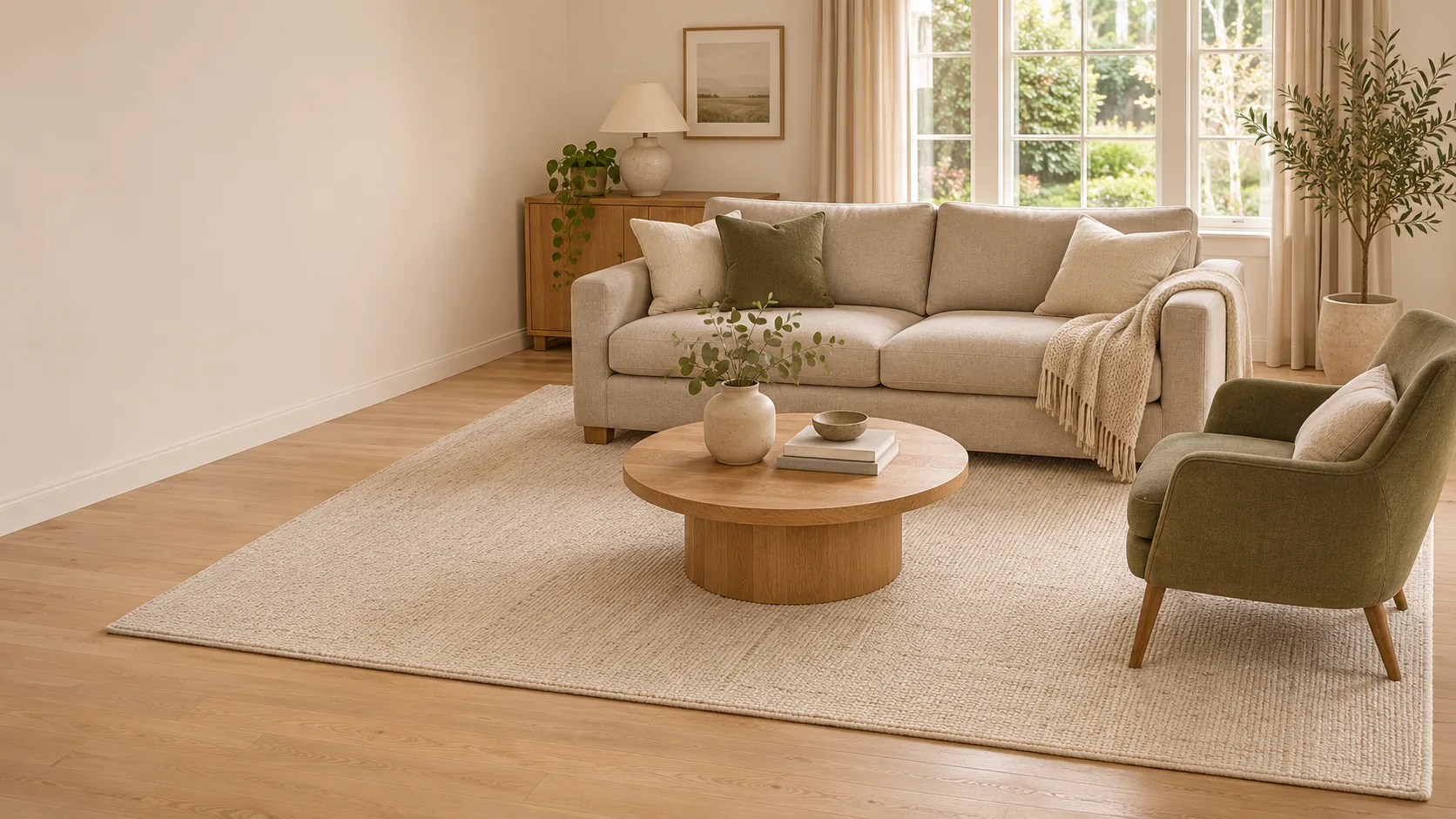
Room & Board's rug-size guide illustrates front legs on the rug and larger arrangements with all furniture legs on it. These are useful options to compare, not requirements for every room.
Mark two candidate sizes with floor-safe tape or paper. Sit in each chair and look at how the rug would connect the pieces. Check the sofa ends and any chair that sits at an angle, where a leg can easily fall just outside the proposed edge.
Check doors, drawers and adjoining surfaces
Open nearby doors and storage fully. A thick rug and pad can change clearance beneath a swinging door, even when the floor outline looks fine. Check the combined thickness and the floor manufacturer's requirements for a compatible pad.
Consider the transition to the next room. Avoid placing an edge where it interferes with the route you use most. If there is another rug nearby, view both outlines together before deciding on their sizes.
Do not fix size with pattern
A striking pattern cannot connect seats that are physically outside the rug area. Decide the footprint first, then compare color and texture. A quieter large rug may serve the seating better than a small statement rug centered under the table.
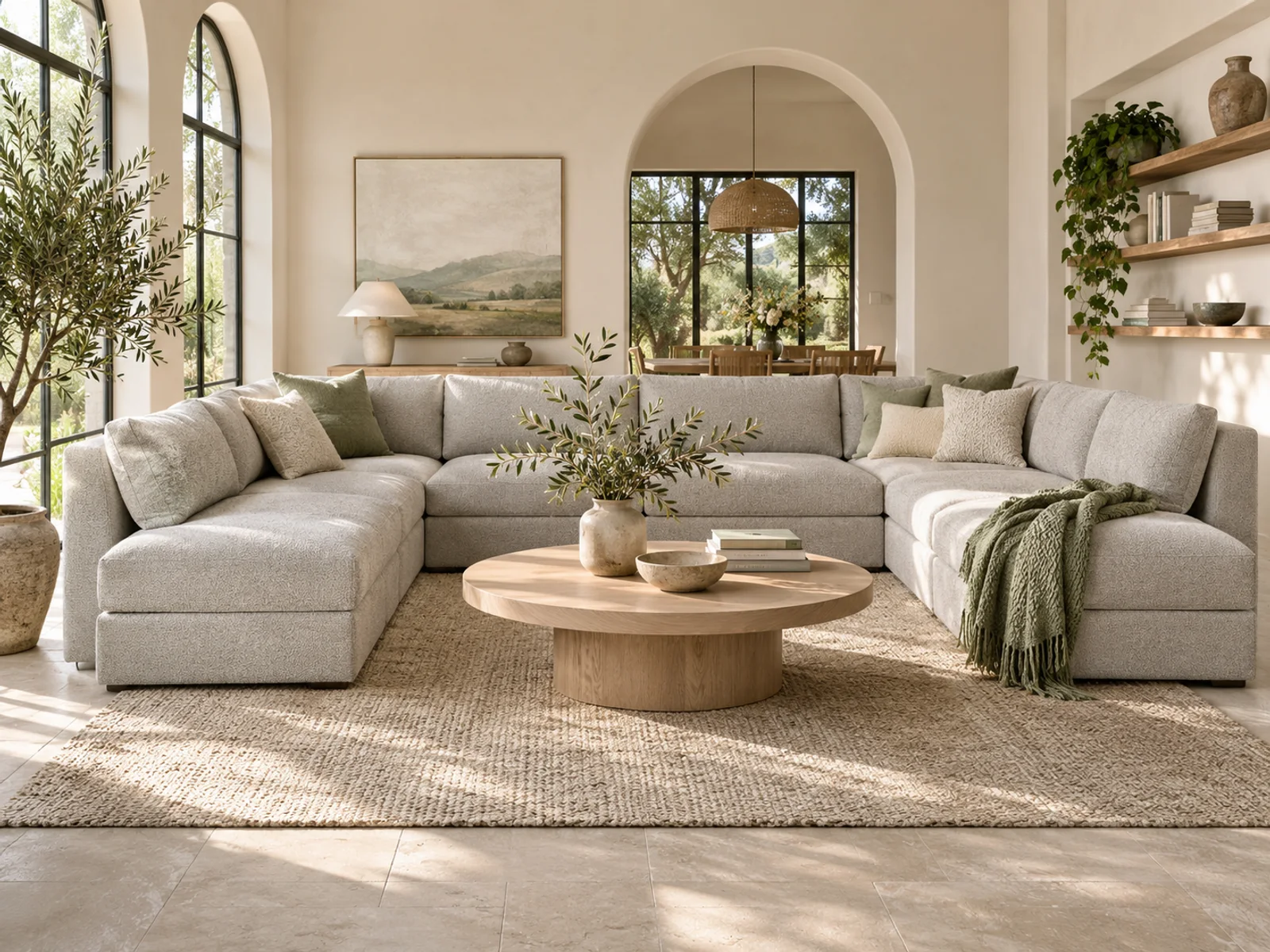
For example, when two chairs sit opposite the sofa, include them in the mock-up rather than choosing a size from sofa width alone. If you have a sectional, our guide to placing a rug under a sectional addresses that shape.
Confirm the actual listed dimensions
Nominal rug labels may not describe the precise finished measurement. Read the size and tolerance information before ordering. Keep the room plan so you can judge whether a small difference would affect door or furniture placement.
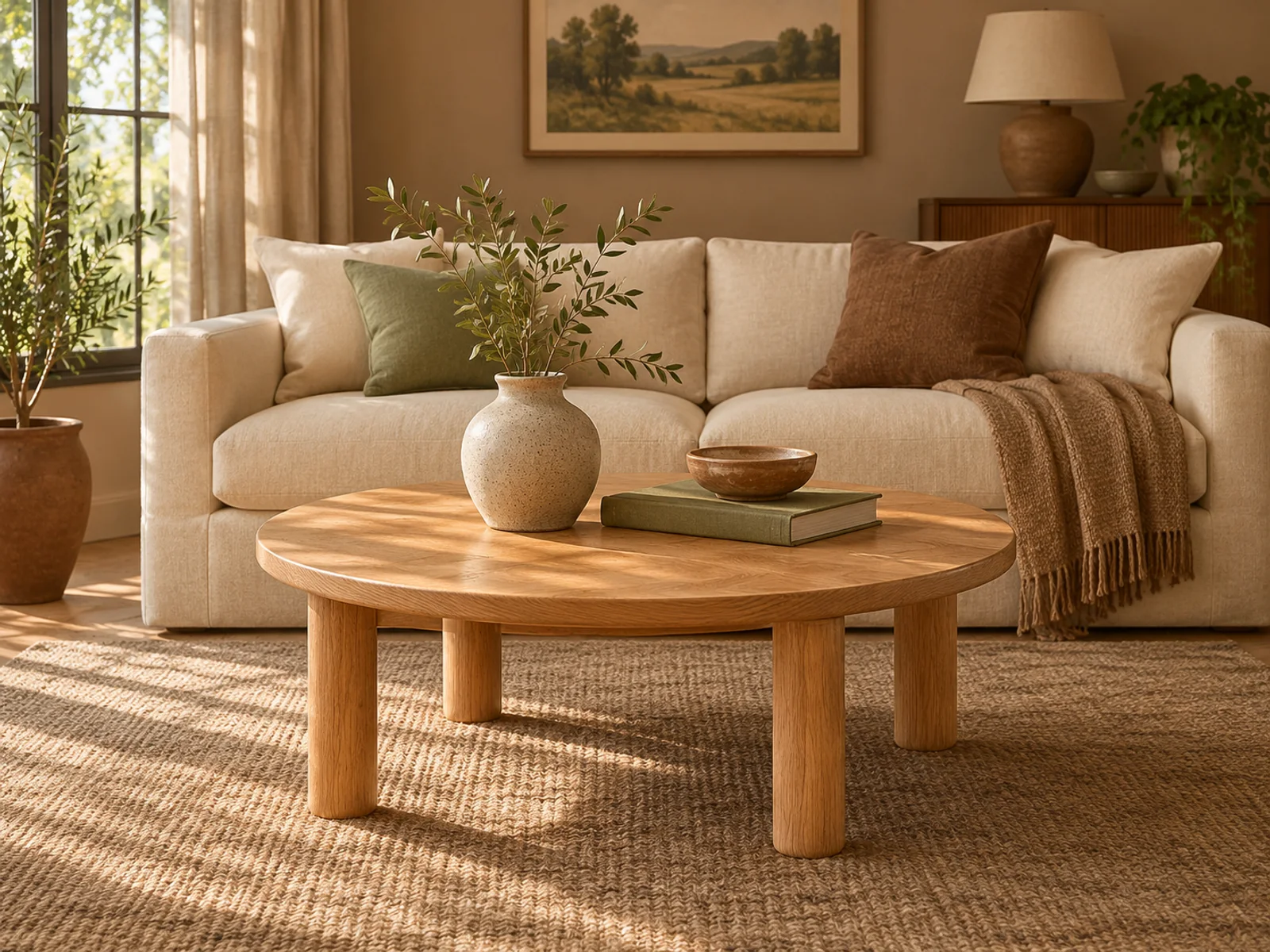
Once the rug size is settled, use our coffee table sizing guide to fit the central surface within the seating group rather than letting the table dictate the whole room.
Test two deliberate layouts
Mark the sofa and other seats, then tape a rug outline that reaches the front supports of the seating group. Compare that with a larger outline that holds all legs. Either can work when it looks intentional and leaves safe walking edges. A rug that floats far from every seat can make the furniture feel disconnected. Check the actual listed dimensions, because nominal rug sizes may vary. Use the room's seating arrangement rather than centring the rug mechanically under a ceiling light.
Include the coffee table and side chairs in the test. The table should sit steadily; a foot that straddles the rug edge may wobble.
Check floor finish and daily use
Choose a pad compatible with both the rug backing and floor, following the floor maker's instructions. Some backings can mark or trap moisture. Check door clearance, pile height and whether a moving chair or recliner catches the edge. A rug needs to handle the household's cleaning routine and pets as well as its colour scheme. If the ideal large size is impractical, choose a smaller front-leg arrangement with a clear border rather than an awkward almost-large rug.
Common questions
Does the rug have to be centered in the room?
No. Center it on the seating arrangement when that better serves the layout. A room with several activities may have a seating group that is deliberately off-center.
Can the sofa back legs stay off the rug?
Yes, that is one common layout to test. Check that the sofa is stable and that the rug and pad thickness do not create an unsuitable position for the furniture.
Should side tables sit on the rug too?
They do not always need to. Check their stability and how the edge falls around the legs. Avoid an arrangement where one narrow leg rests awkwardly on the rug edge.
Can a rug be smaller than the sofa?
It can, but test whether it still visually connects the seats. A very narrow rug under only the coffee table may make a large sofa feel detached.
Should I include side chairs?
Usually the seating group looks more coherent when at least their front supports meet the rug, but test the actual room and avoid a rug edge where people stand.
What if the sofa has a chaise?
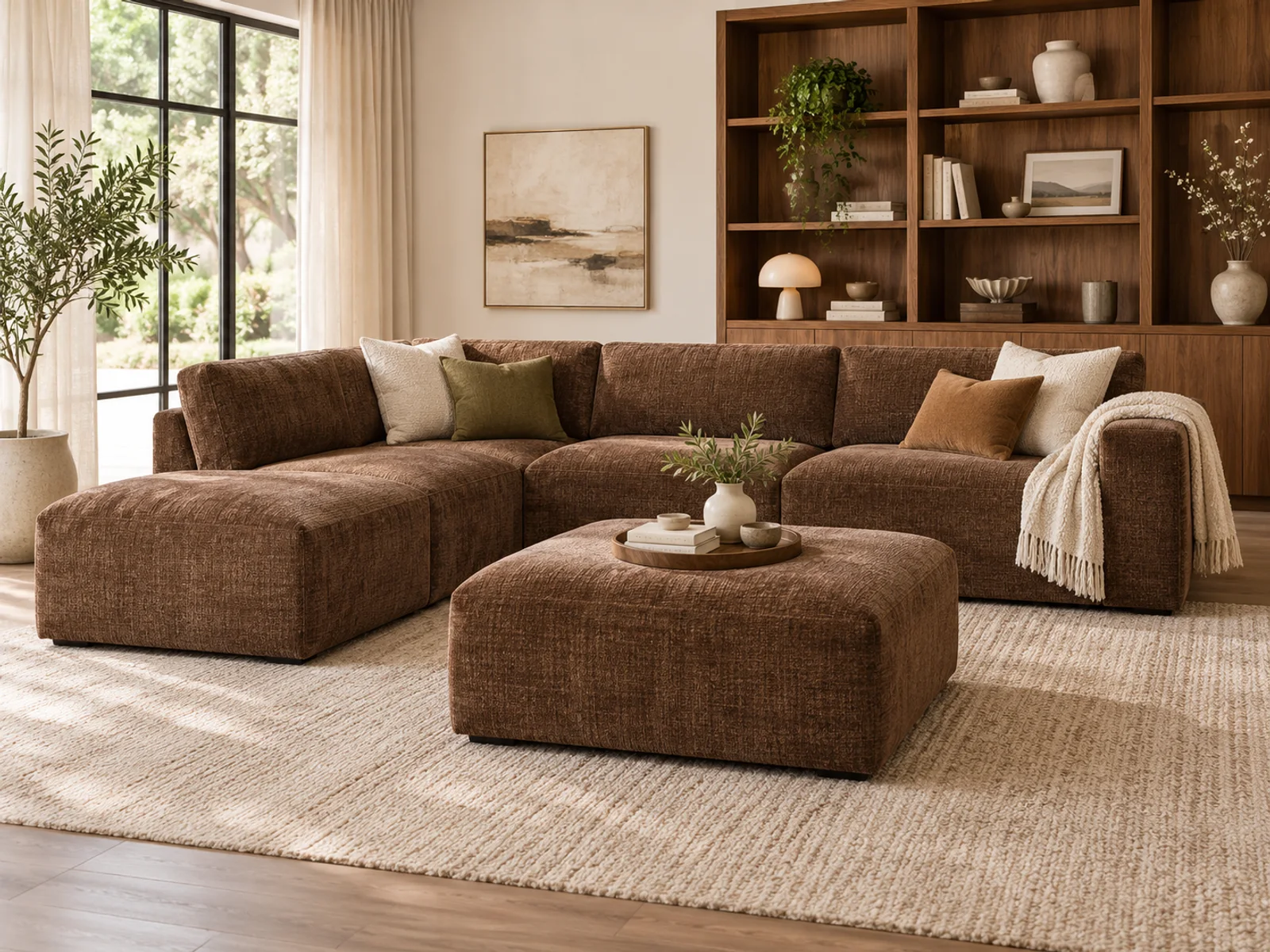
Include the chaise's contact points in the floor outline and check whether the rug extends far enough to look intentional. A narrow rug centred only on the coffee table can leave the chaise visually detached.
Can a rug pad change the fit?
Yes. It adds thickness and can affect door clearance or chair movement. Choose a pad approved for the floor and rug backing, then measure the combined height where a door swings.