Measure the arrangement you will cover
Measure the widest, deepest and tallest points of the furniture in its storage position. Include projecting arms and any items the cover instructions permit you to leave in place. Do not use cushion dimensions as a substitute for the frame outline.
For a set cover, confirm whether chairs are meant to sit around the table, tuck beneath it or stack separately. Match that arrangement to the cover diagram. A generic size label such as large cannot establish the fit.
Check fastening and ventilation details
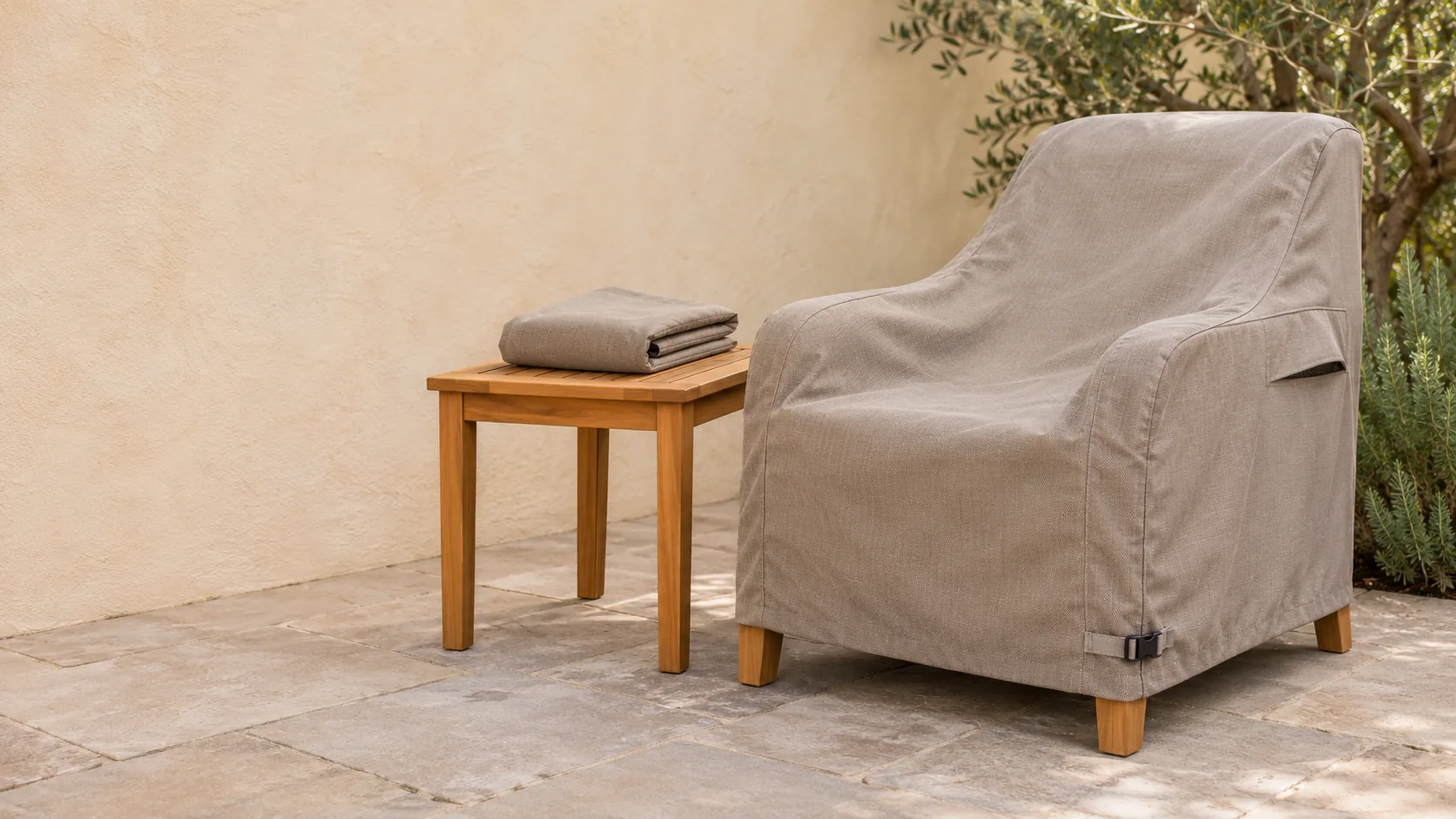
Look at straps, buckles, hems and vents in the product specification. Ask how they should be positioned and what clearance the cover needs above the ground. Follow the intended securing method instead of improvising weights on the furniture.
The cover material and seams should be described clearly. Terms such as waterproof and water-resistant can cover different constructions, so read the stated limits and maintenance instructions rather than relying on the strongest word in the title.
Plan for dry furniture underneath
A cover is not a drying chamber. SunVilla's storage advice specifically calls for furniture to be clean and dry before it is covered. Check the instructions for the frame and cushions as well as the cover.
If the furniture becomes damp, follow the recommended drying and airing procedure. Do not assume that a protective layer can solve unsuitable storage conditions. Our winter storage guide helps you decide what should move indoors.
Consider the daily handling routine
Check whether one person can comfortably remove, fold and replace the cover. Decide where it goes while the furniture is in use, especially after rain. A bulky wet cover needs a practical handling plan.
Inspect it periodically for damaged seams, fastenings and wear. Keep its product details so a replacement can be matched later. When comparing outdoor coffee tables or patio side tables, include cover availability in the shortlist if protection is important.
Measure the furniture in its stored position
Record width, depth and height after chairs are stacked or the sofa modules are arranged as they will be covered. Include high backs and any protruding arms. A cover that is too tight can stress seams and rub a finish; one that pools on the ground can collect water. Ask the furniture maker whether it recommends a fitted cover and where it should be secured. Check how the cover opens so one person can remove it without dragging grit across cushions or wood.
Balance weather protection with ventilation
Look for a fabric and seam construction suited to the local weather, but also a way for trapped moisture to escape. A waterproof label does not mean condensation cannot form underneath. Dry the furniture before covering and keep the cover pitched so rain does not pool. Check straps or vents against the exact set. After a storm, lift the cover and inspect rather than leaving dampness hidden for weeks. Follow the cover maker's cleaning and storage instructions when it is removed.
Make daily use practical
If the set is used often, a difficult cover may be left off. Try the fastening method and weight before buying. Keep straps away from walking paths and sharp table edges. A cover is not a substitute for repairing a cracked frame or storing sensitive cushions indoors when required. Record the measured set dimensions and cover model so a replacement fits later. Choose the option that protects the actual furniture and can be used consistently.
Common questions
Should I buy a larger cover for extra protection?
Extra size is not automatically helpful. Excess fabric may collect water or be difficult to secure, while a tight cover may not fit over projections. Follow the cover maker's sizing guidance for the furniture shape.
Can one cover protect a whole seating group?
It can if the cover is designed for the exact arrangement and the furniture instructions allow it. Measure the group as stored and check access, fastening and ventilation around the complete outline.
Can cushions stay under the cover?
Only if their manufacturer and the cover instructions permit it in those conditions. Dry cushions may still require separate protected storage. Do not assume a frame cover provides suitable long-term cushion storage.
Should the cover touch the ground?
Follow the maker's fit guidance. A cover that drags can collect dirt and standing water, while one that is too short may expose vulnerable parts.
Will a waterproof cover stop mould?
No. Moisture can be trapped underneath. Dry the set first, maintain airflow as directed and inspect periodically.
Can one cover fit several chairs?
It can if their stored arrangement and weight are within the cover's design. Check stack limits and ensure the cover does not pull on fragile parts.
Do cushions need separate storage?
Often they do, depending on their fabric and filling. Check the cushion maker's instructions rather than assuming the frame cover protects inserts.