Separate three depths before comparing sofas
Product pages may use the word depth for different parts of a sofa. Overall depth is the outside measurement from the furthest back point to the furthest front point; it belongs in your floor plan. Seat depth is the usable cushion space between the back support and the front edge. Diagonal depth is sometimes listed for delivery planning. Do not copy one figure into all three columns of a shortlist.
Room & Board's comfort guide measures seat depth from the inside of the back cushion to the front of the seat. Another maker may define it differently, especially if the back is fixed or the cushion is loose. Ask for a diagram when a listing says only “depth.”
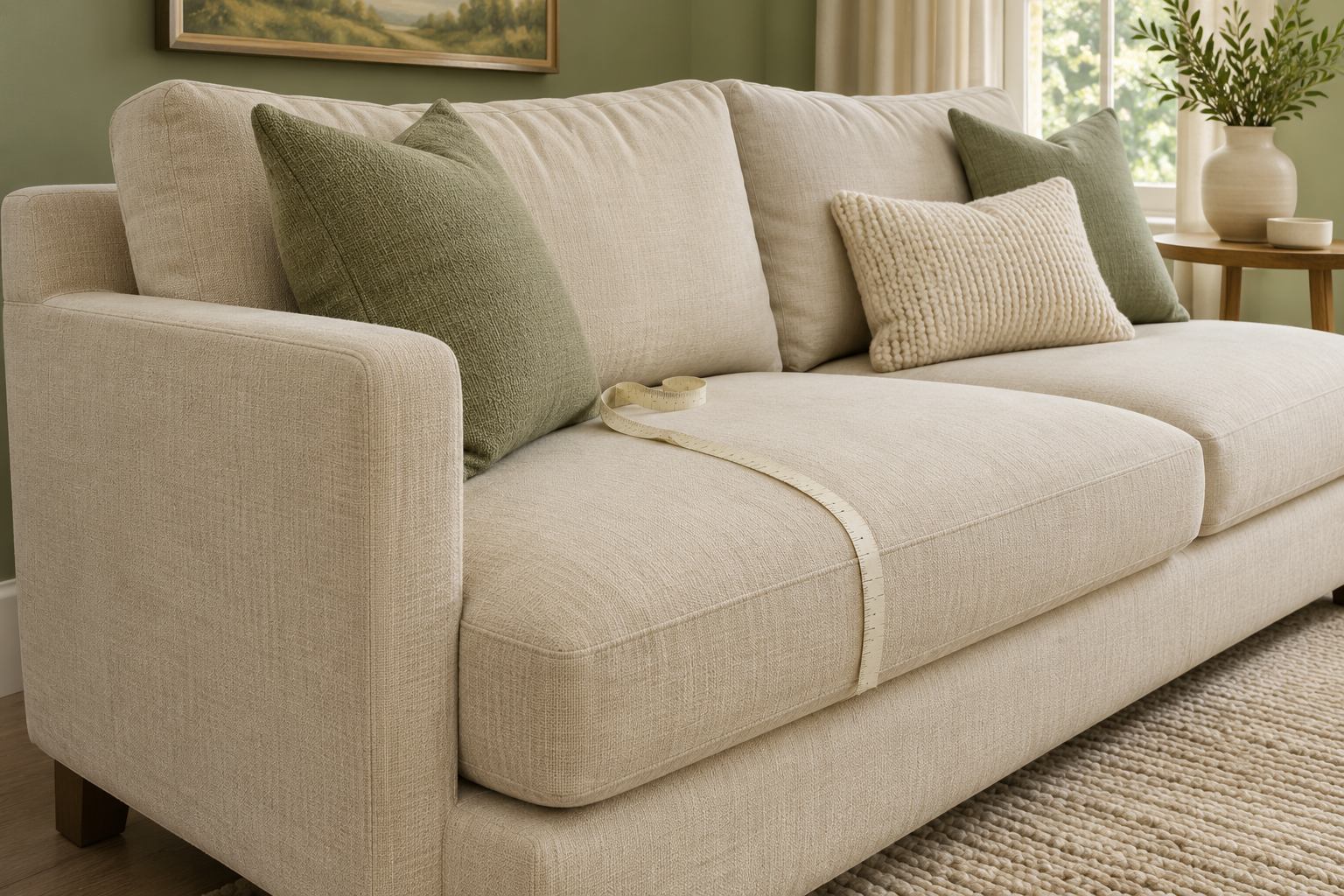
Measure a sofa you already like in the same way. Keep its back cushions in their usual position, then measure from the place your back rests to the seat's front edge. That gives you a personal reference more useful than an internet rule that everyone of a certain height needs one number. Our sofa selection guide shows where this fits alongside room and delivery measurements.
Take the measurement on a level line across the cushion rather than following a curved seam. Note where the back cushion starts when someone sits against it, since a loose cushion can shift forward or compress. If the seller gives a range, ask which configuration and cushion arrangement produced it. Photograph your reference sofa with the tape in place so you can compare the same points later.
Try upright sitting before lounging
Sit all the way back with the supplied cushions in place. Check whether you can sit comfortably without sliding forward or constantly pulling a throw pillow behind your back. Notice how your legs meet the front edge and whether your feet rest where you want them. This is a personal fit test, not a medical assessment or a promise of posture benefits.
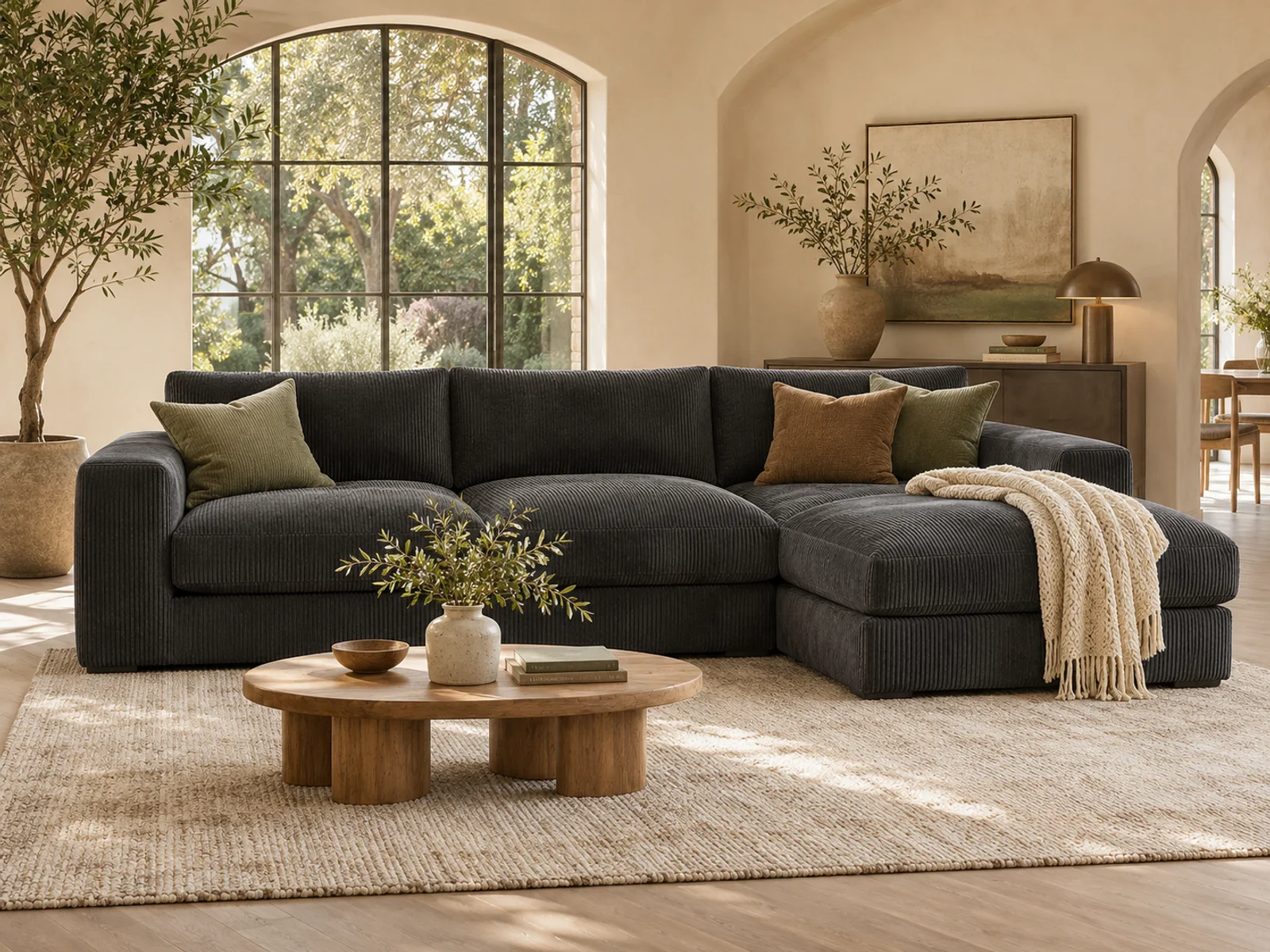
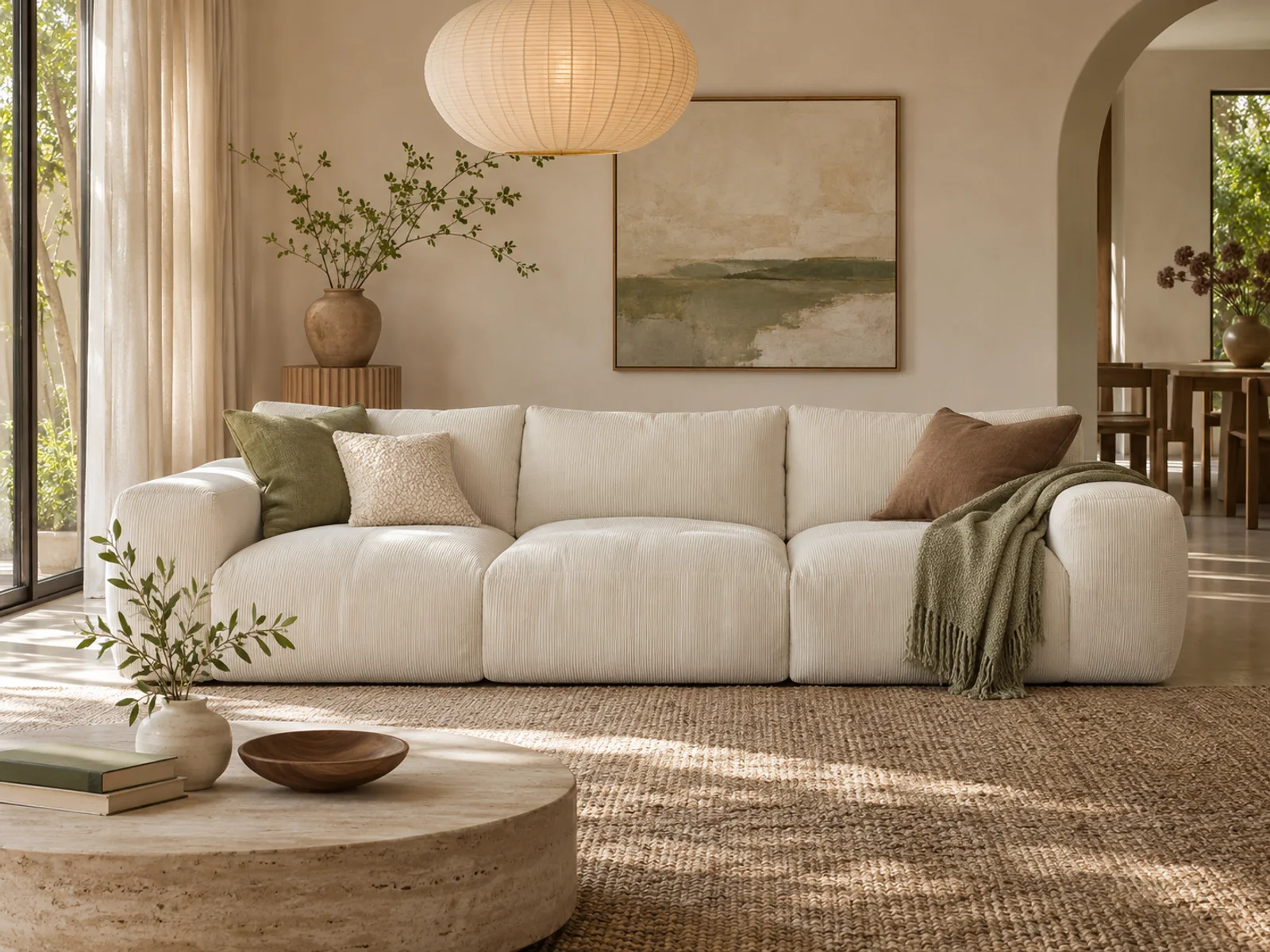
Then try how you actually use the sofa for reading or television. A deeper seat can feel inviting when you curl up or recline, but less convenient when you sit upright for conversation. IKEA's sofa guide describes low, deep seats as more relaxed and higher, narrower seats as more upright. Use that distinction as a starting point, then test the specific sofa.
If the sofa serves several people, have each person try the position they use most. One person's favorite lounge seat may require another to add a back cushion every day. A compromise can be a medium-depth model, a sectional with different seat options, or a separate chair. Do not use a single person's height as the whole household's answer.
Consider seat height, back angle and cushion firmness
The same stated depth can feel different when the seat is higher, the back leans further or the cushions compress more. Ask for seat height and, if available, back height and cushion construction. A soft cushion that sinks during a long sit changes how the front edge meets your legs. A quick showroom perch may not reveal this.
Room & Board's guide separates depth, height and cushion comfort rather than treating them as one score. Use the same approach. Sit, lean back, stand up and return to the seat. If you tend to use a lumbar cushion, bring one of similar thickness or test the arrangement in store.
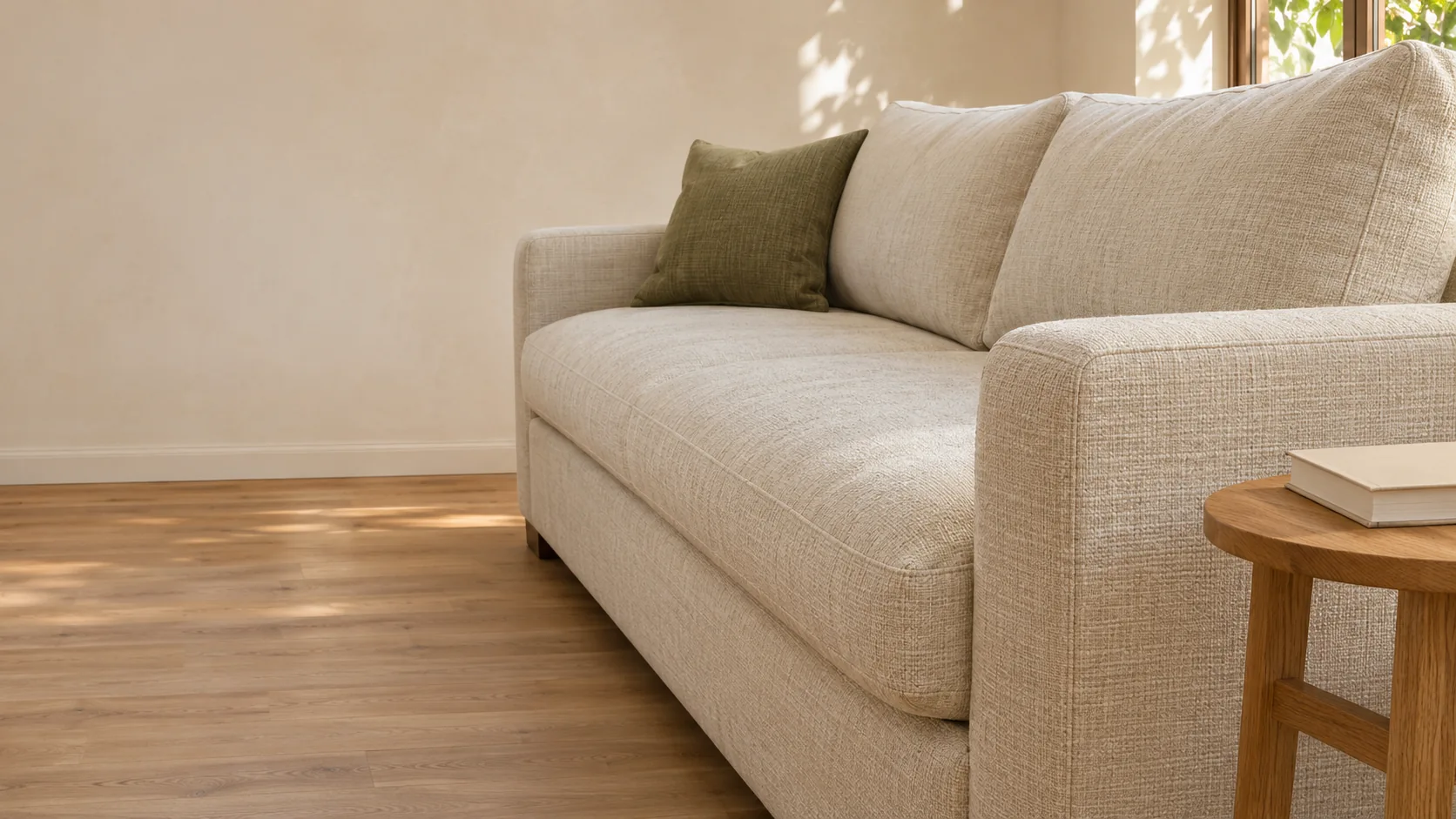
Check the selected upholstery and filling, not just the sample's frame name. A floor model may have a different fabric or cushion option from the one in your cart. Ask whether back cushions are fixed, reversible or removable for cleaning. Our tight-back versus loose-back guide explains why the back construction changes both feel and upkeep.
Measure the whole footprint in the room
A deeper seat generally needs a deeper outer sofa, but the relationship is not one-to-one. Thick back cushions, sloping backs and broad arms use space differently. Put the outside depth, width and height on your room plan. Mark the full outline on the floor with painter's tape and walk past the coffee table, doors and storage that must remain usable.
Crate & Barrel's sofa buying guide recommends recording the room dimensions before choosing a shape. For a sleeper or recliner, measure the open footprint too. A sofa that feels generous in a showroom can crowd a small room once a table, rug and normal walking route are added.
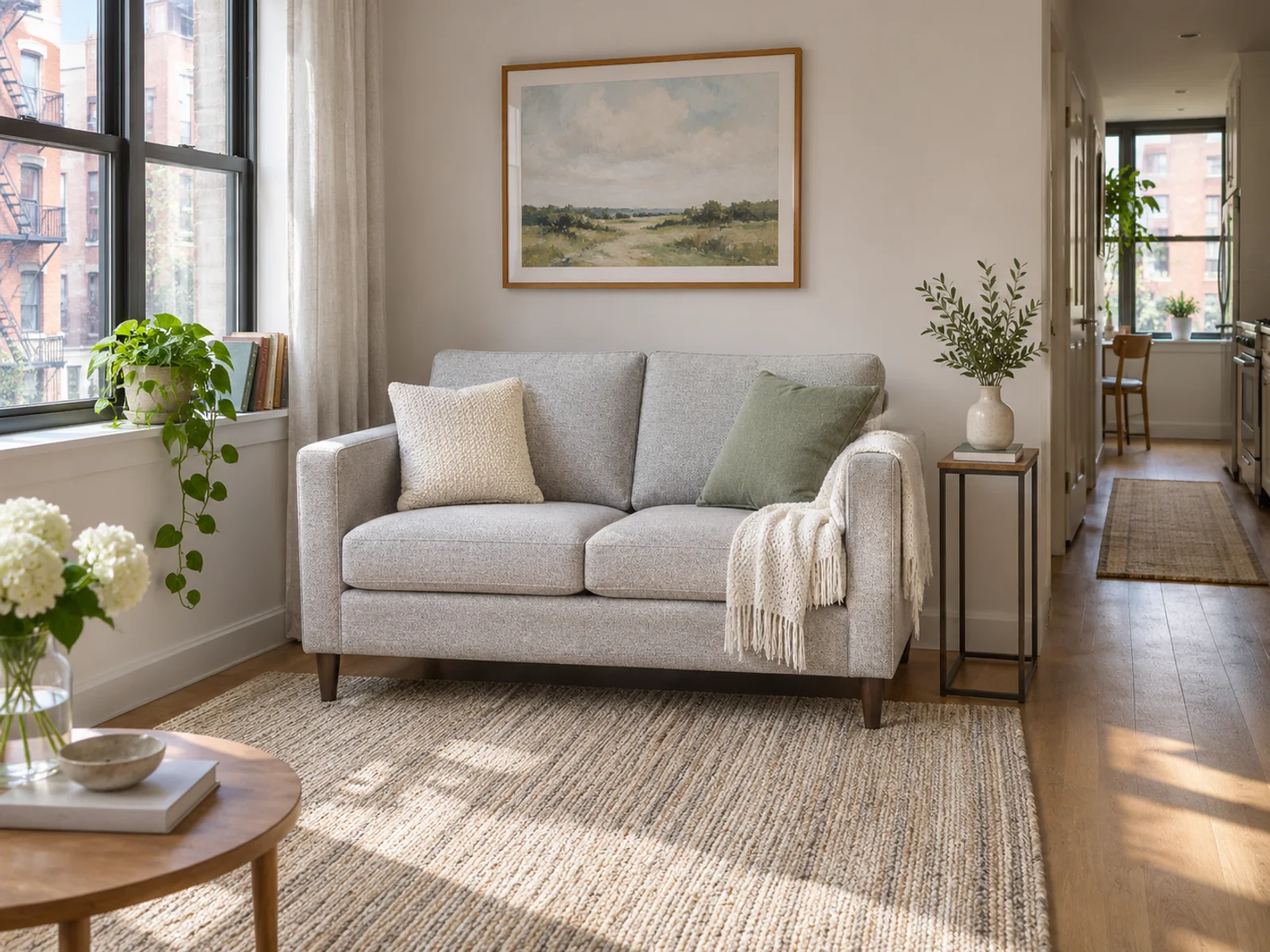
Compare our deep-couch guide with small-space sofas using both usable and outside dimensions. A compact sofa can still have a pleasantly deep seat, while a long sofa can be shallow. Labels such as “apartment-sized” or “oversized” do not replace a dimension drawing.
Use cushion changes as a test, not a rescue plan
A loose pillow behind your back reduces usable depth. Try the exact kind of pillow you expect to use and see whether it stays put, leaves enough room for another sitter and still supports your position after a few minutes. If you always have to build a cushion wall to reach the back, another sofa may be a better fit.
Do not plan to remove structural back cushions to create a deeper seat unless the manufacturer permits that configuration. Even removable cushions may be designed to remain in place during use. Check whether a cushion can be flipped or replaced and what the warranty covers before treating it as an adjustment system.
A bench seat and separate cushions can also feel different at the same nominal depth. The seam position, cushion firmness and back support affect where people settle. Our bench-seat comparison helps you decide whether one long cushion suits how the household uses the sofa.
Shortlist online using comparable measurements
When you cannot sit on a candidate, compare each seller's dimension drawing with a sofa you know. Record the outside depth, seat depth with back cushions, seat height, back height and cushion description. If a field is missing, ask customer support for the exact fabric and configuration. A screenshot of one version may not describe another.
Some product pages clarify whether seat depth includes the cushion. For example, West Elm's Henry sofa specification labels a seat depth “with back cushion.” That wording matters when comparing a listing that measures from a bare frame. Do not transfer a number from that example to a different sofa.
Check return, collection and made-to-order terms before placing a comfort-dependent order. A swatch helps with texture and color, but it cannot tell you how the seat feels after an hour. If possible, test a floor model with the same cushion filling. Save written answers about dimensions and selected options with your order.
Make a small comparison table for two or three candidates. Include your reference seat, the candidate's stated dimensions, what you liked during a sit test, and any unanswered question. A missing number deserves a follow-up, especially when the retailer uses “deep” as a style description. If someone else shares the sofa, record their experience separately rather than averaging two preferences into a fictional ideal.
Make the final seat-depth decision
Choose the candidate that supports your most frequent sitting position while leaving a workable room layout. For a household that alternates between upright conversation and curling up, decide which use matters more and whether a chair, ottoman or different section of a modular sofa can cover the other use.
Write down why the final choice works: “I can sit back without a support pillow; the seat also has room to lounge; the outside depth leaves the table route clear.” This is more reliable than “the deep one felt luxurious.” If the showroom and online specifications disagree, resolve the discrepancy before ordering.
Finally, confirm that the chosen sofa can reach the room. Our sofa delivery measurement guide covers doorways, turns, stairs and the largest delivered piece. Comfort at the final position is only useful when delivery is practical.
Common questions
What counts as sofa seat depth?
It is the sitting space from the back support or inside of the back cushion to the front edge of the seat. Retailers can define the point differently, so ask for a drawing when comparing figures from different sellers.
Keep the supplied back cushions in place for the measurement you will actually use.
Is a deeper seat always more comfortable?
No. Deep seats can favor relaxed lounging but may require some people to slide forward for upright sitting. Height, cushion compression and back angle change the result. Try your normal positions before deciding.
Can a pillow fix a seat that is too deep?
A pillow can reduce usable depth, but check whether it stays in place and still leaves enough seating room. Test the arrangement before relying on it for everyday comfort.
Does overall sofa depth include the back?
Usually it describes the outside footprint from the back to the front, while seat depth describes the sitting space. Confirm the seller's definitions with the product drawing.
What if I cannot visit a showroom?
Measure a sofa or chair you already like, then compare the candidate's seat depth, height, back support and filling. Ask for missing dimensions and review the selected configuration's return terms. A number narrows the shortlist but cannot reproduce a sit test.