
Identify the velvet you own
Find the furniture model and fabric description, including any separate cover instructions. Different fibers and finishes can call for different care. A removable cover is not automatically washable, and advice for velvet clothing does not establish what a sofa can tolerate.
Photograph the label so it stays available when you need it. If the instructions are missing, ask the furniture supplier before attempting a wet clean or hiring an extraction machine.
Separate a spill from a pile mark
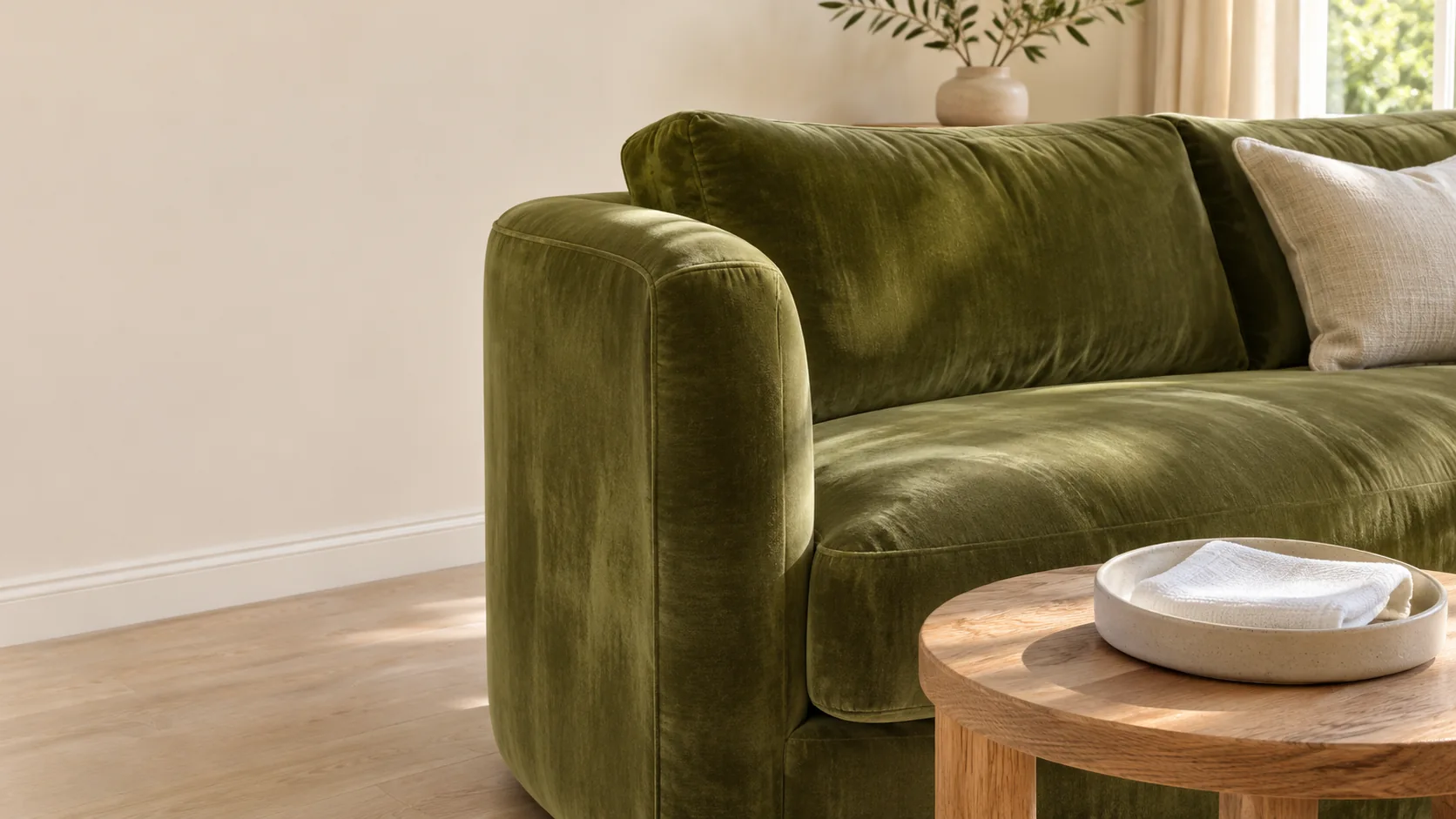
Look at the area from more than one angle. Velvet can show changes in appearance as the pile lies in different directions. A pale patch may need a different response from a food spill, so avoid treating every visible variation as dirt.
For loose dust, use only the gentle tool and method approved for the fabric. Keep rotating brush heads and aggressive rubbing away unless specifically permitted. Work carefully around piping and seams rather than dragging an attachment across them.
Contain a spill without spreading it
Lift loose solids carefully, then blot liquid with a clean white absorbent cloth. Follow the upholstery instructions before adding a cleaning solution. Ashley distinguishes water-based, solvent-based and vacuum-only fabric care, so the word velvet alone cannot choose the cleaner.
Test any approved treatment on the same material in a hidden area. Assess the dry result, including pile and sheen, before working on the visible mark. Avoid saturating the cushion or repeatedly working a stain that is not improving.
Do not assume steam is allowed
Bemz specifically says not to iron or steam its velvet covers. Follow the instructions for your own upholstery rather than transferring a pile-restoration trick from a different manufacturer.
For crushing, rings or a persistent stain, describe the problem and previous treatments to the supplier or an upholstery professional. Keep the seat out of use until any permitted cleaning has dried as directed.
Make future care easier
Keep the fabric code and cleaning instructions with your purchase record. Address spills promptly using the permitted method and check decorative throws for possible color transfer before leaving them against pale upholstery.
If you are comparing a replacement, use our velvet couch guide to check the exact covering and care requirements alongside size and color. A fabric you can maintain confidently is more useful than an appealing finish with unclear instructions.
Find out which velvet is on the sofa
Velvet describes a pile surface, not one fibre or cleaning method. Cotton, synthetic and performance velvets may have different care codes. Find the furniture label and ask the maker about the exact upholstery before introducing moisture or steam. Ashley Furniture's care guidance and Bemz's cover advice show how instructions can depend on the product. A technique that works on a removable cover may be wrong for a fixed couch.
Separate a pile mark from a stain
Velvet can appear darker when the pile is pressed in a different direction. Check the mark from several angles and under different light before applying cleaner. If it is a spill, blot without rubbing and follow the care code. Test any approved product in a hidden area, then let the surface dry fully to judge colour and texture. A wet patch can make a harmless pressure mark look worse. Do not assume a steamer is safe because it lifts a pile on another fabric.
Use gentle routine care
Remove loose debris with the maker-approved brush or upholstery attachment, following the nap rather than dragging against it. Keep a throw where pets regularly sit if the fabric tolerates it. Avoid strong sunlight where possible and respond promptly to spills. If the pile becomes shiny, matted or colour changes after cleaning, stop and ask a specialist. Repeated pressure or chemical treatment can damage the surface more than the original spot.
Keep a care record with the furniture
Photograph the code label and keep the product name, fabric sample and any cleaning receipts. Note which spots were treated and how they looked after drying. This prevents a future cleaner from applying a second chemical without knowing the first. If the cover is removable, store the washing instructions separately from the sofa frame guidance. A visible zipper does not by itself authorise machine washing or tumble drying.
Common questions
Can I steam-clean a velvet sofa?
Only when the manufacturer explicitly permits the process for that upholstery. Some velvet suppliers prohibit steam. Check the exact model and fabric instructions before using either a garment steamer or an upholstery extraction machine.
Can velvet cushion covers go in the washer?
Only if their care instructions say so. A zippered cover may be removable for manufacturing or repair rather than washing. Follow the stated wash, drying and refitting method for the complete cover.
Why does clean velvet still look patchy?
The pile can reflect light differently depending on its direction or compression. View the area from several angles before treating it as a stain. Ask the supplier for its approved pile-care method.
Should I scrub a dried spill?
Avoid aggressive scrubbing, which can change the pile or spread residue. Identify the substance and follow a fabric-approved treatment. Seek professional advice when the care label is missing or a previous attempt has altered the surface.