Keep the mark contained
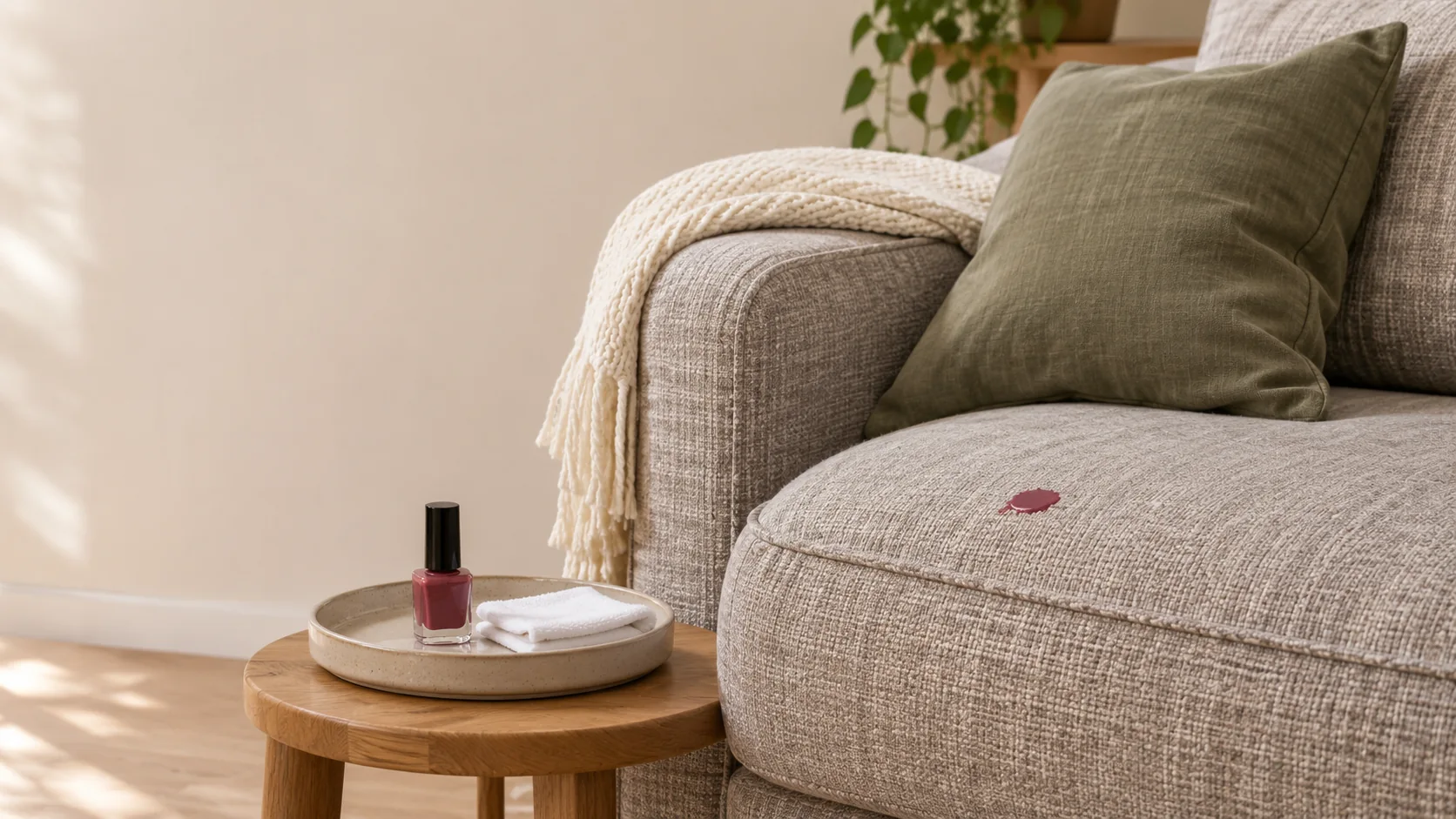
Move the bottle away and keep the affected seat clear. If there is free wet polish on top, gently lift it with a clean absorbent white cloth without dragging it into the surrounding fabric. Do not scrub or press it deeper into the weave.
Leave dried polish alone if lifting it pulls the fibers. Avoid scraping with a sharp blade. Photograph the area and retain the polish packaging so a cleaner can identify what was spilled.
Why remover is not a universal answer
The University of Georgia's fiber guide warns that acetone destroys acetate. Other parts of a sofa, including dyes, coatings and nearby finishes, also need compatibility checks. An acetone-free cosmetic remover is not automatically an upholstery cleaner.
Read both the fiber information and the furniture care directions. A solvent-cleaning code does not establish that every solvent is acceptable. If the material is unknown, pause before applying one.
Use only an approved stain procedure
Sunbrella's stain chart includes a specific solvent stage for nail polish on compatible Sunbrella fabric. That material-specific instruction is not a general recommendation for a couch. The furniture construction and current product directions still matter.
If the manufacturer permits a treatment, test it in a hidden area and inspect it after drying. Follow its quantity, ventilation and residue-removal instructions. Keep solvents away from ignition sources and never mix cleaning products.
Stop before the repair becomes larger
Stop if dye transfers, the surface becomes sticky, the pile changes or the mark spreads. More pressure or more solvent is not a reliable next step. Tell a professional exactly what has been applied and where.
Polish can leave pigment even after some residue is removed. A permanent change to the cover is also possible, so complete removal should not be promised. Panel replacement may be worth discussing if cleaning is unsuitable.
Keep the next manicure off the upholstery
Use a stable work surface and a suitable protective layer for polish and remover. Keep open bottles away from cushions and wood furniture finishes. Store them before sitting down again.
For ordinary cushion care between incidents, see how to clean couch cushions. A stain-specific problem needs more information than the sofa's color or its broad fabric label.
Contain the spill without adding solvent
Lift any wet polish carefully with a clean white cloth or suitable blunt edge without spreading it. Do not reach for acetone until you know the fibre, dye and upholstery code. Nail-polish remover can dissolve finishes and move colour, leaving a larger permanent patch. University of Georgia Extension's fibre guidance shows why textiles respond differently. Photograph the mark and find the furniture maker's care directions before choosing a treatment.
Ask for a compatible stain procedure
If the maker permits a particular solvent treatment, test it in a hidden area and follow its instructions exactly. Keep the cushion filling protected and use minimal product. Sunbrella's fabric guide is relevant only to confirmed Sunbrella upholstery; it is not a general permit for bleach or solvent. For delicate, valuable or unknown fabric, contact a professional cleaner and tell them whether the polish has dried and what has already touched it.
Judge the dry surface before repeating
When the area is fully dry, inspect colour, texture and any ring under good light. A faint polish spot may be less damaging than repeated solvent use. Do not rub a hardened patch with a sharp tool, which can cut fibres. Keep the sofa out of use while a permitted cleaner evaporates and follow ventilation directions on its label. Move future manicures to a protected hard surface rather than relying on an upholstery-cleaning shortcut.
Keep product labels for the cleaner
If professional help is needed, bring the polish and remover names or photographs of their labels. Different formulations can change what a cleaner should try. Note whether the stain was wiped, blotted or allowed to dry, and whether any water was added. Avoid covering the spot with a wet towel while waiting; trapped moisture can create a second ring. A clear history helps the professional judge whether the remaining colour is polish, damaged dye or altered fabric finish.
Common questions
Can I use acetone on a couch?
Only when the exact material and furniture instructions explicitly permit the process. Acetone can destroy acetate and affect other finishes. If the cover is unidentified, obtain professional advice before applying any remover.
Is acetone-free remover safer for upholstery?
Not automatically. It contains other ingredients intended for cosmetic use, and those still need compatibility checks. Read the furniture's approved treatment instructions rather than choosing a remover solely from its front label.
Should I scrape dried nail polish off?
Do not use a sharp blade or pull at bonded polish. Stop if the fibers move with it. A cleaner can assess whether controlled removal is feasible without creating a tear or changing the surface.
Will the color disappear once the polish is removed?
Not necessarily. Pigment or a material change may remain after some residue is lifted. The outcome depends on the cover and previous treatment, so avoid any method that promises a guaranteed complete result.