
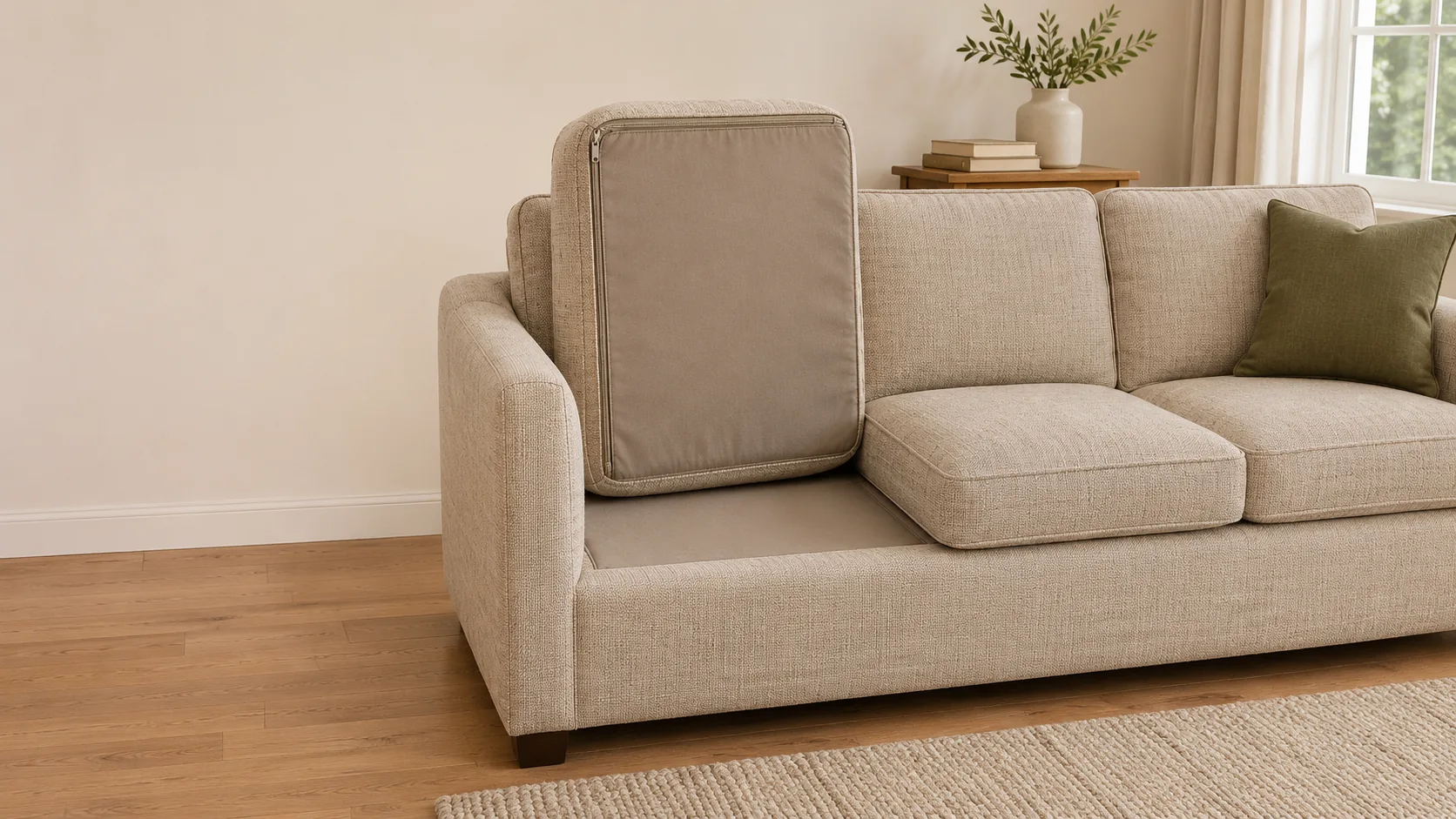
Map the cushions before lifting them
Take a photograph of the assembled sofa. Note left, middle and right positions and any shaped corners. Look for different underside fabric, zips, grip panels or attachments that determine how each cushion belongs.
A removable cushion is not necessarily reversible. A T-shaped end cushion may not fit on the opposite side, and a patterned cover may have an intended direction. Keep these details separate from whether the cover can be removed for servicing.
Translate the care instructions into exact moves
Room & Board's upholstery care page recommends regular attention to removable cushions. For your own sofa, ask which specific moves are approved rather than applying another maker's general routine.
Write a simple position map if the instructions are easy to confuse. For example, record that two matching center cushions may exchange places while shaped end cushions remain where they are. Treat that as a example layout until your supplier confirms it.
Check the seat platform while it is accessible
Remove loose debris using the approved upholstery attachment and setting. Inspect attachments without pulling on them and make sure no small objects sit beneath the cushion. Return every piece to a permitted position.
Compare the seams and front edges after replacing the cushions. If the cover is twisted or the cushion no longer sits flat, correct the fit according to the instructions rather than forcing it beneath an arm.
Track changes instead of hiding them
Rotation is routine maintenance, not a cure for a damaged interior or support system. Note a hollow, broken zip or uneven filling that remains after the approved reset. Ask about replacement parts if needed.
Our cushion layout comparison covers the practical differences between formats. For persistent unevenness, use the sagging couch guide to separate cushion concerns from frame or suspension problems.
Check whether the cushions are reversible
Look for zips, fabric on both sides, fixed attachments and manufacturer instructions. Some sofa seats are shaped to fit only one location or have a show face on one side. Do not flip a nonreversible cushion to hide wear. Room & Board's upholstery care guide recommends rotating where the design allows; follow your own sofa's construction first.
Make a simple rotation plan
If the maker allows it, swap similarly sized seats between positions that receive different amounts of use. Keep left and right shaped pieces in their intended positions. Check that seams, labels and cover closures sit correctly after moving. For back cushions, fluff or reshape using the approved method before replacing them. A dated phone reminder can make the routine more consistent than waiting until one spot looks compressed.
Watch for uneven support
Rotation may spread ordinary wear, but it will not repair a broken spring, sagging frame or failed foam. If one position stays low regardless of which cushion sits there, record that observation and ask the retailer to assess the sofa base. If one cushion alone stays low wherever you move it, ask about that cushion's filling or replacement options.
Common questions
How often should I rotate cushions?
Use the interval recommended for the exact sofa and filling. If none is given, ask the supplier for a routine based on your configuration. Avoid inventing a schedule that requires moving non-interchangeable parts.
Can I flip a cushion with a different underside?
Do not assume so. The underside may be designed for grip or attachment rather than use as a seat. Check the manufacturer's instructions before placing that surface upward.
Will rotation remove a permanent dip?
It may redistribute ordinary use where the design permits, but it cannot guarantee a repair. A persistent dip can involve the interior or support beneath it. Document the change and have the cause checked.
Can I flip every cushion?
No. Check whether both faces are upholstered and the maker permits flipping.
How often should I rotate them?
Use the maker's schedule or a routine that fits your usage; there is no universal interval for every filling.
Will rotation fix sagging?
It can distribute normal wear but cannot repair damaged support or failed filling.
What if cushions are different shapes?
Only interchange cushions that are designed to fit the same positions. Keep shaped or fixed pieces where specified.