Fit each side independently
Measure the sofa arms, available floor space and any nearby door. One side may need a narrow table while the other has room for a larger surface. Do not sacrifice a useful route merely to make the pair symmetrical.
Use the side table height guide to test seated reach. A pair that looks balanced from the doorway can still be awkward if one top is far below the arm or too distant from the seat.
Choose one connection between the tables
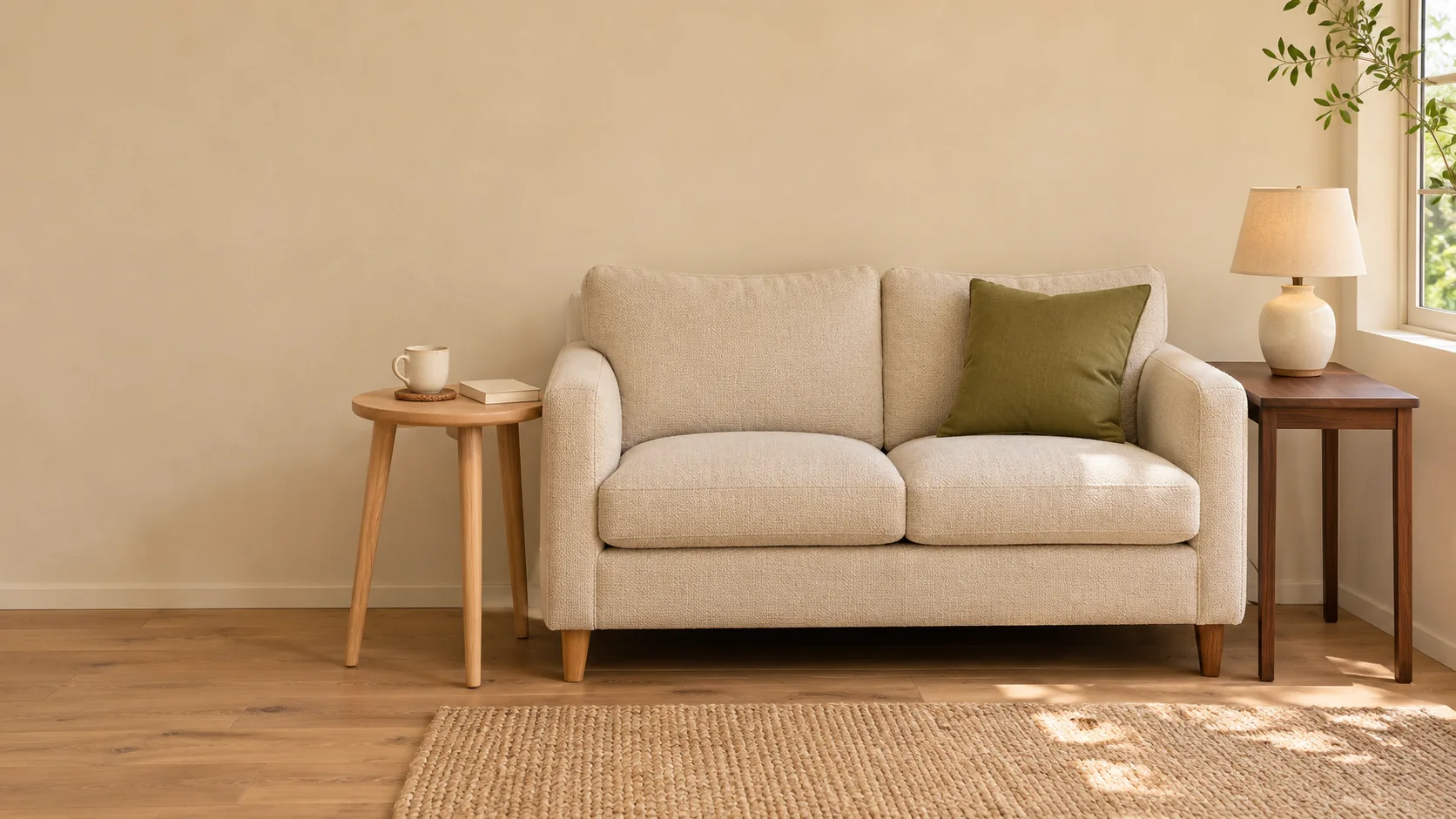
A round oak table and a rectangular walnut table might connect through simple shapes or similar proportions rather than matching color. Alternatively, two different shapes can share the same metal finish.
Room & Board's advice on mixing woods supports combining different wood tones. For this pairing, treat the result as a room-specific styling decision rather than a formula that makes any two tables work together.
Balance what sits on them
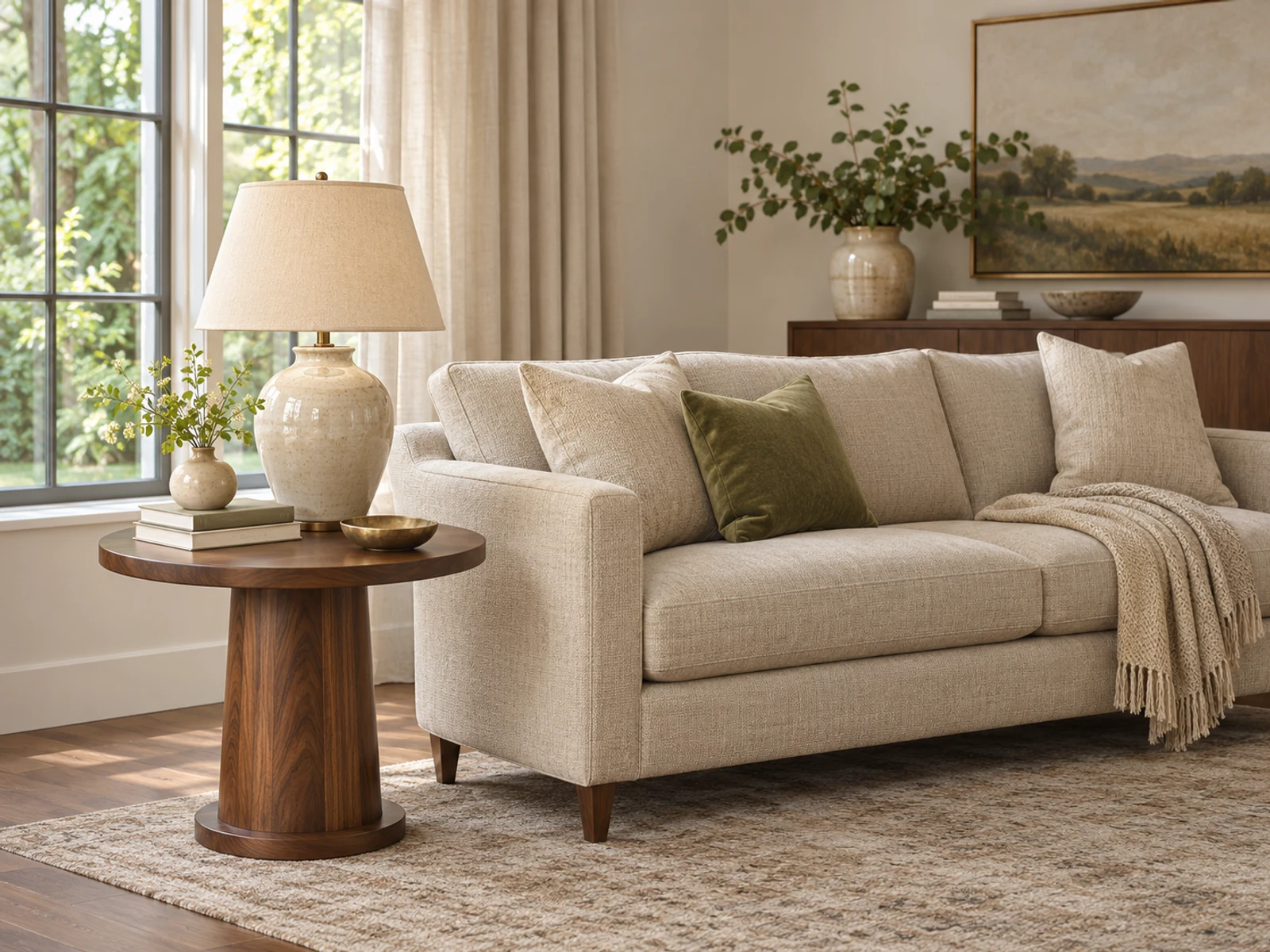
If one table is visually substantial, keep its accessories quieter and compare a lighter arrangement on the other side. Lamps can differ, but check the light they provide and their scale from the seats.
Place lamp bases fully on the tops and keep cords out of walking routes. Leave room for the things people actually put down. A decorative stack that must be moved whenever someone has a drink is working against the table's purpose.
Check the group from several positions
Look from the entrance, the sofa and the opposite chair. Notice whether one table blocks the view or feels crowded beside an arm. Move small accessories before deciding that another furniture purchase is needed.
Browse round side tables and wood tables once you know the size each side needs. A deliberate mismatch should make the room more useful as well as more varied.
Give each table a job
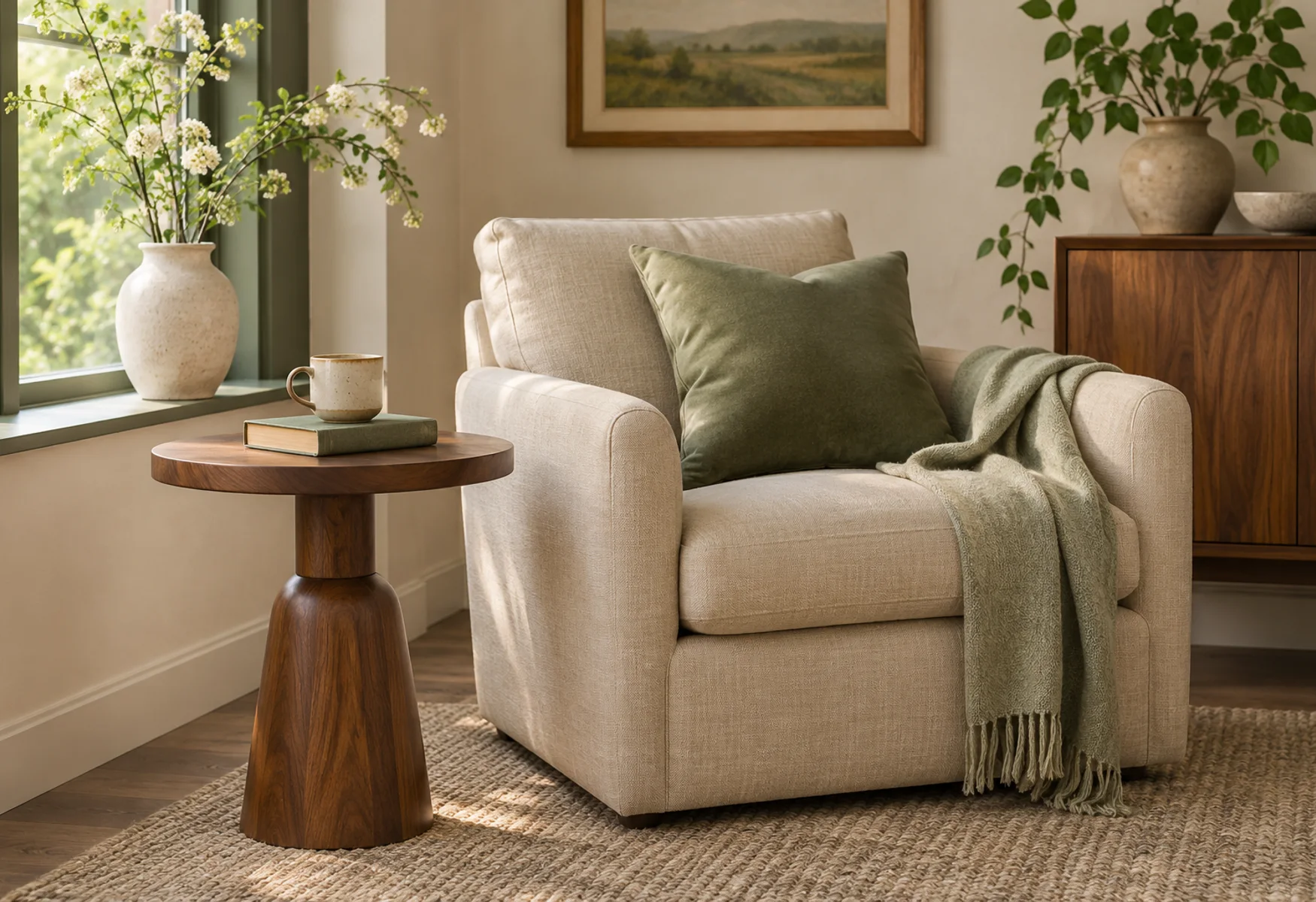
Different side tables can work well when each serves its adjacent seat. Check height, reach and top space from the sofa and chair rather than trying to make both identical. One may hold a lamp and book, the other a drink and remote. Measure walking space around each base. A low decorative stool is not a useful table if someone must bend awkwardly for a cup. Try temporary surfaces at the proposed heights before buying another piece.
Find one visual connection
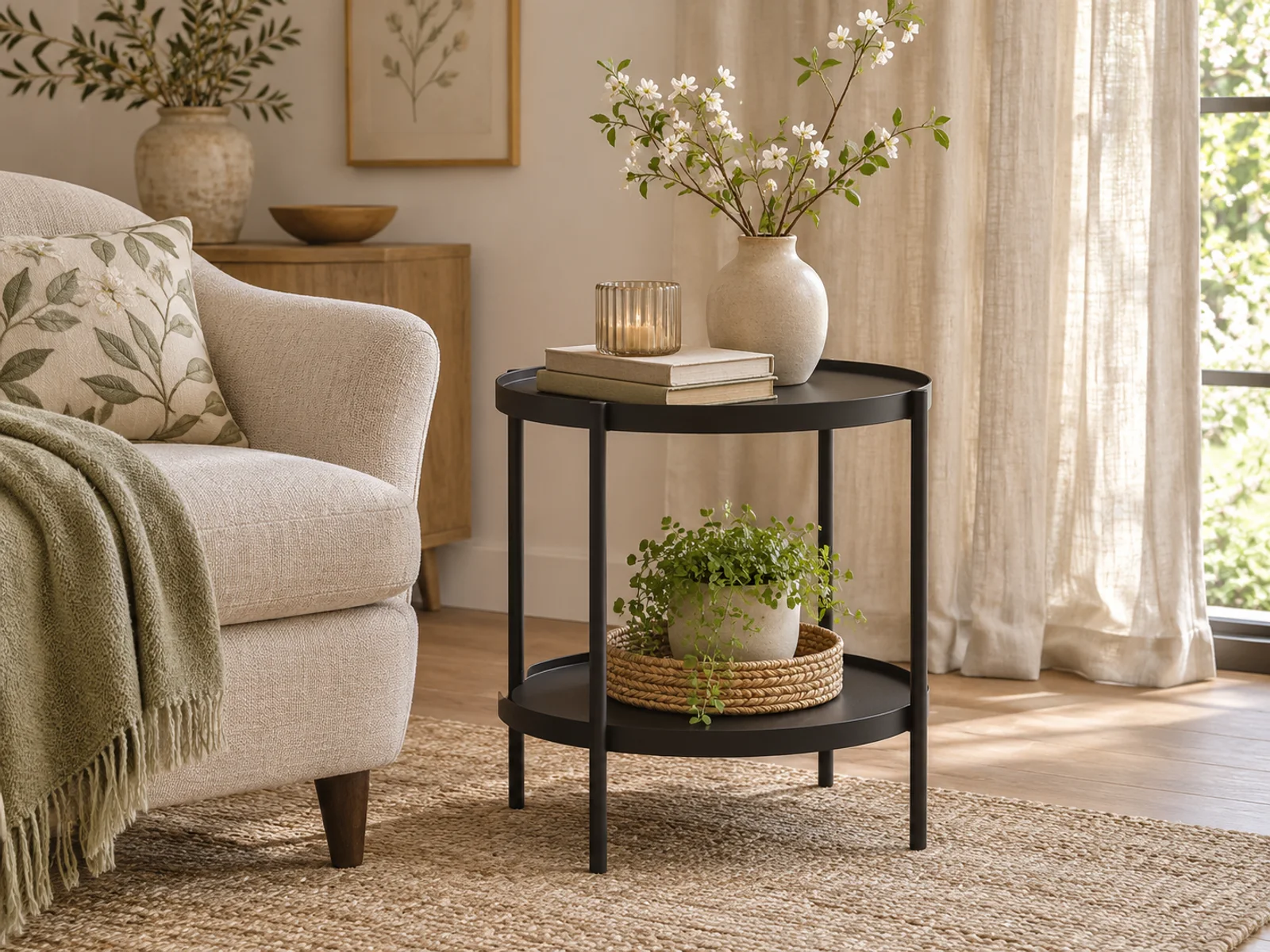
Repeat a finish, shape or material in a small way. Two tables can have different forms while sharing a dark metal leg or warm wood note. A tray or lamp can link them without hiding their differences. Test samples in the room's actual light; a near match that is slightly off can look less intentional than a clear contrast. Keep tabletops restrained so the mismatched shapes do not become visual clutter.
Check stability and cleaning separately
A pedestal table, three-legged stool and open shelf have different balance and care needs. Follow each maker's load guidance, especially for tall lamps or heavy plants. Use floor protectors suited to the surface and check whether a moving chair catches a table edge. If one table is an older item, inspect joints before placing a breakable object on it. A successful pairing is useful, stable and easy to live with, not just an interesting photograph.
Common questions
Must mismatched tables have the same height?
No. The adjacent seat and task determine a useful height. Compare how each works in use, then judge the visual relationship with lamps or other objects in place.
Can one side have a table and the other have none?
Yes, if the seats still have useful access to a surface where needed. Symmetry is optional. Avoid adding a table that narrows a doorway solely to complete a pair.
Should the lamps match instead?
They can provide a repeated element, but matching lamps are not required. Check base size, light direction and cord routes first. Similar visual weight may be enough even when the lamp designs differ.
Do they need the same height?
No. Each should suit the adjacent seat. If heights differ greatly, repeat another element such as colour or material to connect the pair.
Can one be a stool?
Yes if it is stable and rated for the objects placed on it. A seat is not always a safe surface for hot drinks or a heavy lamp.
Should lamps match?
Not necessarily. Compare light level and shade height from the seats, then use shape or finish to make the group feel coherent.
How many objects should sit on each?
Leave usable space for the table's daily job. A lamp, coaster and book may be enough; crowded tops make the room harder to use.