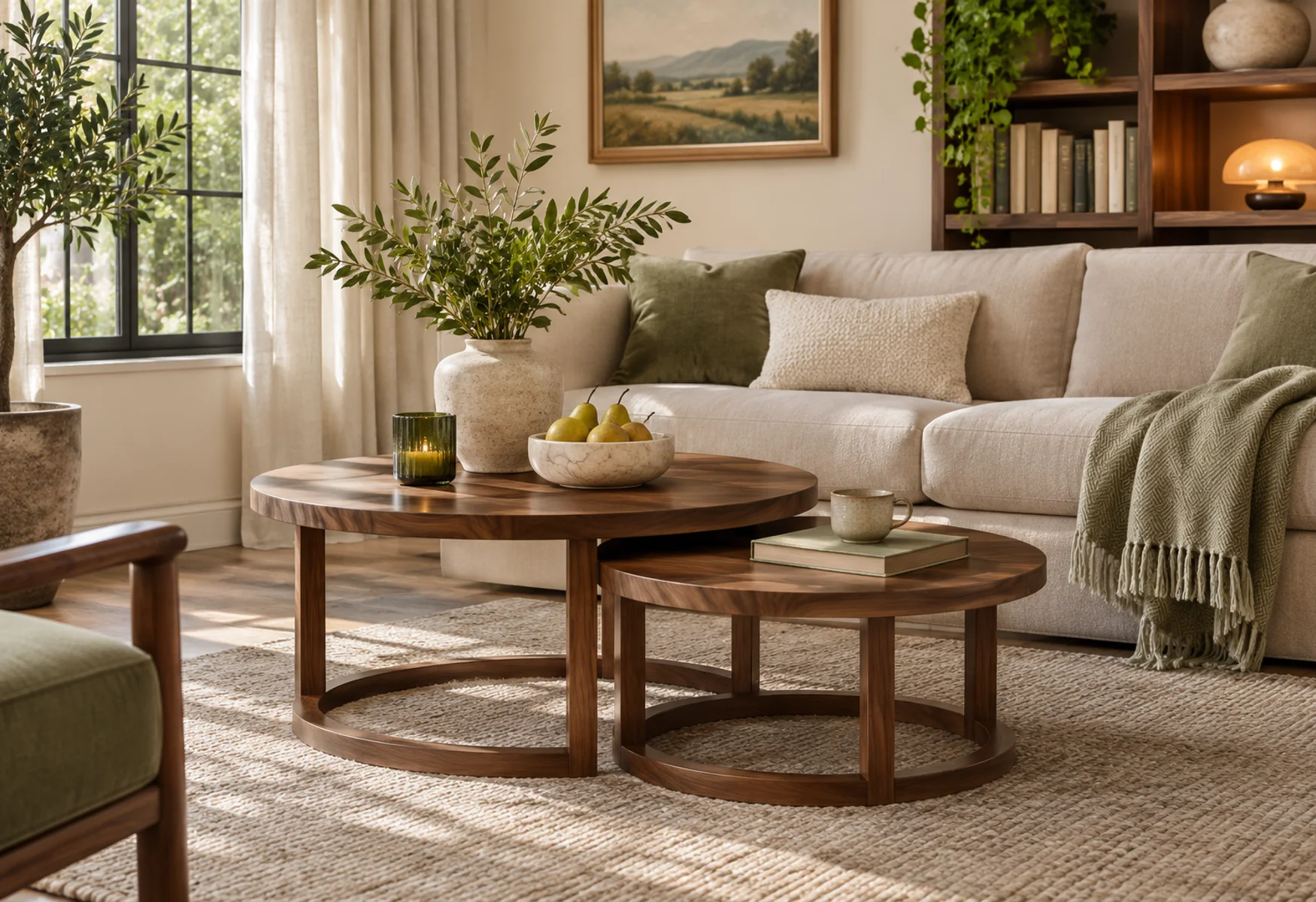
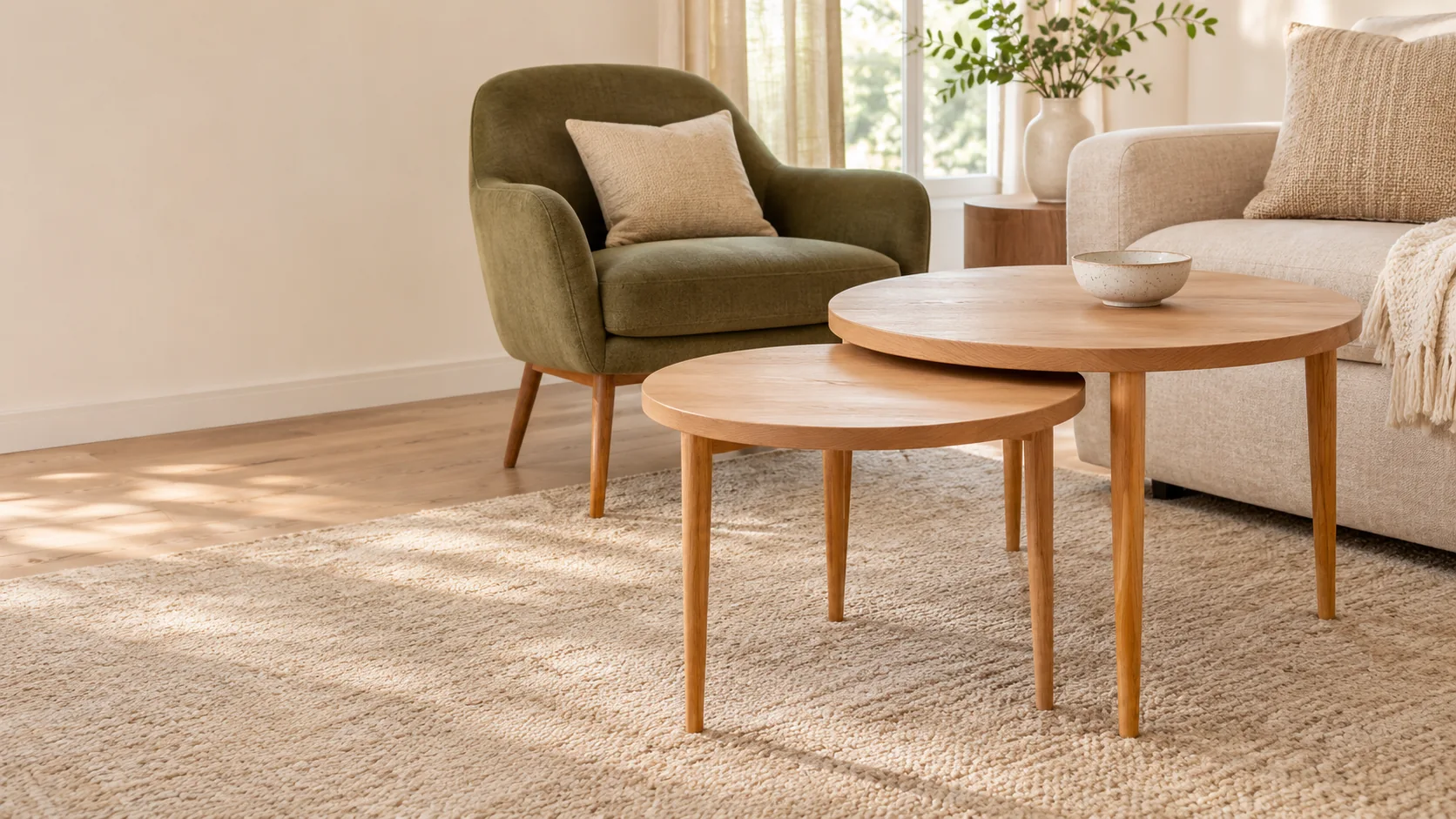
Check what nested means for the set
Some tables slide almost completely under one another. Others overlap only partly because of their legs, rims or different shapes. Look at a side view and ask for the dimensions of the set in its stored arrangement.
Crate & Barrel's guide presents paired or nesting tables as a way to add surface area. That extra area is useful only when the individual pieces can fit where you need them.
Plan the everyday arrangement
Decide which top will hold the items used daily. If a lamp or tall object sits on the larger table, check that pulling the smaller piece out will not disturb it. Leave enough access to grip and move the table safely.
A set placed in a tight corner may look compact but be awkward to separate. Mock up the movement as well as the final footprint. Check whether legs need to slide over a rug edge.
Give the smaller tables destinations
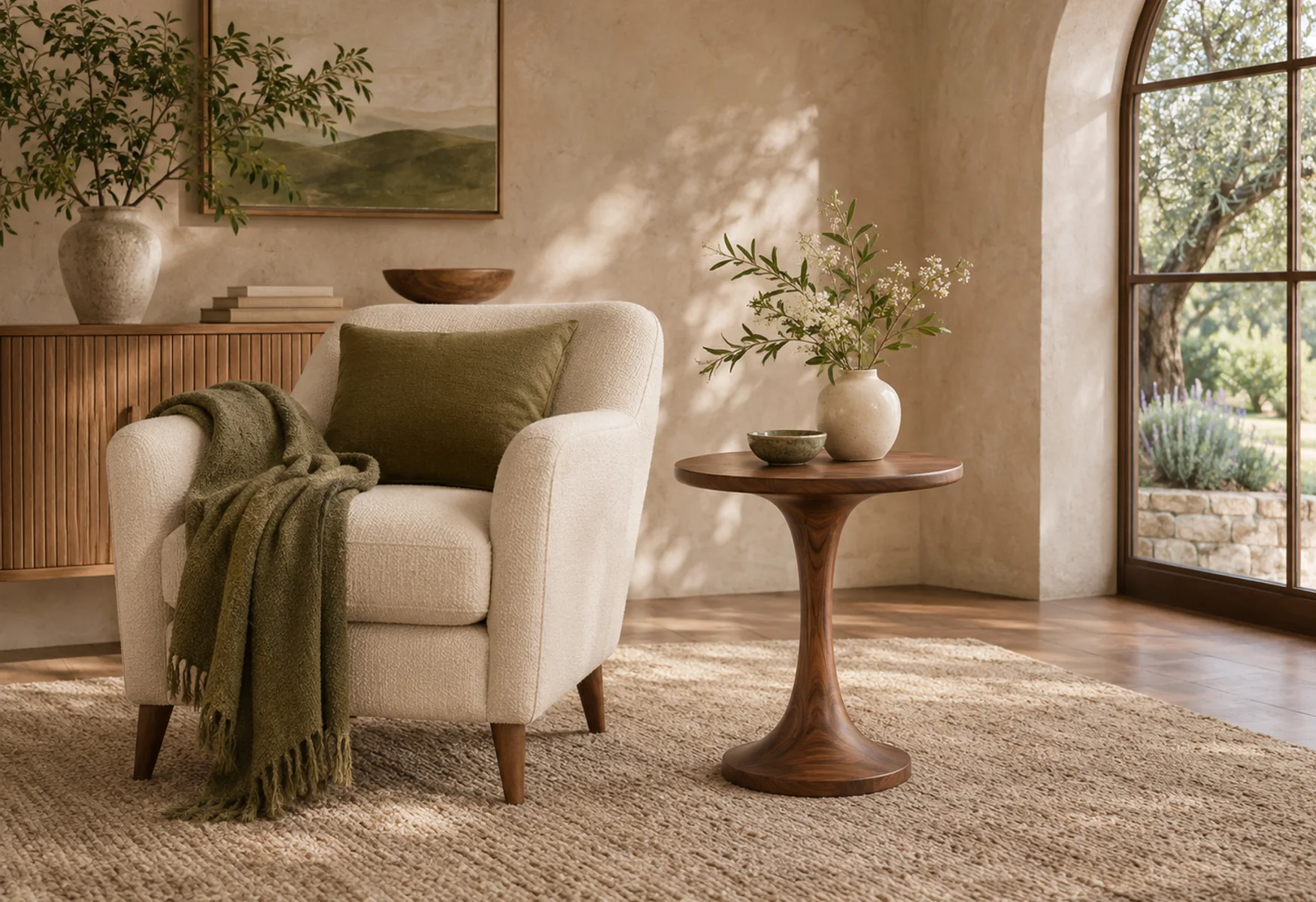
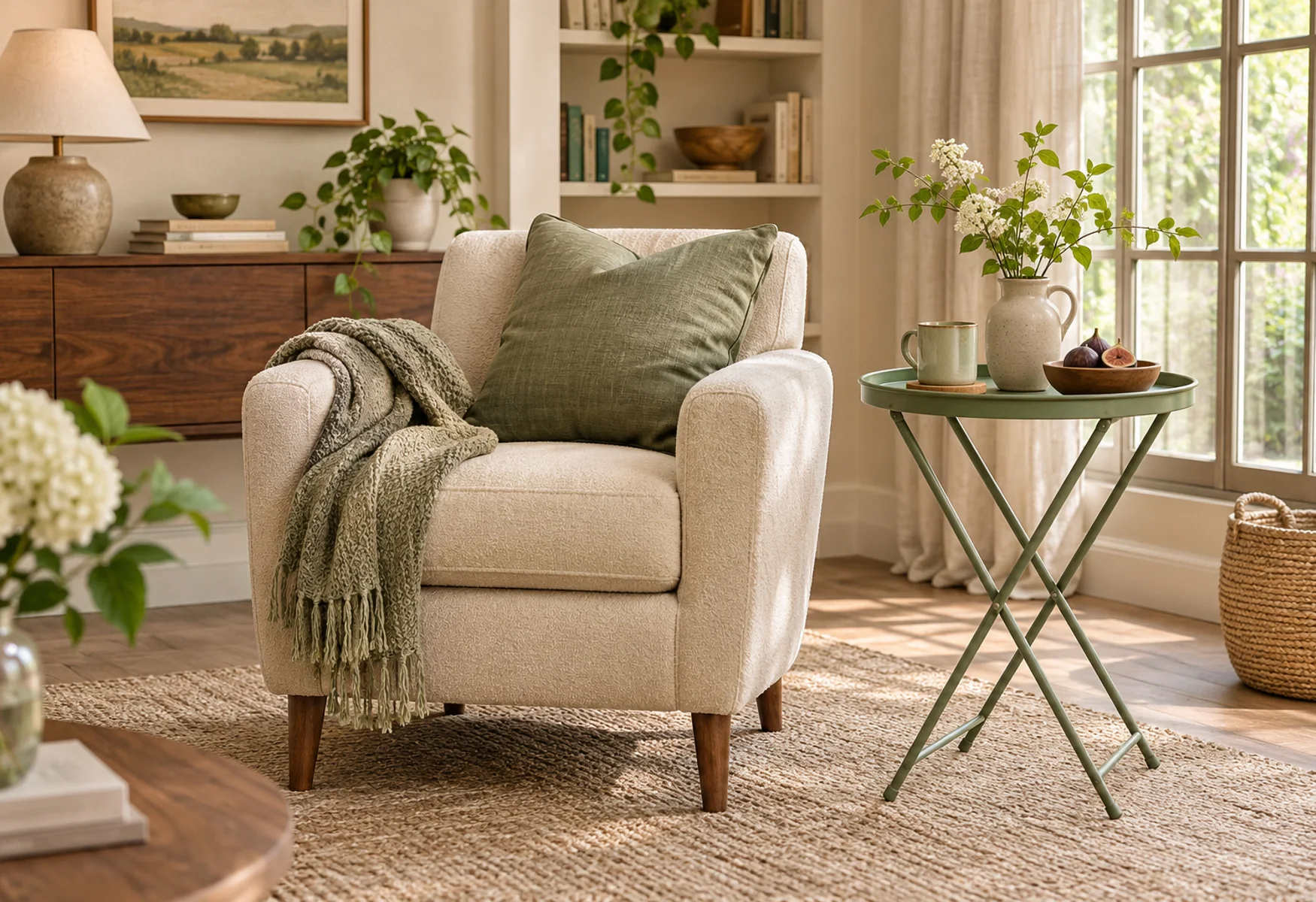
Choose a position beside the guest chair or another seat before guests arrive. Compare each top height with the adjacent seat or arm. The smallest nesting table may sit too low for the purpose you imagined.
Our side table height guide explains that reach check. If the pieces are mostly decorative at their separated positions, a single larger table may be more useful.
Check stability and handling
Look at the base, weight and permitted loads for every piece. A narrow table can be easy to move without being suitable for a heavy lamp. Avoid judging stability from the nested arrangement alone.
Use the manufacturer's handling instructions. Do not lift the whole set by one tabletop unless that is explicitly permitted. Check whether the material needs protection when one piece slides close to another.
Compare the set with simpler alternatives
Calculate the floor space occupied when all pieces are in use. If they crowd the room, a small side table or a folding surface may serve the occasional need better. Include the storage location for a folding option in that comparison.
Browse nesting coffee tables and folding side tables after deciding how often the layout will change. Flexibility is useful when the movement is convenient enough to become a habit.
Plan each table's normal home
Nesting tables save space only when the smaller pieces have a useful destination when pulled out. Measure the stacked footprint and each separate top. Place tape outlines beside the sofa, chair and main walking route. Check whether the small table can carry a lamp or cup without wobbling. Some sets have a narrow base that becomes unstable on a thick rug; test the intended floor. If every table needs to stay out all evening, compare the total footprint with one well-sized coffee table.
Check how the pieces slide together. A sharp metal edge or tight clearance can scratch a finish when the set is nested daily.
Use them for flexible tasks
A smaller table can serve a guest chair or a game night without making the centre of the room permanently crowded. Decide what is stored on the top when the tables are nested so it does not have to be cleared each time. Read the maker's load and heat guidance; a petite table may not be rated for sitting or a heavy plant. Use coasters suitable for the finish and keep cords away from tables that move often. A flexible set works best when moving it is simple and safe.
Common questions
Can all nesting tables be used separately?
Check the product instructions. Many sets allow it, but confirm each piece is stable and intended to stand alone. Do not assume an overlapping support is independent without checking.
Are nesting tables always smaller than one coffee table?
No. The grouped footprint can be substantial, and the spread-out arrangement uses more space. Compare both layouts with the single table you would otherwise choose.
Can the smallest table go beside a chair?
Yes, if its height, top size and base suit that position. Test seated reach and ensure the surface is stable enough for its intended objects. A low nesting piece may work better elsewhere.
Do nesting tables always save space?
Only when they spend meaningful time stacked and the stacked base fits the room. Measure both the stored and expanded layouts before buying.
Can I put a lamp on the smallest table?
Check its weight rating, top size and stability on the intended floor. A tall lamp on a narrow base can tip, especially where children or pets pass.
Can the small tables go on a rug?
Test their stability on the actual pile and pad. A narrow leg or base can wobble, especially with a tall lamp or hot drink. Use the maker's load guidance.
Should I match them to the coffee table?
They need not match exactly. Repeat a material or finish so the group feels connected, then choose dimensions and function that genuinely help the seats.