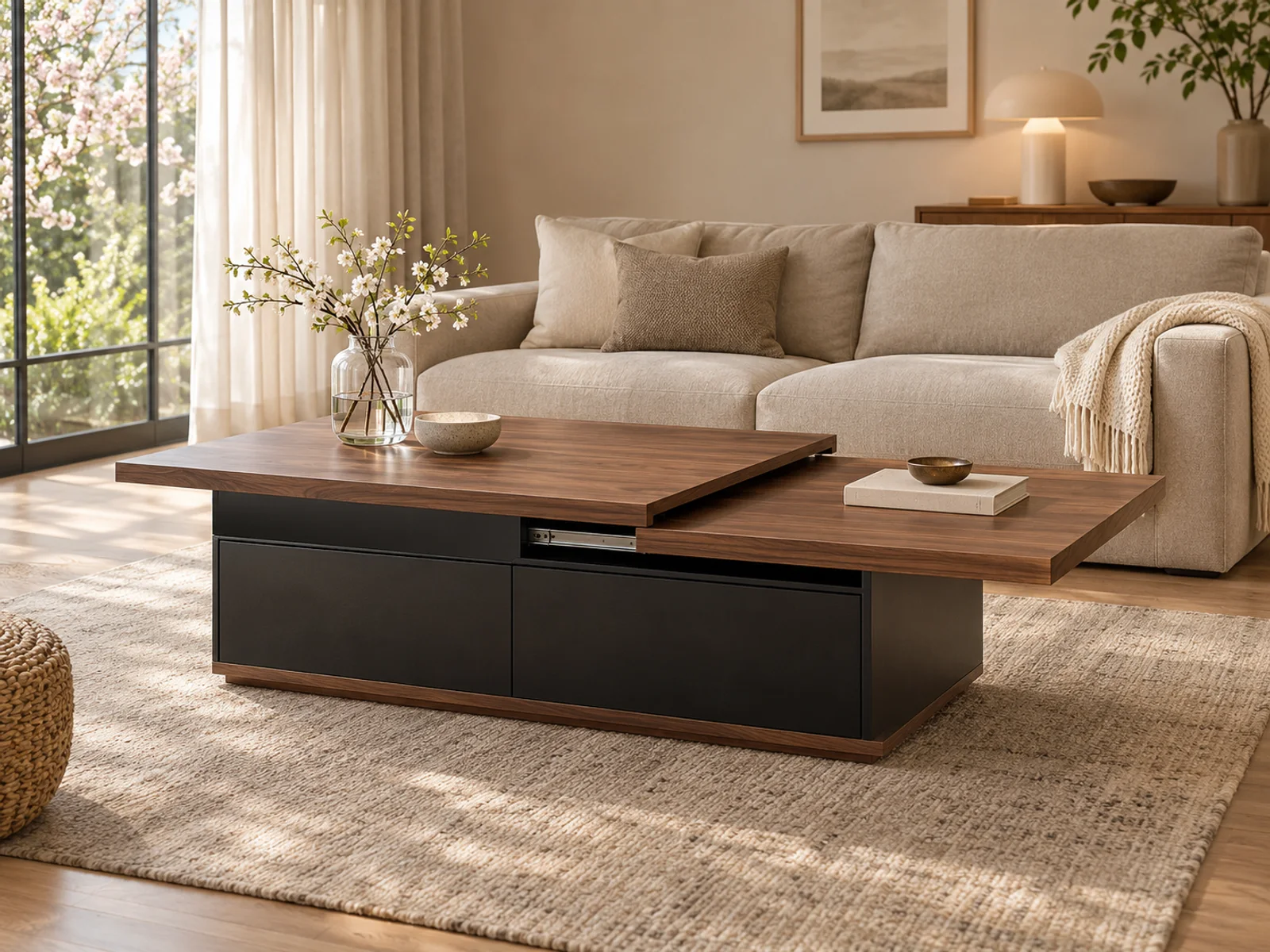
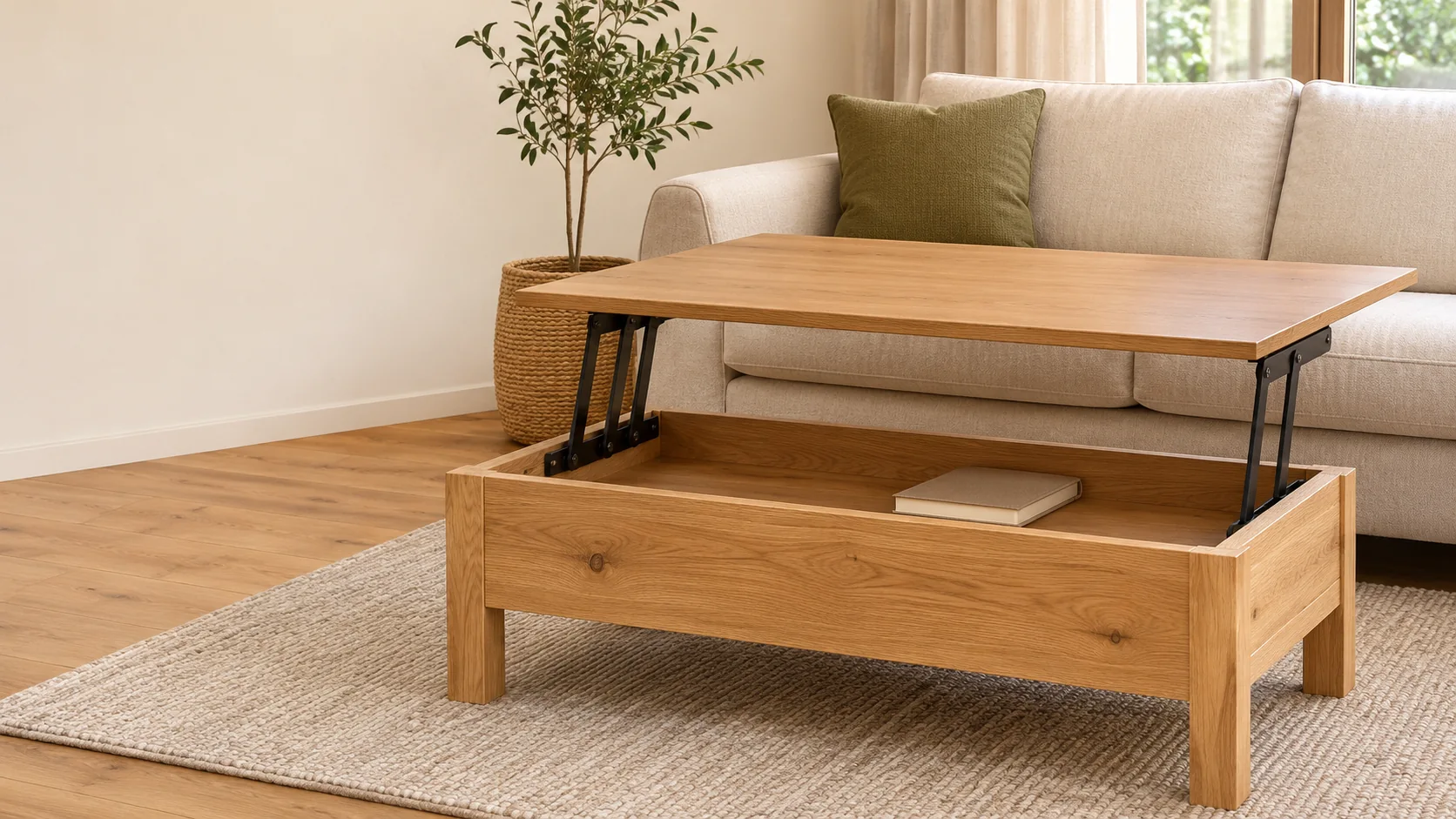
Define the occasional task
Decide whether the raised top is for a meal, paperwork or brief laptop use. Measure the sofa seat and try a stable surface at the proposed height and distance. Notice whether you have to lean or sit at the cushion edge.
A height that works for one sofa may not suit another. Check the direction in which the top moves, especially if the table can only be placed one way around. The product's closed appearance does not show its working position.
Measure the open arrangement
Ask for raised height, extended depth and the space beneath the top. Include the frame, shelf and lift hardware when judging knee clearance. Draw the open outline on the floor and compare it with nearby seats.
Read the model's own instructions. This Rockpoint lift-top table manual is an example of product-specific load and use guidance, not a rule for every lift-top design. Obtain the equivalent document for your shortlisted table.
Try the movement and storage access
Ask how many hands the lift requires, whether objects must be removed first and how the top is lowered. Check where fingers should be kept during operation. Follow the supplied procedure instead of testing a mechanism by force.
Storage beneath the top may be convenient, but consider what happens to the objects on the surface when you need it. A table that requires clearing a display every time may be less practical than a drawer for frequently used items.
Compare it with a simpler surface
If you only need somewhere for a drink and a book, a fixed table may avoid unnecessary moving parts. If the task happens every day, a dedicated table or desk may fit your working position better. Compare the complete routine.
Browse lift-top coffee tables alongside fixed storage tables. Choose the mechanism because it solves a measured problem, then keep its load and care instructions with the furniture.
Test the open position with a real task
Lift the top while seated where you normally work or eat. Check whether it reaches a comfortable height and distance without forcing a hunched posture. Measure the open footprint and knee clearance. A tabletop that rises may block the view of another seat or hit a lamp. Ask about the mechanism's load rating in both closed and raised positions. A lift top can be useful for occasional meals, but it may not replace a desk for hours of laptop work.
Inspect storage and mechanism together
Open the compartment and check whether items remain accessible when the top is raised. Test whether the lid moves smoothly with one person and whether it locks or could close unexpectedly. Keep fingers clear of hinges, particularly around children. Read the assembly and maintenance instructions and ask whether parts can be serviced. Compare the cost and weight with a simpler table plus a lap desk or side table. Pay for the moving feature only if it solves a frequent need in the room.
Check the closed mode too
A useful lift top still spends much of its time closed. Sit beside it, check access to storage and whether its top height works for cups and books. Ask if the mechanism rattles or shifts under normal use. Measure delivery weight and whether assembly is required. Keep the manual for later adjustment or service. If the table will be moved frequently, a heavy mechanism may be more burden than benefit. Compare the complete daily experience with a lighter fixed table.
Common questions
Can I lift the top with drinks on it?
Only if the manufacturer explicitly permits that use. Follow its operating instructions and load limits. When the instructions are unclear, remove objects and ask the supplier before operating the mechanism.
Can children operate a lift-top table?
Follow the model's age, supervision and safety instructions. Moving hardware can create pinch points. Do not assume a slow or assisted mechanism makes independent use appropriate.
Will a lift-top table work for a full day of laptop use?
Do not assume it will. Check your seated position, screen height and support over the intended duration. A table suited to an occasional task may not provide a suitable daily work setup.
Can I leave drinks on the top while lifting?
Use the maker's instructions. In general, clear loose or hot items before moving a surface that tilts or shifts. A spill could reach the mechanism or a person.
Will it be stable for a laptop?
Check the rated load and test typing at the raised height. Also consider laptop ventilation and whether the screen position is comfortable for more than a short task.
Can children operate it?
Follow the maker's age and supervision guidance. Hinges and moving tops can pinch fingers or close on stored objects.
What if I rarely use the lift?
A fixed table may cost less and be lighter to move. Compare the feature's value against the extra mechanism and storage access you will maintain.