Separate outside width from sitting space
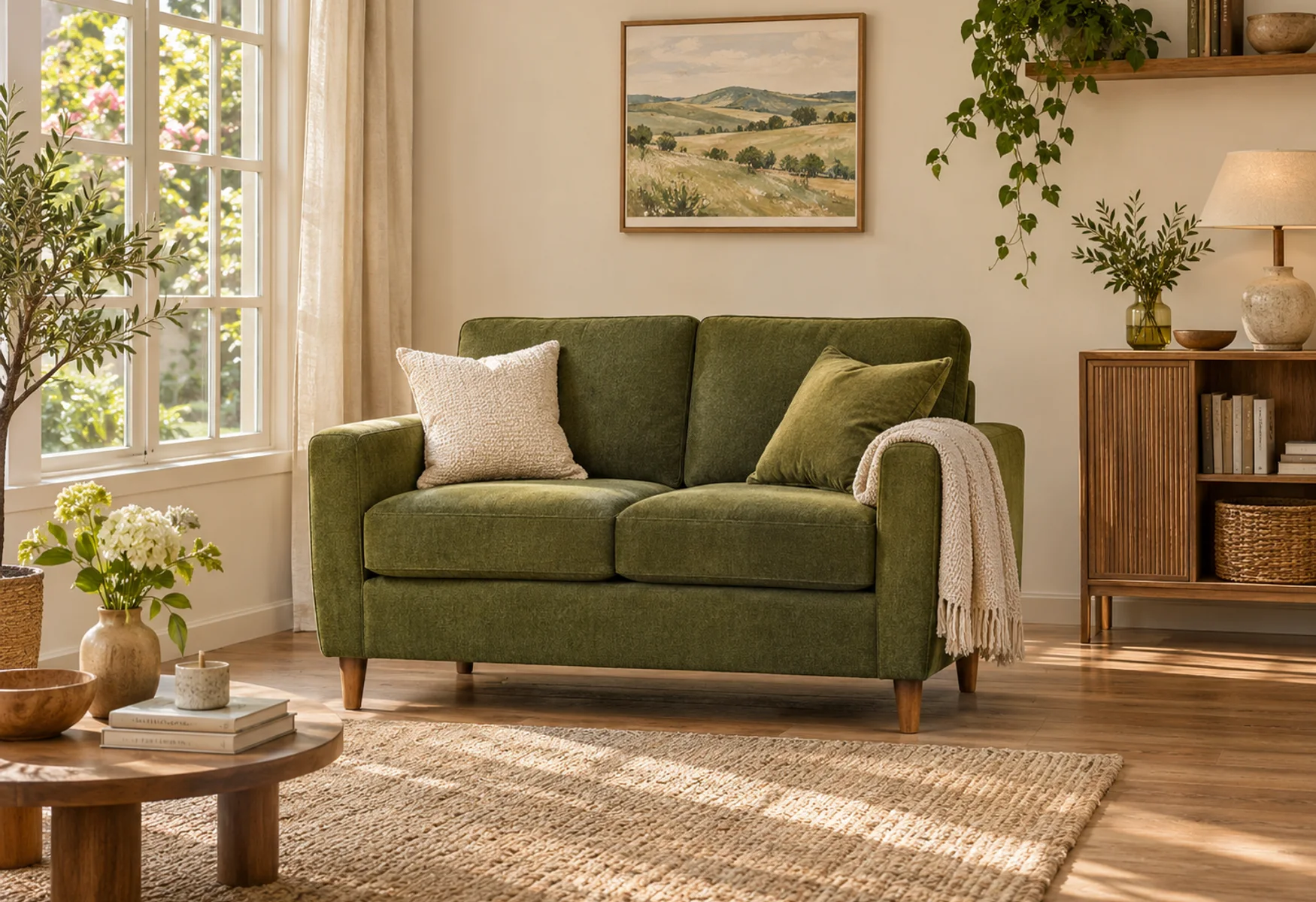
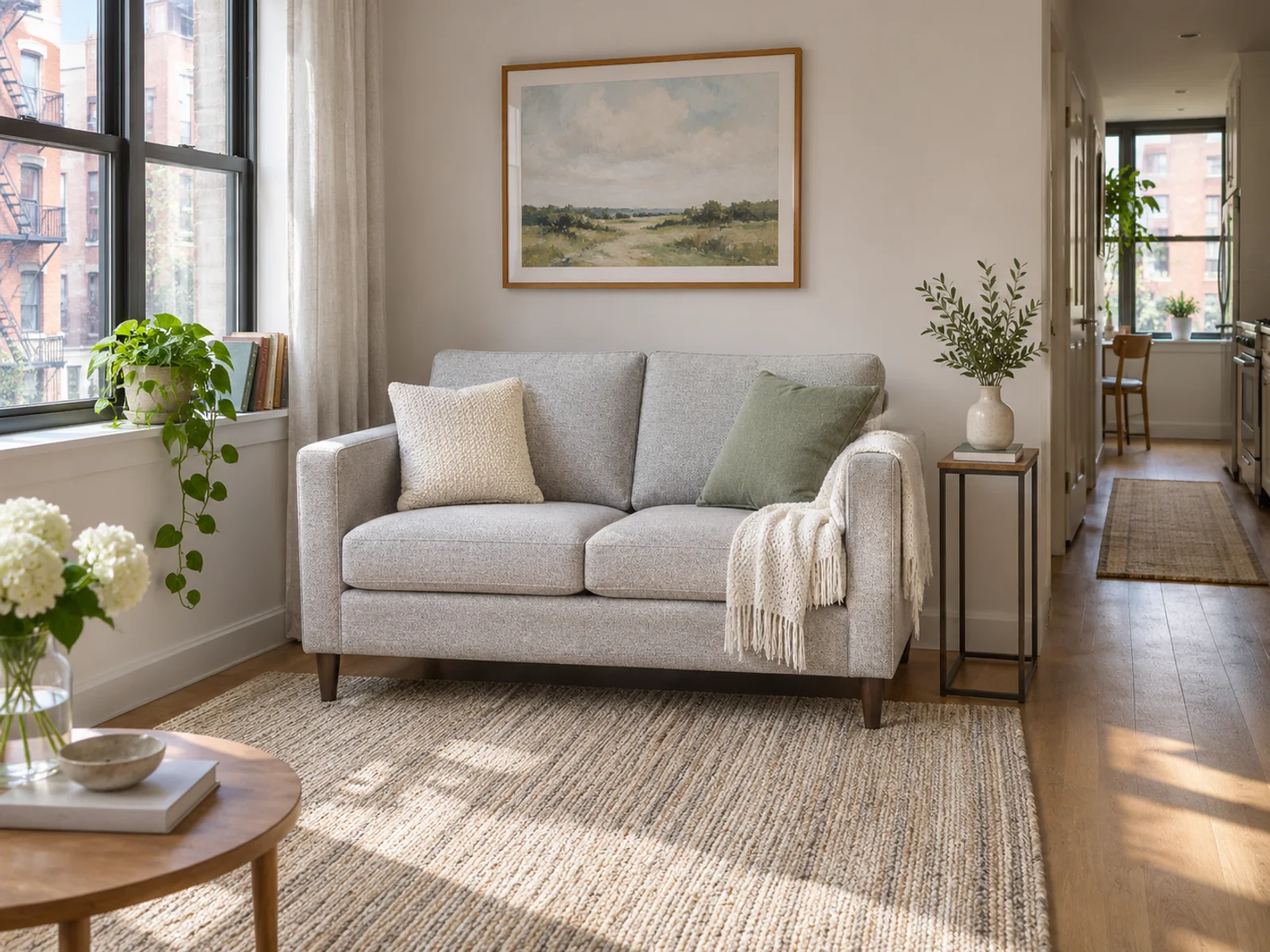
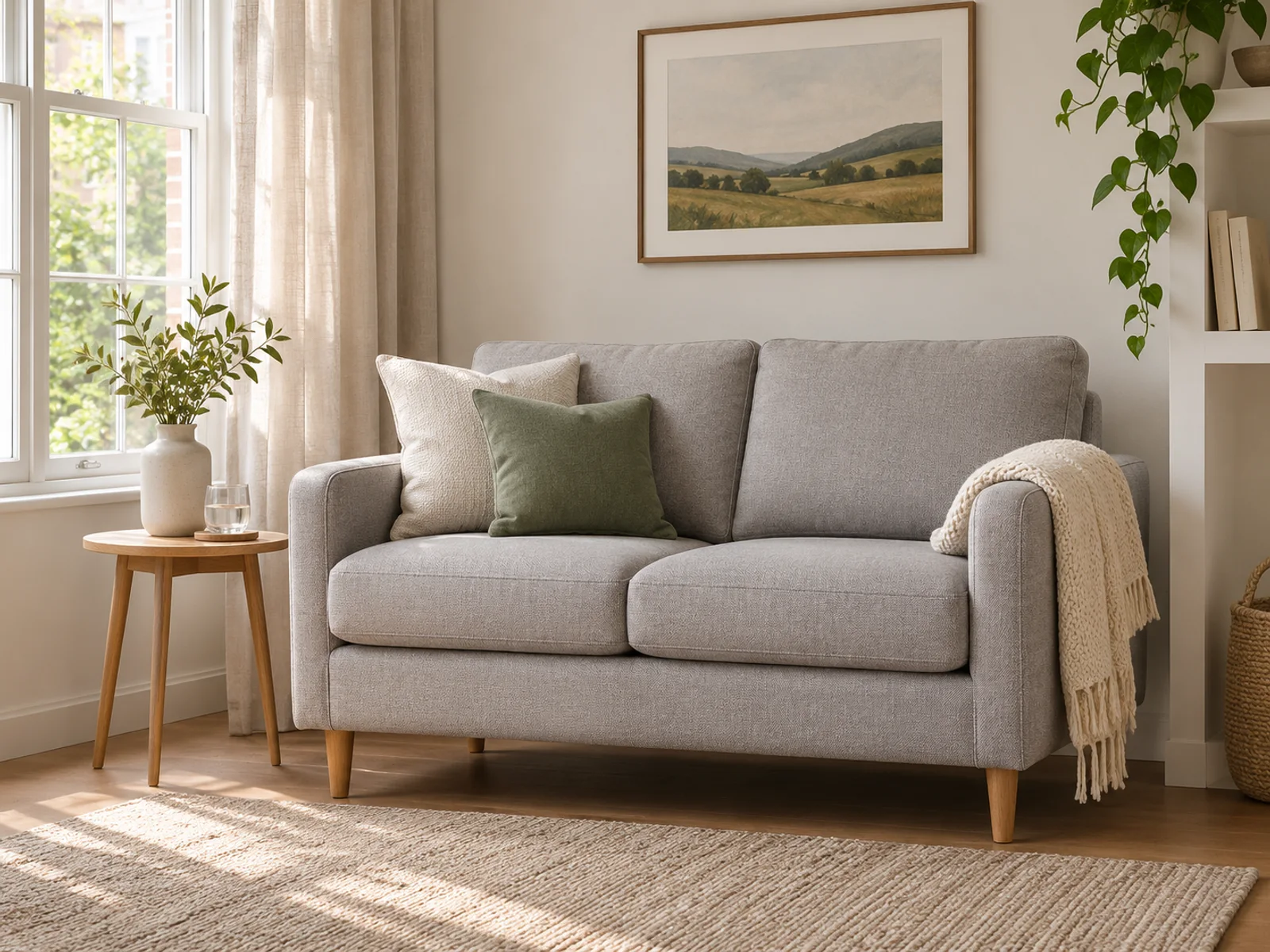
Overall width includes both arms. Two pieces with similar outer dimensions can leave very different amounts of space between them. Look for the inside seat width and the number and shape of cushions.
Measure the sofa you use now and note where people actually sit. If two adults regularly share it, compare their usable space with the new piece. A stated seat count cannot tell you whether the arrangement will suit your household.
Choose around the activity you use most
A loveseat may be enough for upright conversation but too short for the way you like to stretch out. A longer sofa can improve lounging while using space that might otherwise hold a separate chair. Neither choice is automatically better in a small room.
Write a short priority list, such as two daily seats, an occasional guest and room for a side table. This makes a tradeoff visible before a particular fabric or silhouette distracts you.
Compare depth as carefully as width
A short, deep loveseat can project farther into the room than a longer, shallow sofa. Check the back-to-front dimension and the space needed to stand up. Broad rolled arms can also make a piece appear and feel more substantial.
Tape out both candidates. Leave your existing walking route marked so you can see the difference. West Elm's sofa guide distinguishes several sofa formats, including sectionals and sleepers, but the measurements of the exact model should decide the fit.
Test a second seating arrangement
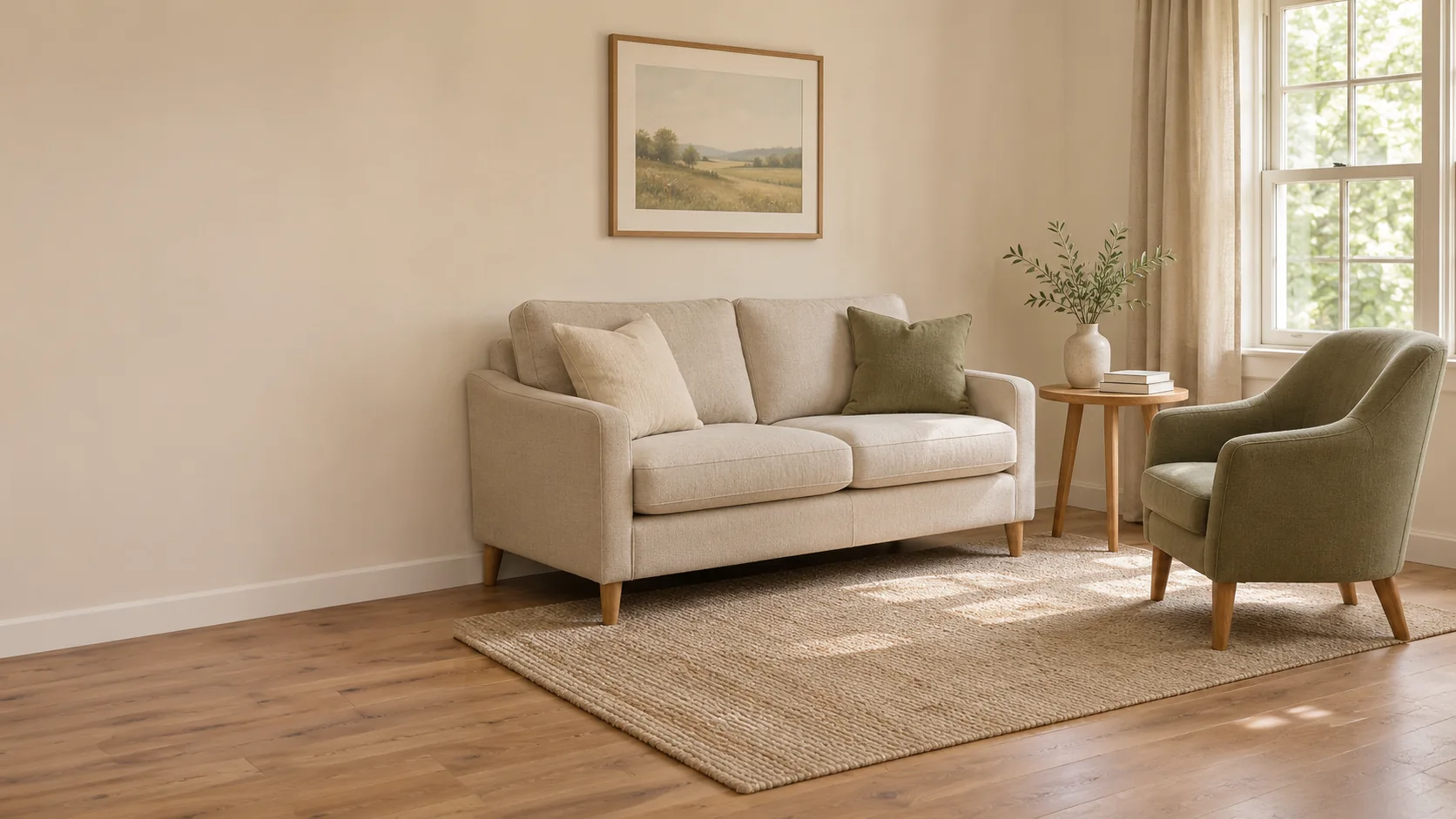
A loveseat and one movable chair may be more useful than a larger sofa when guests prefer facing each other. Conversely, adding a chair, table and lamp can take more total floor area than a single sofa. Draw the whole group.
Consider whether the room has somewhere to place drinks and whether each seat can see the television if that matters. Do not buy a smaller sofa only to fill every saved inch with extra furniture.
Check access before narrowing the shortlist
Compare loveseat options with small-space sofas using overall size, inside seat width and delivery dimensions. Read the variant information because the same range may contain several widths.
Before ordering, repeat the delivery route check. Small in the showroom does not necessarily mean easy to carry around a tight landing.
Count usable seats, not names
Loveseat often suggests a compact two-person seat, but published widths and cushion layouts vary. Measure the actual model's outside width and the sitting width between arms. Two wide arms can leave less space than a slimmer three-seat sofa. Sit with the people who will use it if possible. Check seat depth too: a shallow sofa may free floor space while still supporting comfortable upright sitting. Tape two candidates in the room and leave the normal walking path visible.
A loveseat plus one movable accent chair may serve a small room better than one larger sofa, especially if the room has an awkward door or window. Compare the whole arrangement, not one item alone.
Decide which activities matter most
For conversation, face seats toward each other and keep a reachable table. For television viewing, test sightlines without pushing the sofa against an unsuitable wall. If someone regularly naps or guests stay overnight, measure the usable length and open bed footprint before choosing a sleeper version. Storage under the seat may help, but check how it opens and whether it needs extra clearance. A smaller sofa is useful only if it leaves the room easier to live in.
Common questions
Does loveseat mean exactly two seats?
It usually describes a compact sofa intended for two people, but usable space varies. Check the width between the arms and compare it with seating your household already finds practical.
Will a loveseat make the room feel larger?
It may free floor space, but depth, arm bulk and the surrounding furniture also matter. A narrow sofa with visible floor beneath it may suit the layout better than a deep loveseat.
Should I choose a sleeper loveseat for guests?
Check both the sleeping dimensions and the fully opened footprint. The daytime fit does not establish whether there is room to unfold it, make the bed and move around it.
Will a loveseat always make the room look bigger?
No. A bulky frame or deep arms can still crowd a small room. Compare real dimensions, leg visibility and the walking route with a taped floor outline.
Can two adults sit comfortably on one?
It depends on the usable seat width and the people. Check the distance between arms and try the actual model rather than relying on the name loveseat.
Should I pick the shortest sofa?
Not automatically. A slightly longer but shallower sofa may preserve the walking route and offer more useful seating. Compare width, depth, arm thickness and how each fits the room's door and window positions.
Is a pair of chairs more flexible?
It can be, especially when conversation and rearrangement matter. Test the two-chair footprint with a table and walking space. The pair may cost more or use more floor area than one compact sofa.