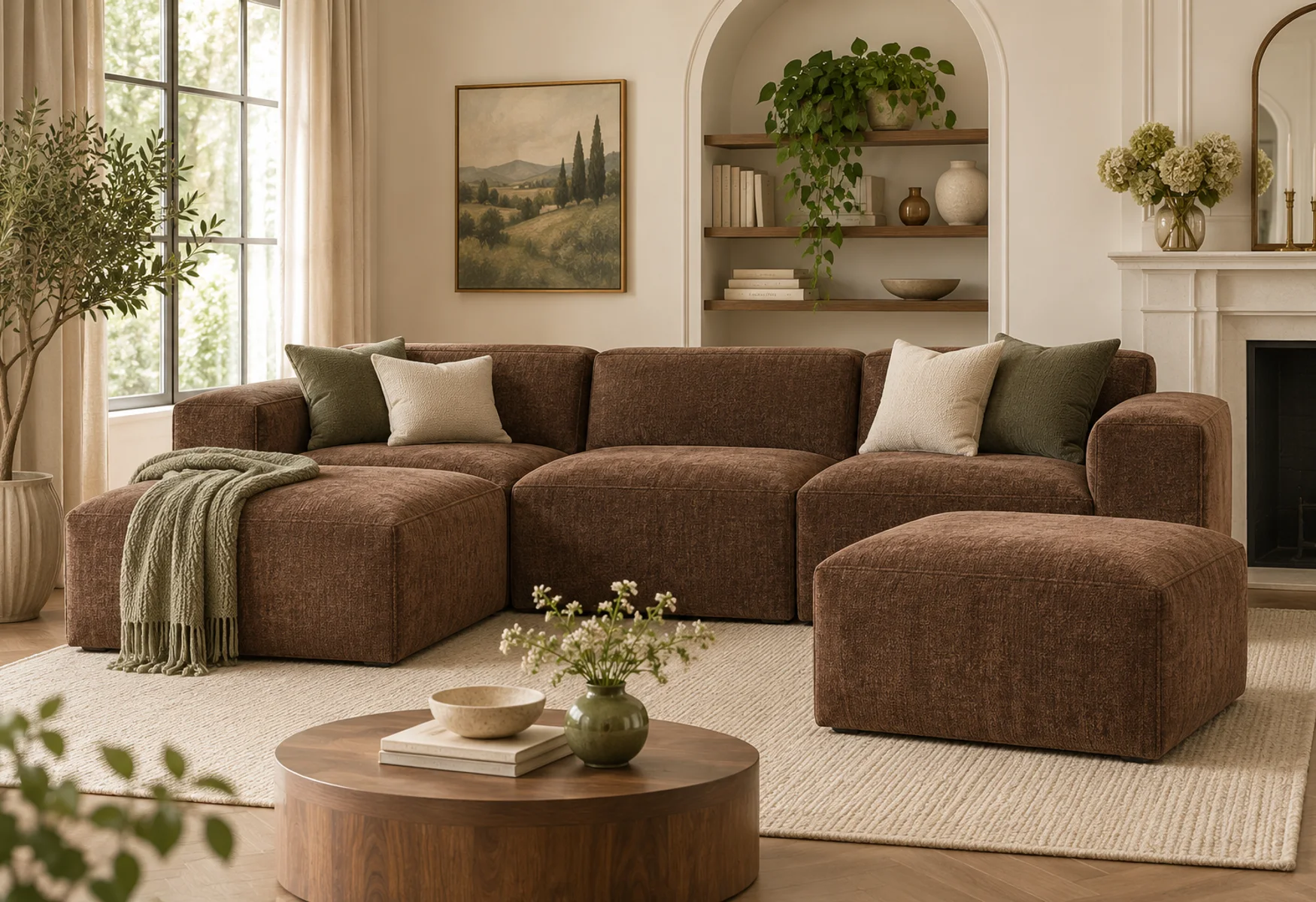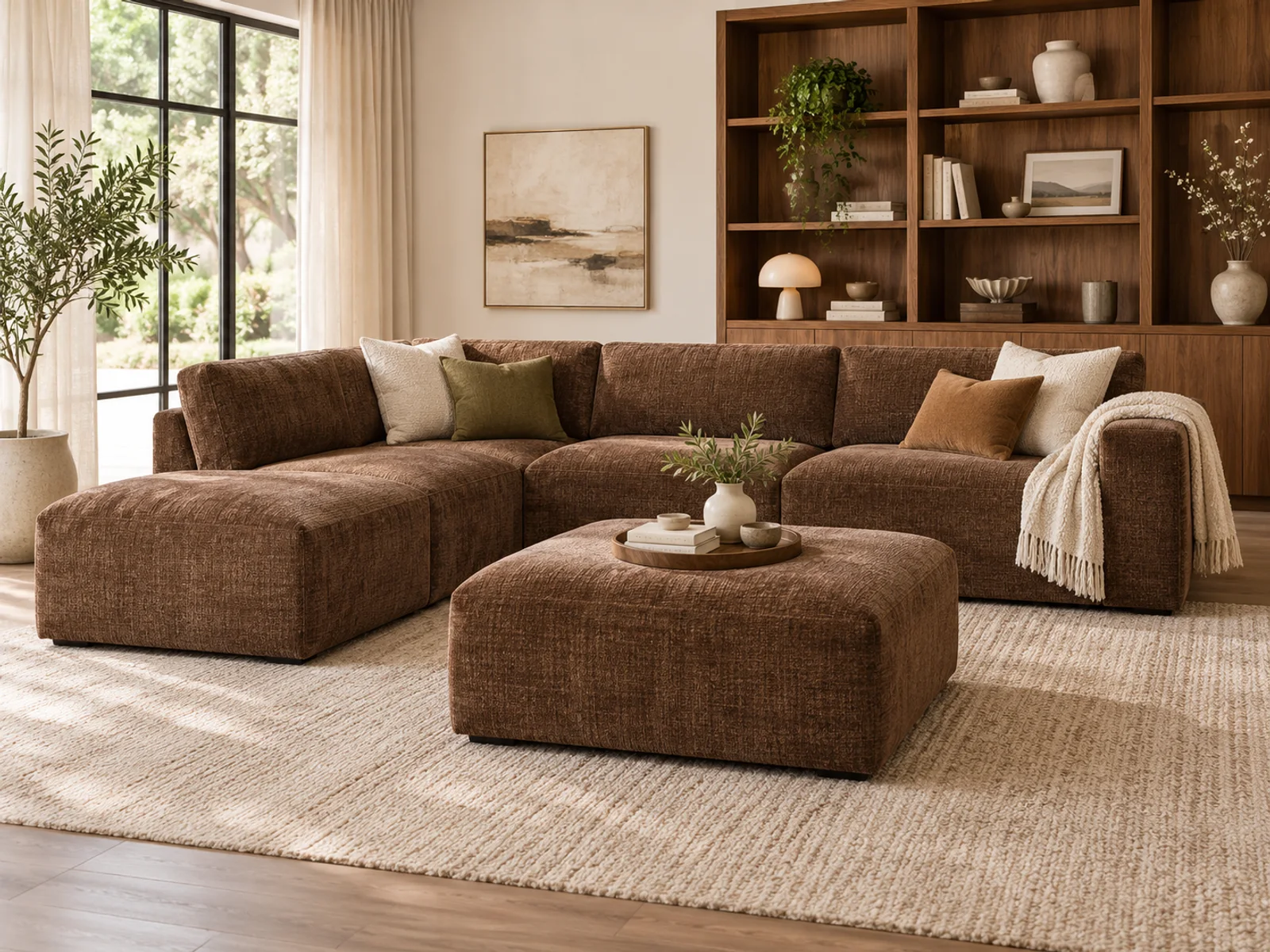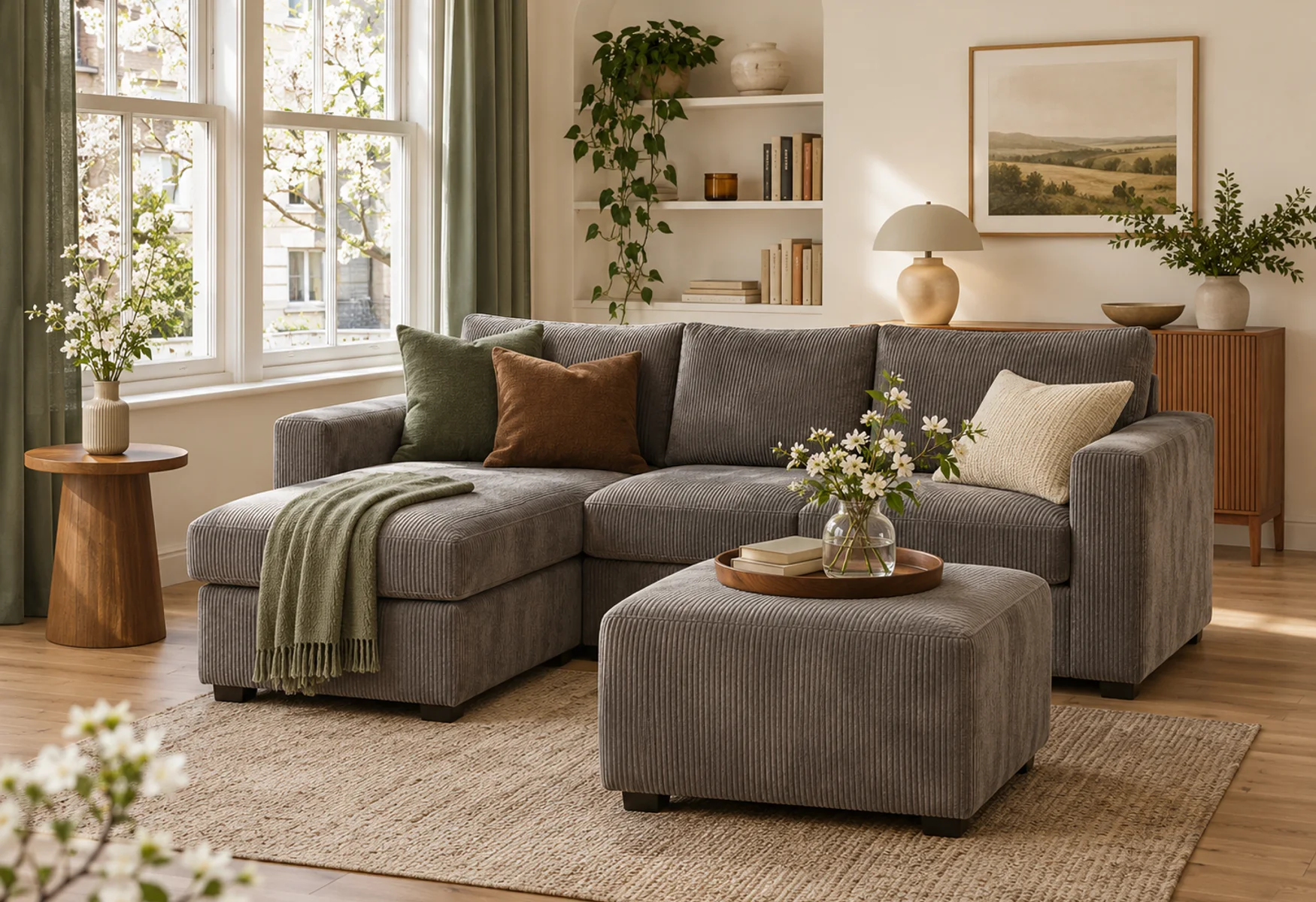
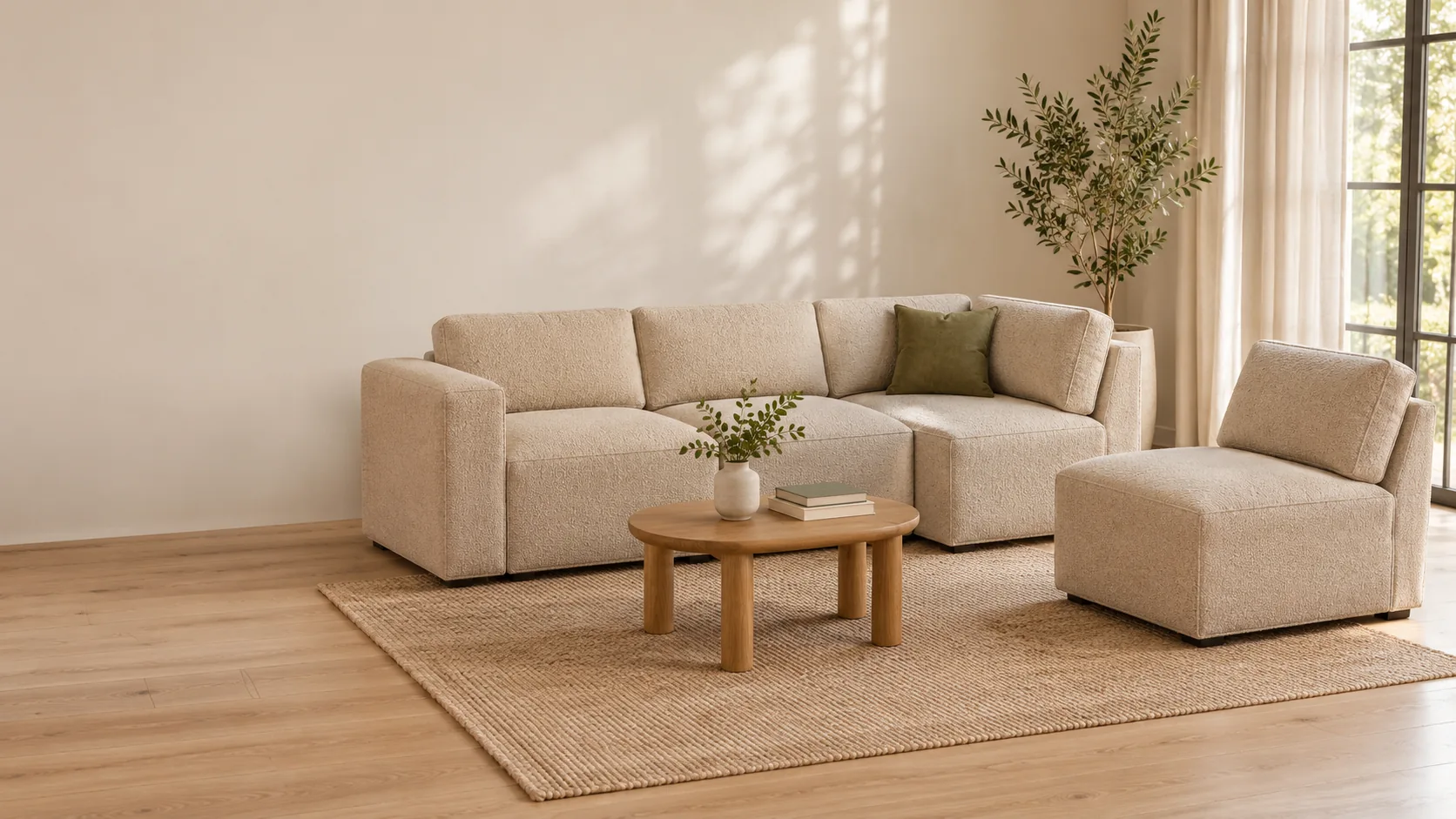
Compare the arrangement you can actually build
A sectional may combine a sofa and a chaise in one fixed layout. A modular range may offer separate corner, armless and end units. That does not mean the arms can move freely or that every piece has a finished outside face.
Ask for a component drawing and the assembly instructions. West Elm's sectional guide illustrates component-based ordering and notes that attachment methods differ. Use the documentation for your own shortlisted collection to confirm how its pieces connect.
Decide how often the room will change
If the sofa will stay against the same wall, a fixed arrangement may cover your needs without buying extra flexibility. A changing rental layout or a room used for both guests and everyday seating may benefit from more approved arrangements.
Sketch the two layouts you genuinely expect to use. Count the required corner and end pieces in each. A system that creates one attractive showroom arrangement may leave awkward gaps or unsupported exposed sides in your alternative plan.
Measure the modules and the finished sofa
Small components can help with delivery access, but their combined footprint still matters. Include connector gaps and projecting arms in the finished dimensions. Make sure the assembled sofa does not drift into a main route when you create the larger layout.
Use the delivery measurement checklist for each large component. A modular label does not guarantee that the widest corner unit will clear your stairs.
Ask what future expansion really means
Do not base the purchase on a promise that matching modules will always be available. Collections, fabrics and connectors can change. A later fabric batch may also look different from upholstery that has already spent years in your room.
If expansion matters, ask which additional parts are currently compatible and retain their identifiers. Compare the price of the arrangement you need now with the cost of speculative extra seats. Storage for unused modules is part of that decision.
Choose by the tradeoff you will notice
A fixed layout may be simpler to order. A flexible set may make rearranging easier but create more joints to maintain and more pieces to position correctly. Seat feel and support remain product-specific in both cases.
Our modular couch guide and sectional sofa guide help you compare actual configurations once you know which flexibility matters.
Define what can move after delivery
Sectional describes a sofa built from sections; modular describes pieces intended to be rearranged in supported ways. The labels overlap, but the actual connectors and finished sides decide what is possible. Ask the retailer for a diagram of every permitted configuration, including whether an armless module can be used by itself. Check whether covers and legs are finished on exposed sides. A configuration that can be assembled once is not necessarily convenient to change every month.
Try the connecting mechanism in person if possible. It should feel secure when seated and practical for the household to separate without damaging the floor or fabric.
Compare the complete cost and future parts
Price the arrangement you want now, including extra modules, connectors, covers and delivery. Ask whether matching pieces can be purchased later and how long the range is expected to remain available. A modular system can help after a move, but a discontinued fabric may limit future expansion. Measure each module for delivery and the final footprint for the room. Sit on the corner, chaise and armless seats; they may feel different. Choose flexibility only when it solves a likely need rather than paying for unused options.
Common questions
Are modular sofas always sectionals?
The terms often overlap in retail descriptions. Focus on the number of components, their connection method and the layouts the manufacturer permits. Those details tell you more than the category name.
Can modules be used as separate chairs?
Only if the individual units are designed for that use. Check stability, exposed connectors, finished upholstery and any requirement to attach neighboring pieces. An armless section is not automatically a standalone chair.
Will every module from one brand fit together?
No. Compatibility may be limited to a collection, generation or connector system. Confirm exact part numbers before buying additions, particularly if the original sofa is older.
Can I mix modules from different ranges?
Do not assume it. Connector dimensions, seat height, upholstery and frame support can differ even within one brand. Use the maker's compatibility list for the exact range.
Is a modular sofa easier to move?
Smaller modules may be easier to carry through a doorway, but each piece still needs measuring and safe lifting. Check the largest module, assembly tools and total weight before relying on that advantage.
Will the pieces drift apart?
They should have a connector or other approved method that keeps the configuration stable. Ask for a demonstration and check the floor surface. Do not improvise straps that damage the frame or fabric. Recheck connectors after moving the sofa.
Can I add a piece later?
Only if compatible modules remain available in a matching finish. Ask about the range's part numbers and future supply. Fabric dye lots and dimensions can change. Buy a configuration that works now even if expansion is uncertain.