Start with the use instead of the label
An ottoman may be described as a seat, footrest or storage piece. A footstool often focuses on supporting feet. Retail terminology is not consistent enough to replace the product specification.
The OKA ottoman and footstool guide discusses that overlap. For your shortlist, write down which uses the manufacturer actually permits and any stated limits. Upholstery alone does not establish a seating function.
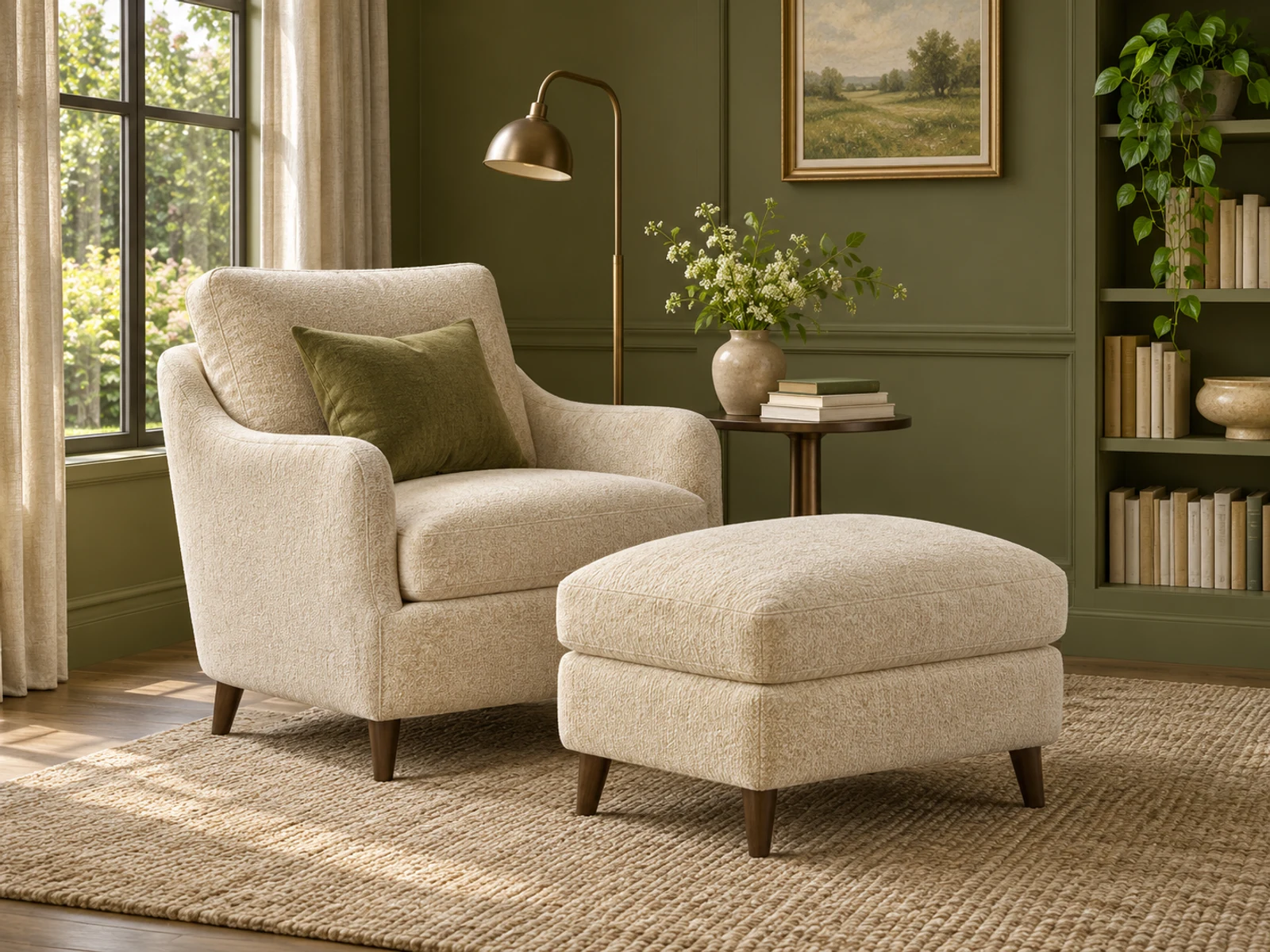
Try it with the adjacent chair
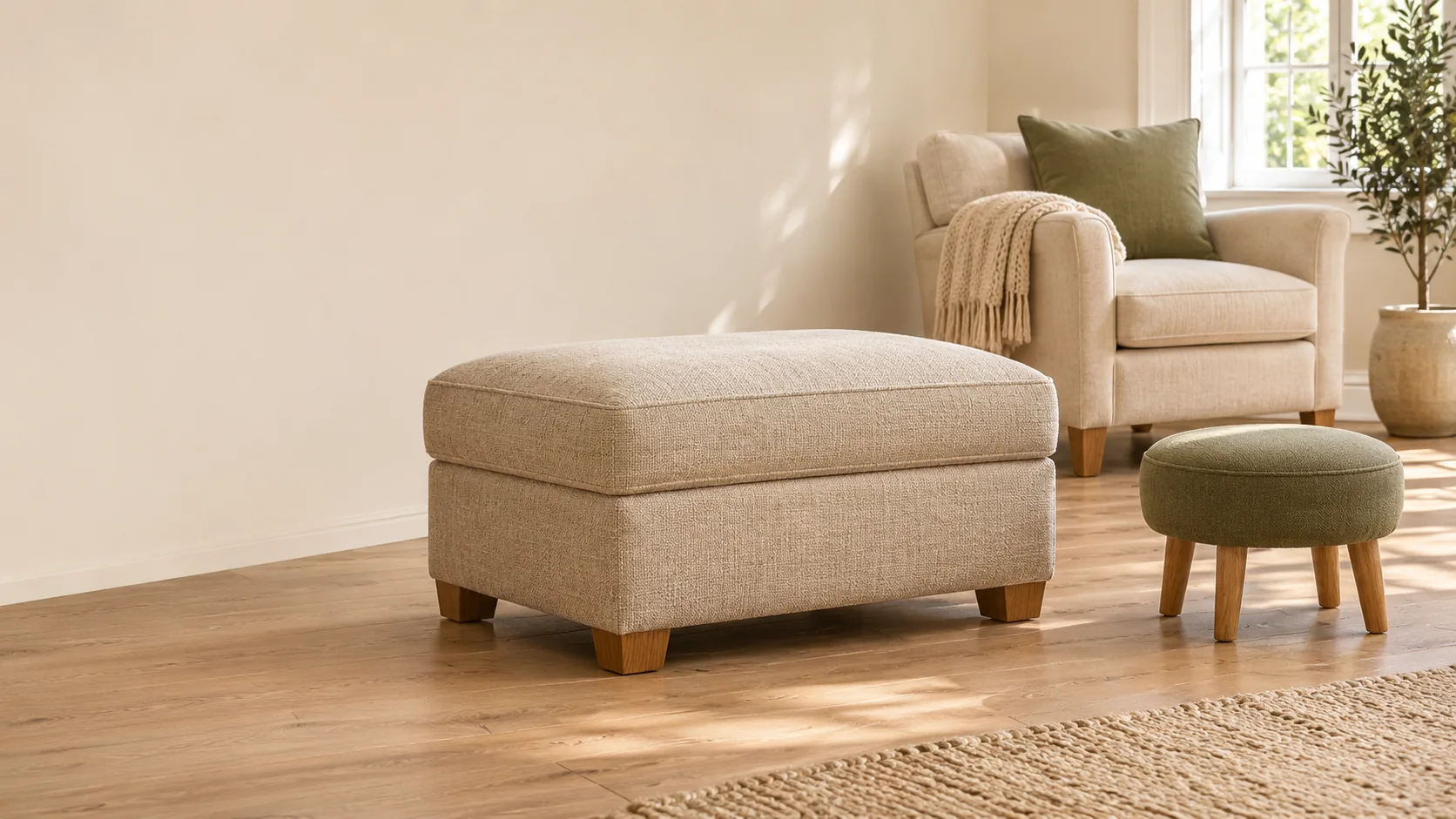
Compare the top height with the chair's seat while sitting normally. Include how both cushions compress. A firm stool beside a soft chair can feel different in use from what their unloaded measurements suggest.
Move it to the position you would use for resting your feet, then stand and walk past. The useful footprint includes the space between chair and stool, not simply their two separate rectangles.
Check storage and tray compromises
A storage lid needs space to open and an appropriate operating mechanism. Read its instructions and keep fingers clear during use. Do not choose storage solely because it appears in a feature list if you will rarely access it.
A tray can provide a firmer surface only where it rests securely on the upholstery. It does not turn a soft, uneven or unstable footrest into a suitable place for hot drinks. A separate side table may solve that task more reliably.
Plan where it goes when unused
Decide whether the piece stays in front of the chair or moves aside. Check its weight and permitted handling method. A large ottoman that blocks the room whenever guests arrive is not functioning as flexible furniture.
Browse chairs with ottomans for coordinated proportions, or compare pouf ottomans by their actual specifications. Our ottoman and coffee table comparison covers the choice of a central surface.
Check the permitted use
Retailers use ottoman and footstool labels inconsistently. Read the exact product description for whether the piece supports feet, provides seating, contains storage or takes a tray. A padded top does not by itself establish a safe seat. Ask for the stated load limit and any restrictions before assuming it can accommodate a guest.
Compare height beside your chair
Measure the chair seat and the proposed footrest in their normal, compressed condition. Sit with feet supported and check whether your knees and hips feel comfortable. Then stand and walk around both items. The room must accommodate the gap between them and the route around the footrest. Our ottoman and coffee table guide covers the separate choice of a central surface.
Consider moving and maintenance
A large storage ottoman may be useful but awkward to relocate. Check the listed weight, lid mechanism and cleaning instructions. A small footstool can be easier to move, though it may have no storage or seating rating. Choose by the function you will use each week, and keep a clear place for the piece when it is moved aside.
Common questions
Can I sit on a footstool?
Only when the maker permits seating and you remain within its stated limits. A footrest may have a different structure from a stool intended as a seat. Check before using it for guests.
Does an ottoman have to match the chair?
No. Coordinate it through material, color or shape if you prefer a mixed pair. Its usable height, footprint and permitted function matter more than whether it belongs to the same collection.
Is a storage ottoman always heavier?
Do not infer weight from the category. Materials, mechanisms and size vary. Check the listed weight and handling instructions, particularly if you expect to move it frequently.
Can any footstool be used as a seat?
No. Use it for seating only if the maker permits that use and states suitable limits.
Does an ottoman have to match the sofa?
No. Proportion and usable height matter more than matching upholstery.
Is storage always helpful?
Only if you can open and access it comfortably in the planned position.
Can I put a hot drink on it?
Do not assume an upholstered top is stable or heat resistant. Use a suitable table.