Draw the base as well as the top
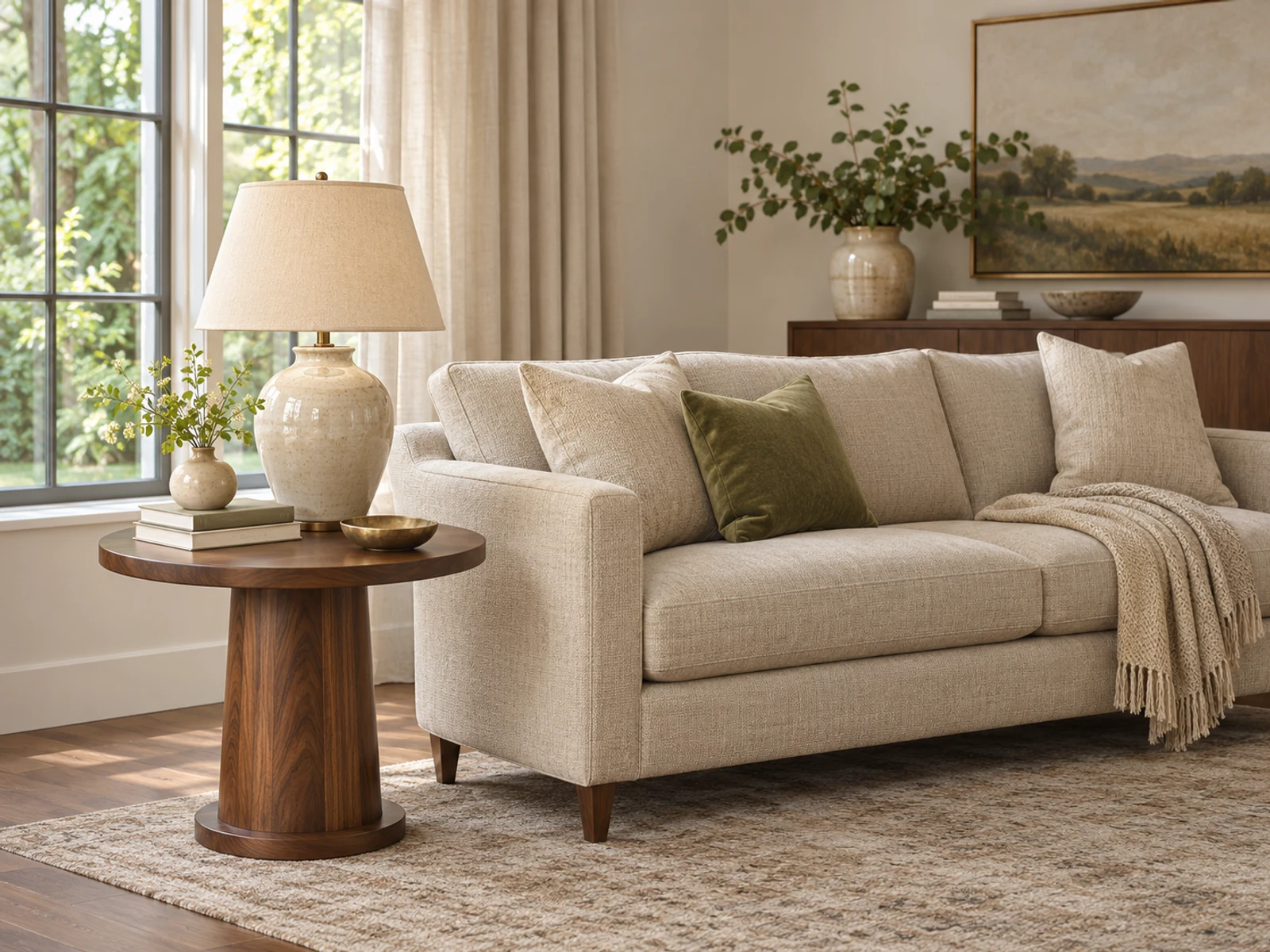
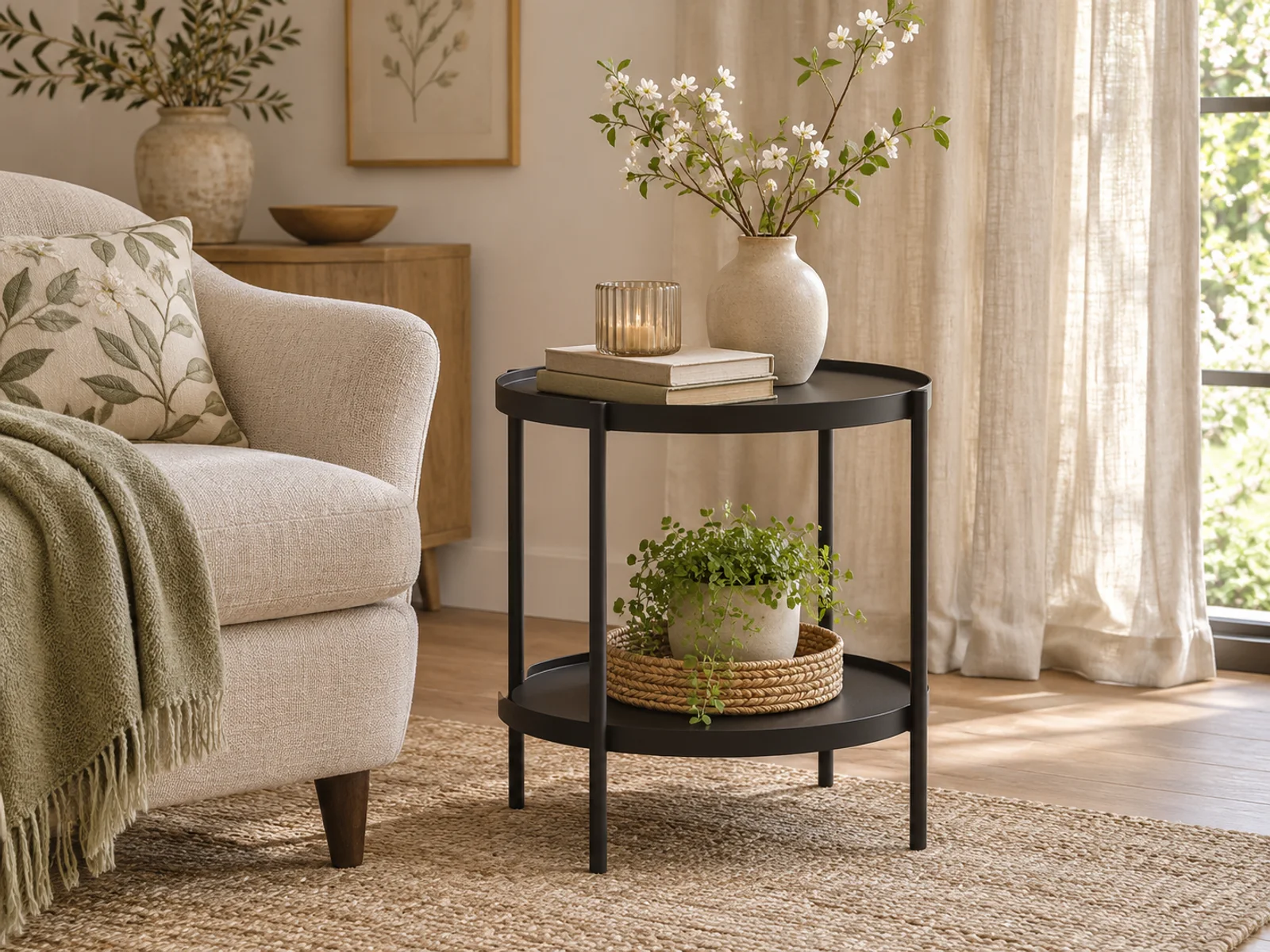
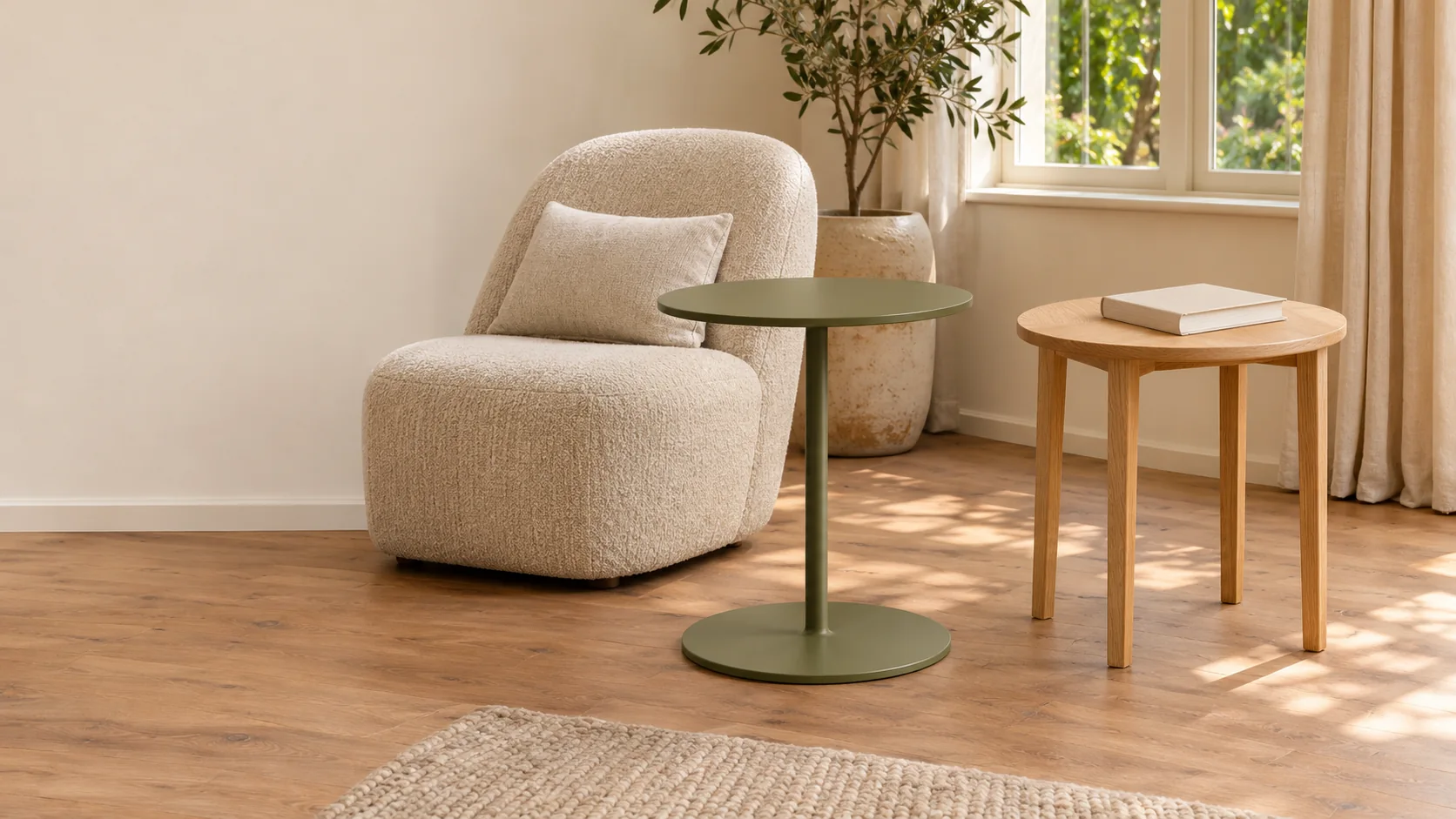
Ask for base dimensions if the listing only gives tabletop width. A pedestal can widen near the floor, and angled legs can project beyond the top. Those shapes affect where you place your feet and how closely the table sits beside a chair.
Sketch both outlines on paper or mark them with a floor-safe method. A narrow-looking stem does not mean the whole floor area beneath the table is available.
Check reach from the seat
Sit normally and identify where your hand would place a cup or book. Compare the top height with the arm and its distance from you. A visually compact table is less useful if its base prevents it moving close enough.
Use our side table height guide for the seated check. Test the chair's swivel or recline movement too, using the clearances required for that chair.
Compare support without guessing from style
Read the assembly method, material and stated load. A broad pedestal, a narrow stem and a four-leg frame can each be built in very different ways. Do not judge stability solely from a photograph or the number of supports.
The Crate & Barrel table guide considers materials and room fit together. For a side table, add the intended surface: a lamp needs its whole base supported, while a small drinks table serves a narrower task.
Look at the floor and cleaning access
Check whether the base sits fully on the same surface or crosses a rug edge. Follow the supplied leveling instructions if there are adjustable feet. Avoid improvised wedges that can shift during use.
Compare pedestal side tables with round side tables after measuring. Leave enough room to clean around the base and reach nearby outlets without moving a heavy table every time.
Map the base footprint
A pedestal can leave more apparent foot space, but its base still occupies floor area. A legged table may fit around a chair arm yet create several points to avoid while walking. Measure the maximum base width, not just the tabletop. Place a cardboard template beside your chair and see how the base interacts with the chair legs and rug.
Test stability with ordinary use
Ask to handle the display model and check the maker's load instructions. A narrow top-heavy pedestal may feel less stable than its photo suggests; a four-legged table may wobble on an uneven floor. Neither category guarantees a particular result. Try reaching for a book from the seated position without leaning on the table for support.
Plan cleaning and placement
Legs create more edges for vacuuming around, while a broad pedestal base may block floor access under the top. Check whether the table can stand fully on your rug or needs to sit entirely on hard flooring. Review the finish care if you use coasters or place a lamp there. A practical side table should allow safe lamp cord routing without crossing a walkway.
Common questions
Is a pedestal table harder to tip?
The style alone cannot establish that. Base dimensions, weight distribution, construction and loading matter. Follow the stated use and load limits, and do not treat a side table as a seat or climbing support.
Will a central base leave more legroom?
Sometimes, but a wide floor plate can occupy the space your feet need. Compare the entire base with your seated position rather than looking only at the narrowest part of the stem.
Can a table sit partly on a rug?
Check whether every support remains properly seated and level under the manufacturer's instructions. If the rug edge causes rocking, change the placement instead of accepting an unstable setup.
Is a pedestal always more stable?
No. Stability depends on the full design, dimensions and floor surface.
Do legs make a table easier to move?
Weight and handles vary. Check the actual item before relying on that assumption.
Can the base sit partly on a rug?
A height difference may cause wobble. Test the intended position and follow any maker guidance.
How high should a side table be?
Compare its usable top with the adjacent seat and arm, then test reach while seated.