Look at the gray already in the room
Gray walls can lean warm, blue, green or violet. Benjamin Moore recommends comparing gray samples with furnishings and in different light. Keep that idea in mind when choosing upholstery beside paint you already own.
Hold fabric samples against the wall and near the floor. A couch has to work with both, plus any large rug or wood cabinet you plan to keep. Make those fixed elements the starting point rather than choosing from an isolated online photograph.
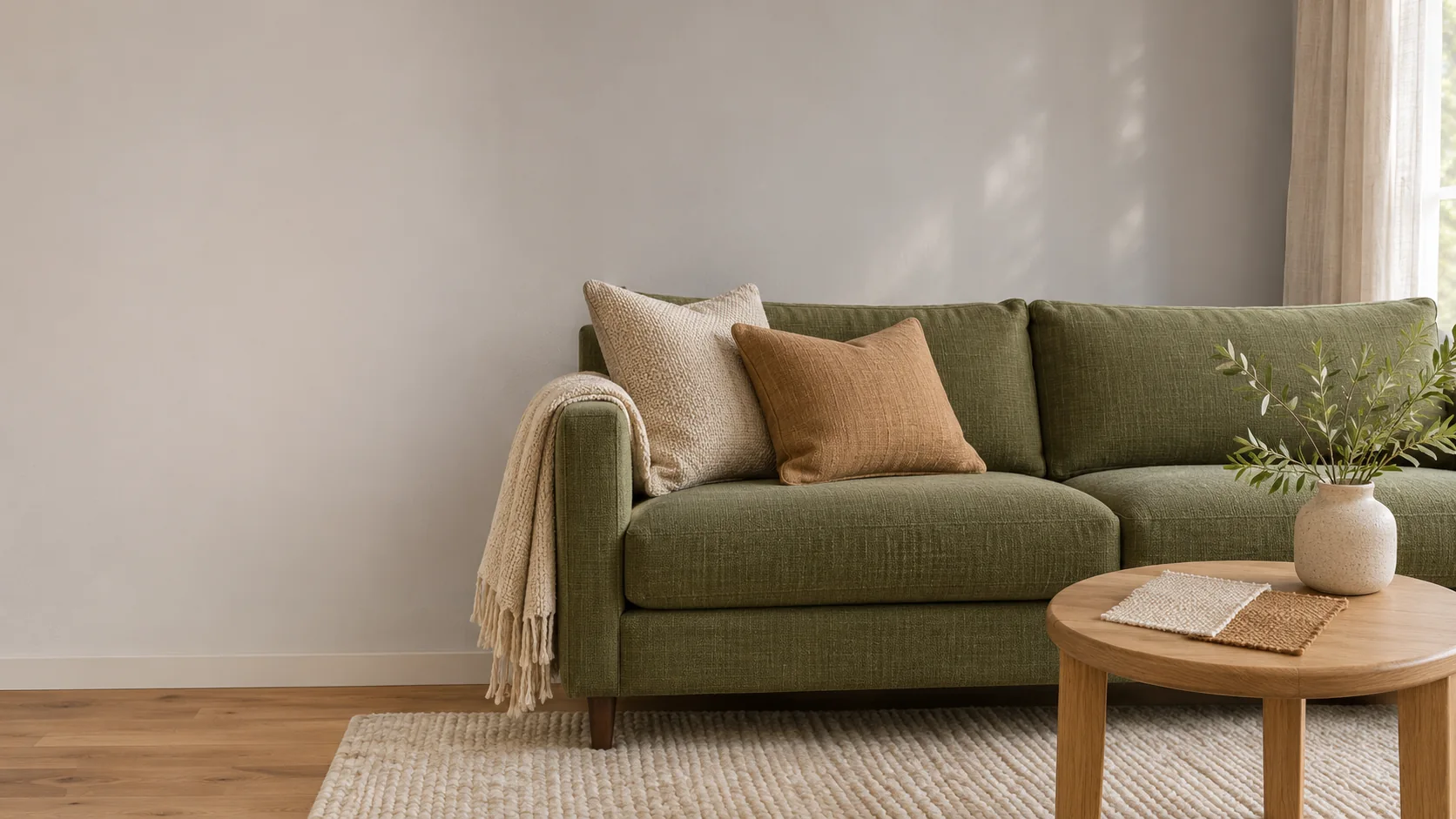
Try cream or camel for a warmer balance
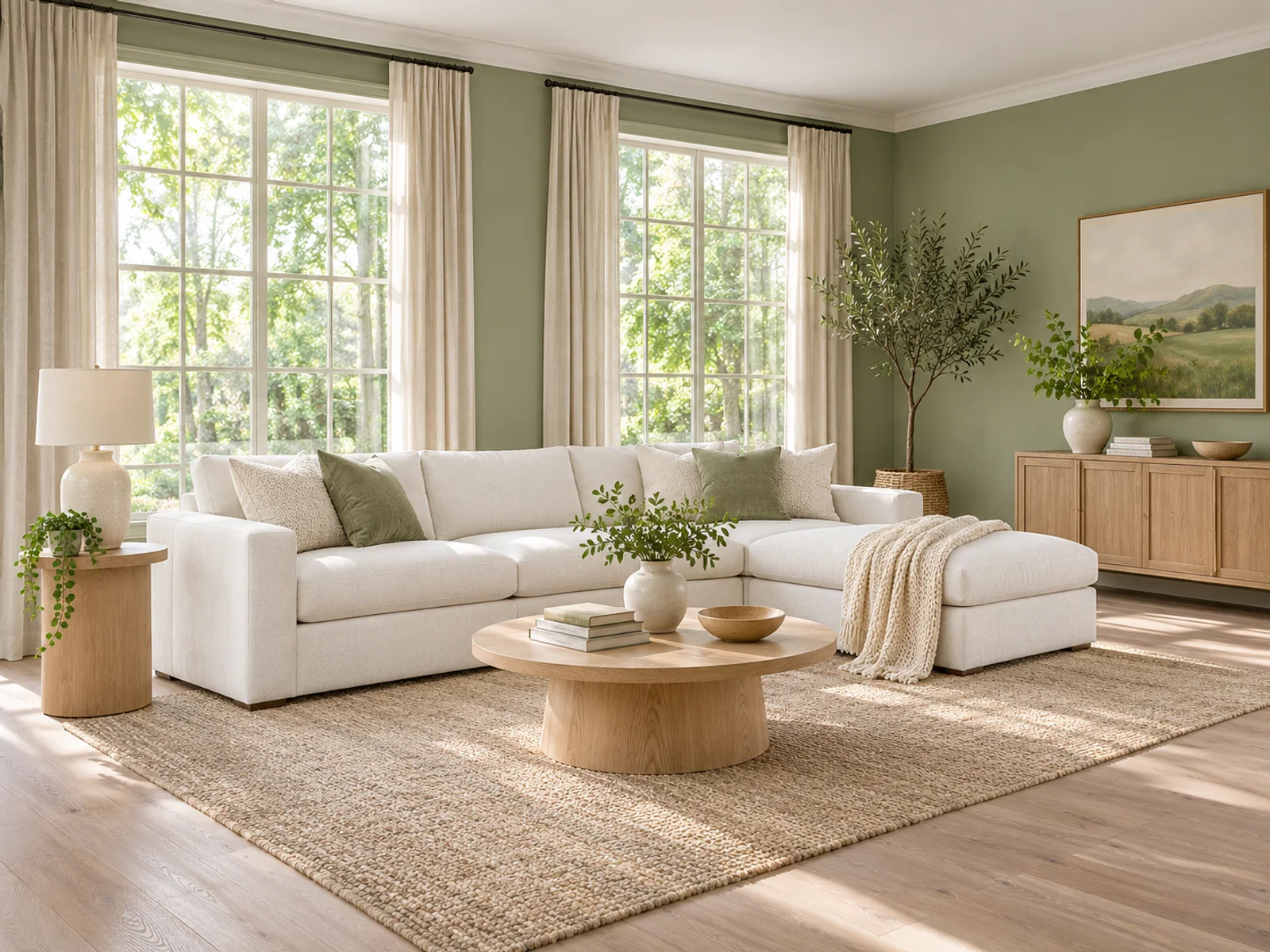
Cream or oatmeal can soften the contrast beside a medium gray wall. Camel introduces a warmer focal point, especially when you want the sofa to stand apart from pale surroundings. These are useful palettes to test, not rules for every gray.
Compare the cream with the trim so an unintended yellow cast does not surprise you. With camel, look at the floor and wood furniture together. Decide whether you want related warm tones or a more obvious difference.
Use olive or blue as the main color
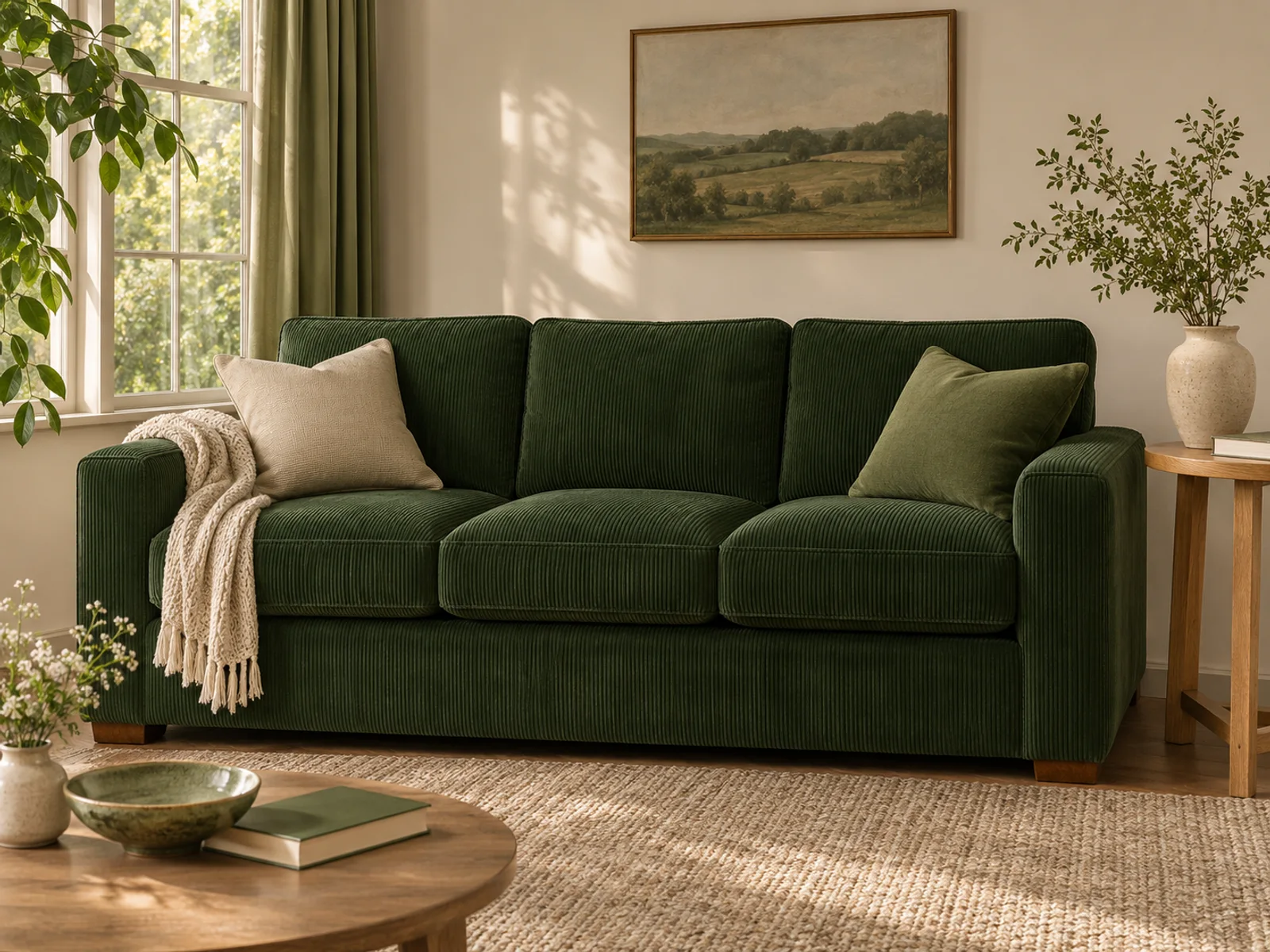
An olive or green couch can give a gray room a grounded focal point. Try a muted sample if the room already contains strong artwork or a patterned rug.
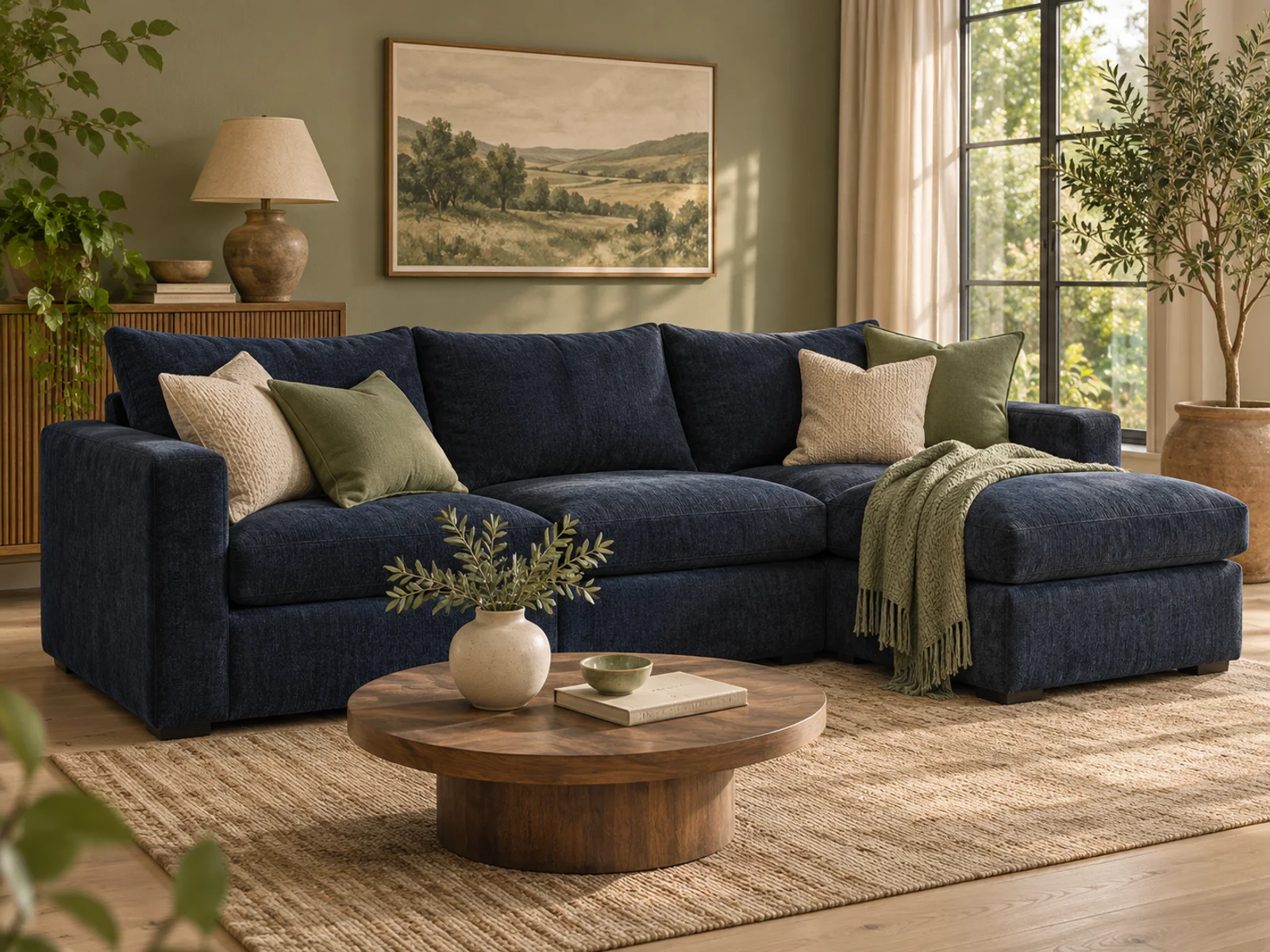
Navy can create deeper contrast, while a dusty blue keeps the difference quieter. For a starting comparison, see our dark blue sofa guide. Evaluate the fabric in the actual room before using cushions to build the rest of the palette.
Make gray-on-gray intentional
A charcoal couch against light gray walls can look distinct without introducing another large color. If wall and couch are similar in value, use texture and a contrasting rug or throw to keep the seat from disappearing into the backdrop.
Avoid choosing a slightly different gray simply because it is described as neutral. Put the swatch beside the wall and ask whether the combination looks deliberate to you, particularly where two undertones meet.
Narrow the choice to two samples
Keep one light option and one deeper or colored option in the room for several days. View them from the doorway and from your usual seat, with the lamps you normally use.
Choose the large upholstery first, then add smaller accents. A cushion is easier to change than a couch, so it should support the final decision rather than rescue a fabric you already dislike.
Read the grey in real light
Grey walls can lean warm, cool, green or violet. Place fabric samples directly against the wall and view them in morning light, evening light and under the lamps used in the room. Benjamin Moore's grey palette illustrates the range, but a screen image cannot show your paint accurately. Compare the sample with the floor and any large rug as well as the wall; those surfaces occupy more visual space than a small cushion.
Choose a clear relationship
Cream or camel can warm a cool grey room, while olive or blue can provide a deliberate colour note. A charcoal sofa can work if there is enough light contrast with the wall and floor. Grey-on-grey needs texture or shade separation so the couch does not disappear. Try two strong candidates rather than collecting a dozen tiny swatches. Photograph each from the doorway and main seat. The useful choice is one that still looks right when daylight changes.
Check fabric and scale after colour
A perfect colour is not enough if the sofa is too deep, blocks a route or has a fabric the household cannot clean. Bring the swatch to the room and compare the actual model dimensions with a taped floor outline. If the walls may be repainted soon, choose a couch colour you can live with across several palettes. A neutral sofa can be changed with cushions and a rug more easily than a large upholstered piece can be replaced.
Use accents to finish the room
Once the sofa choice is clear, repeat one of its undertones in a small object or textile. Add a contrasting material such as wood, metal or woven fibre so the room does not rely only on colour. Keep the accent restrained; too many competing hues can make the grey wall look different than it did beside the sample. Test the arrangement with the curtains open and closed before buying more decoration.
Common questions
Can a gray couch work with gray walls?
Yes. Choose a deliberate difference in depth or texture and test the undertones together. A darker couch against pale walls is one option, while a similar shade needs other elements to define the seating area.
Does a cream couch suit cool gray paint?
It can create a warmer balance, but creams vary considerably. Compare the fabric with the wall, trim and floor in your room. A sample that looks neutral online may look yellow beside a cool gray.
Should the couch match the curtains?
It does not need to match exactly. Choose a shared undertone or repeat a small accent color if you want a connection. Keeping the curtain and couch at different depths can make the room feel more layered.
Which option is safest without a fabric sample?
No color name can replace a sample reliably. Ask the retailer for a swatch or confirm the return terms before committing. Screens, fabric texture and room lighting can all make the final appearance different.