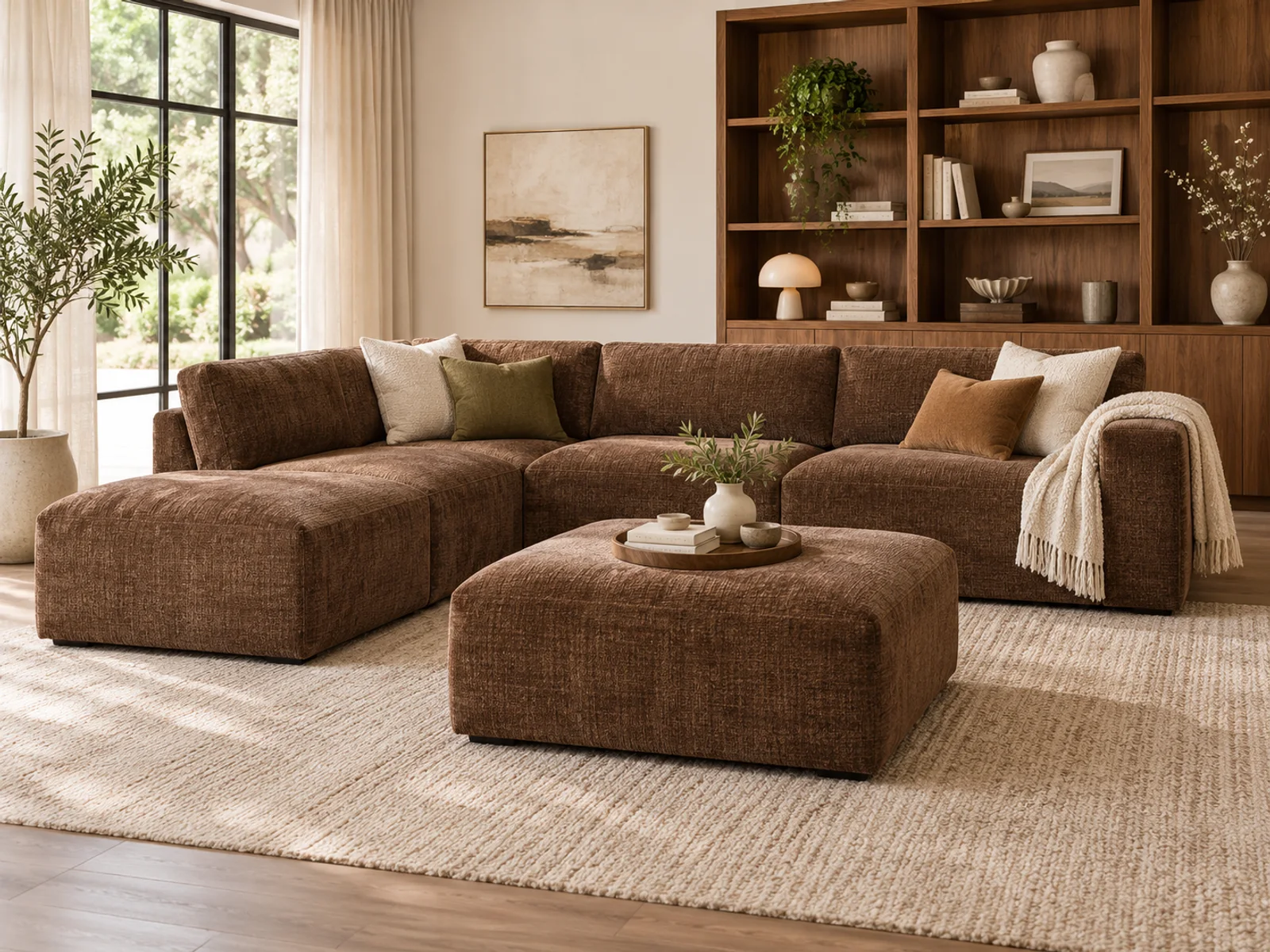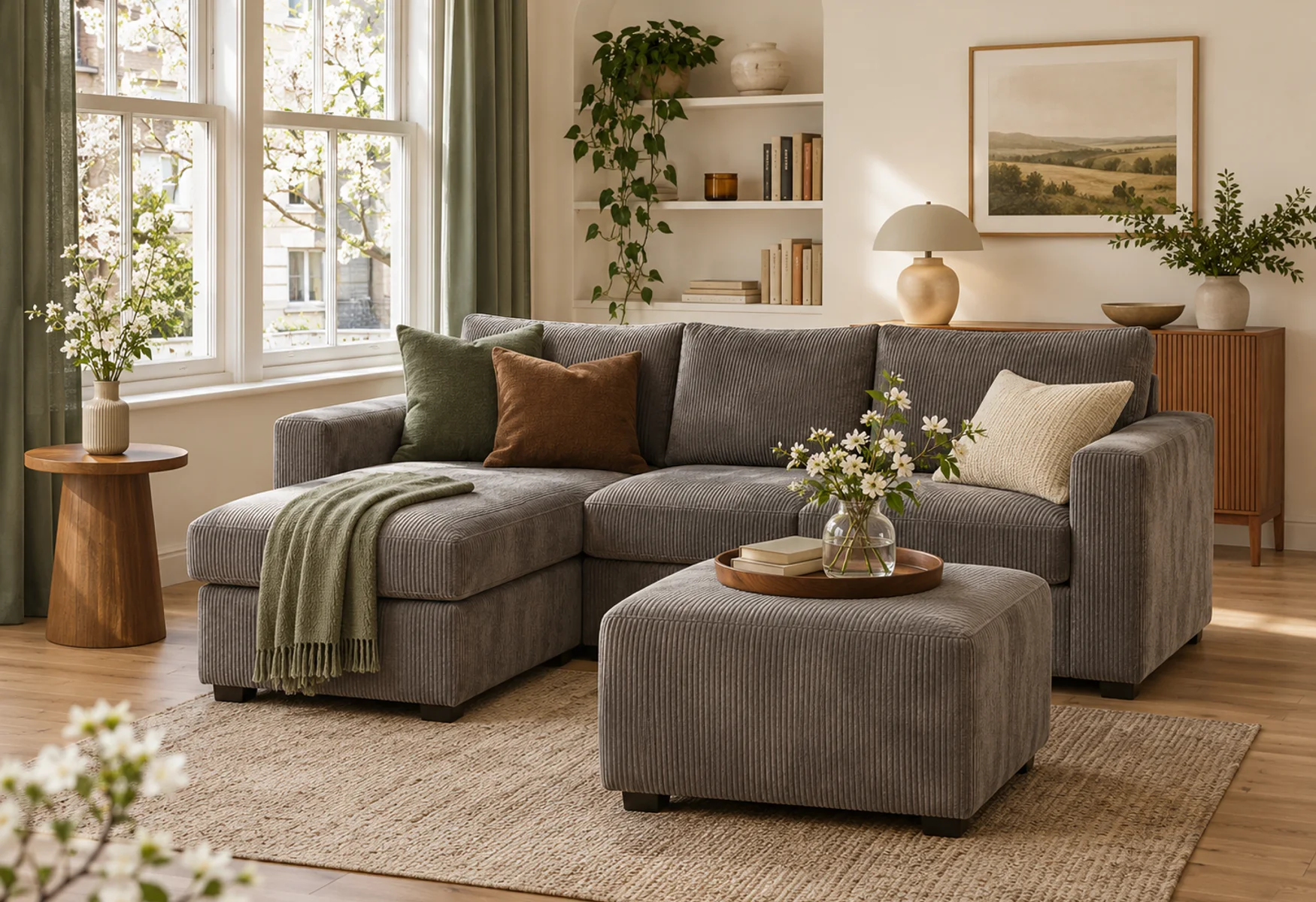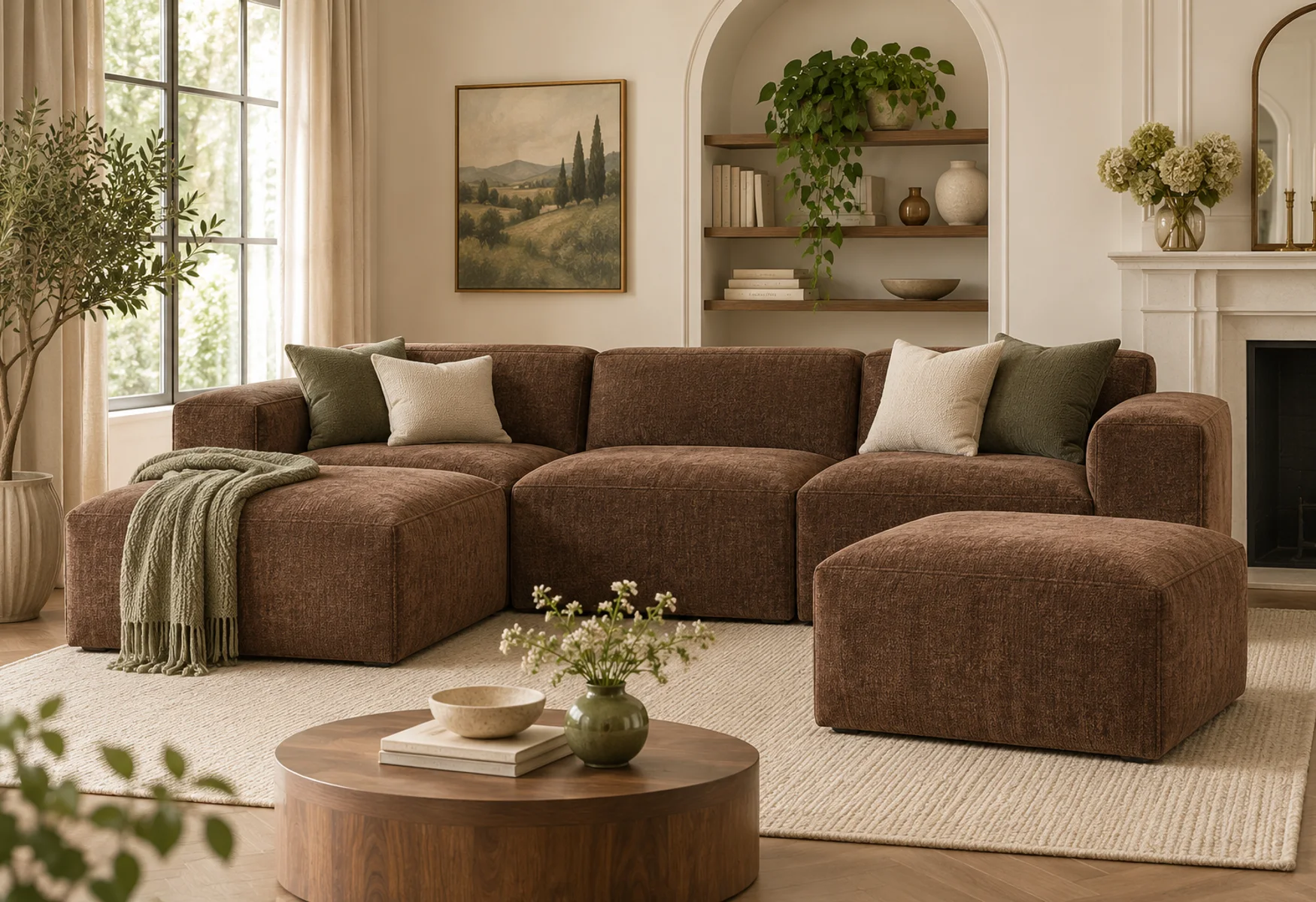
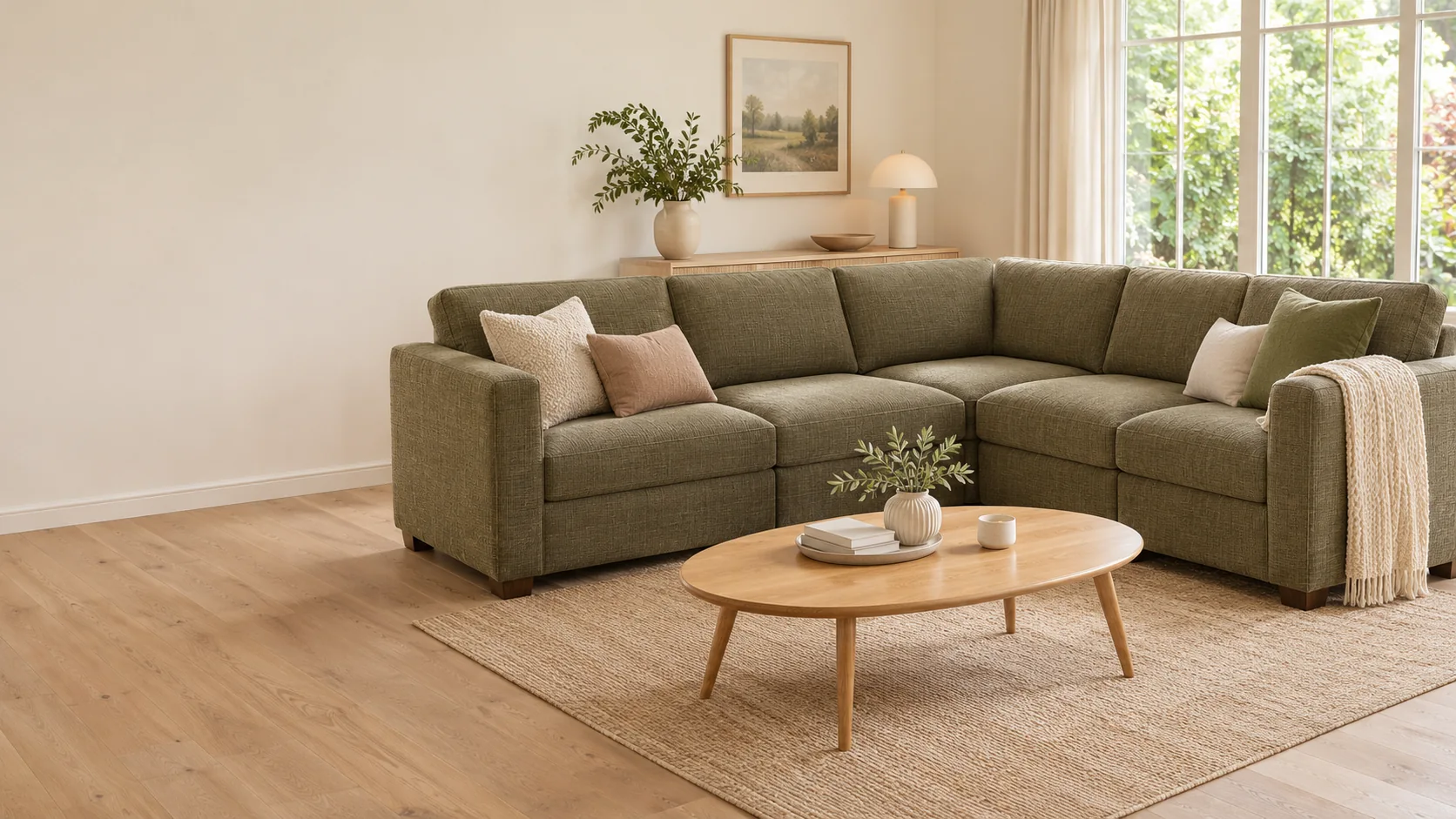
Think in pieces rather than one outline
A sectional may combine end seats, armless seats, corners and a chaise. The overall shape is only part of the description. Two similarly sized arrangements can provide different usable seating because their corners and arms occupy space differently.
Ask for a component list and a top-down drawing. Confirm that the photographed arrangement matches what is included in the quoted package rather than assuming every displayed piece arrives together.
Separate sectional from modular
Modular usually suggests components designed for rearrangement, while sectional can describe a more fixed combination. Product naming is not consistent enough to replace the assembly information. Check which pieces can connect and whether exposed sides are finished for another layout.
If rearranging is important, compare our modular couch guide. Ask whether extra modules remain available, but avoid relying on a promise of future expansion without confirming the actual range.
Choose a layout around the room
An L-shaped arrangement can define a seating area, while a larger U shape needs more room around its inward-facing seats. A chaise adds a place to stretch out but is not the same as an extra row of upright seats.
IKEA's sofa-selection guide connects seat depth and back height with different sitting preferences. Use that distinction when comparing sectional components, rather than evaluating size alone.
Check delivery section by section
Measure the room footprint, then compare the largest delivered piece with doors, stairs and turns. A sectional arriving in pieces can still include a bulky corner that is difficult to maneuver.
Ask whether legs or backs are removable and who is responsible for assembly. Keep the component drawing available on delivery day so the orientation and connectors can be checked before the room is fully arranged.
Make every seat usable
Sit in the corner position if possible and consider where each person puts their feet or reaches a table. Count the positions you would actually use rather than relying only on a marketing seating number.
Our sectional sofa guide and small sectional guide offer starting points at different scales. Mark the full outline on the floor, then leave the routes your household uses most clear.
Build the room around the sections
A sectional is assembled from connected seating pieces, but it is not always freely modular after purchase. Ask which sections can be swapped, whether the chaise is reversible and how the connectors work. Draw each piece separately on a floor plan. Then mark the total footprint, the route to doors and the reach to side tables. A large L shape can define a seating area, yet it can also trap the wrong side of a room behind a long arm. Compare at least two orientations before ordering.
Use each seat in the test
Corner and armless seats can feel different from the end seats. Sit where each person is likely to sit, check the view of the television and whether a coffee table is reachable. Measure seat depth and cushion support across modules; a single comfortable sample chair does not prove the whole configuration is comfortable. If a sleeper or recliner section is included, test its open dimensions separately. Choose a fabric and cushion construction that can be maintained consistently across the whole piece.
Confirm the delivery sequence
Measure the largest module against doors, stairs and turns. Ask whether legs can be removed and who assembles and connects the sections. Photograph the layout plan and keep the model numbers so a delivery team does not reverse the arrangement. Review the retailer's return terms for a made-to-order configuration. A sectional that fits the floor plan but cannot reach the room is not a workable purchase; delivery measurements belong in the comparison before checkout.
Allow for later changes
Ask whether replacement modules and covers can be ordered later in the same finish, and how long the range is expected to remain available. A sectional chosen for one room may not divide into useful separate pieces after a move. If flexibility matters, compare connector designs and the visual finish of exposed sides. Keep the layout plan and assembly instructions. Modular is a specific capability to verify, not a promise implied by the number of sections in the photograph.
Common questions
Is every L-shaped sofa modular?
No. An L shape describes the layout, while modular describes how components may be arranged. Check the connection system and supported configurations before assuming you can reverse or separate the pieces.
Is a chaise sofa a sectional?
It may be, but the terms describe different features. Chaise identifies an extended lounging seat. Sectional refers to multiple seating sections. A product can fit both descriptions, so inspect the construction and layout.
How do I know which side to order?
Use the seller's plan drawing and compare it with your room while facing the sofa. Confirm the orientation in writing if needed. Do not rely on left or right wording without checking the matching image.
Does a sectional suit a small room?
It can if the footprint and walkways work. Compare the complete depth, including any chaise, and the usable seats. A compact sectional may fit well, but separate seating can offer more flexibility in another room.