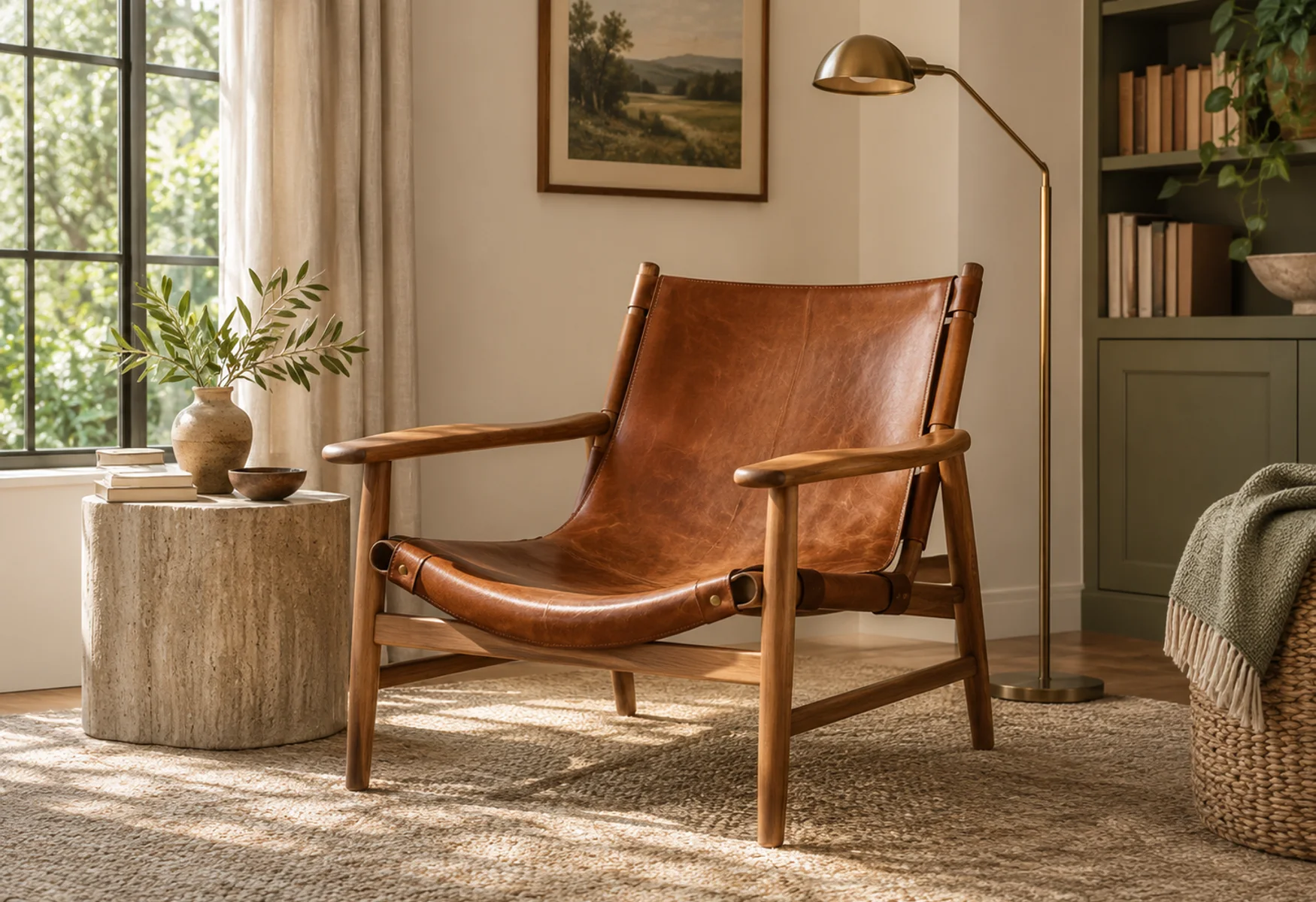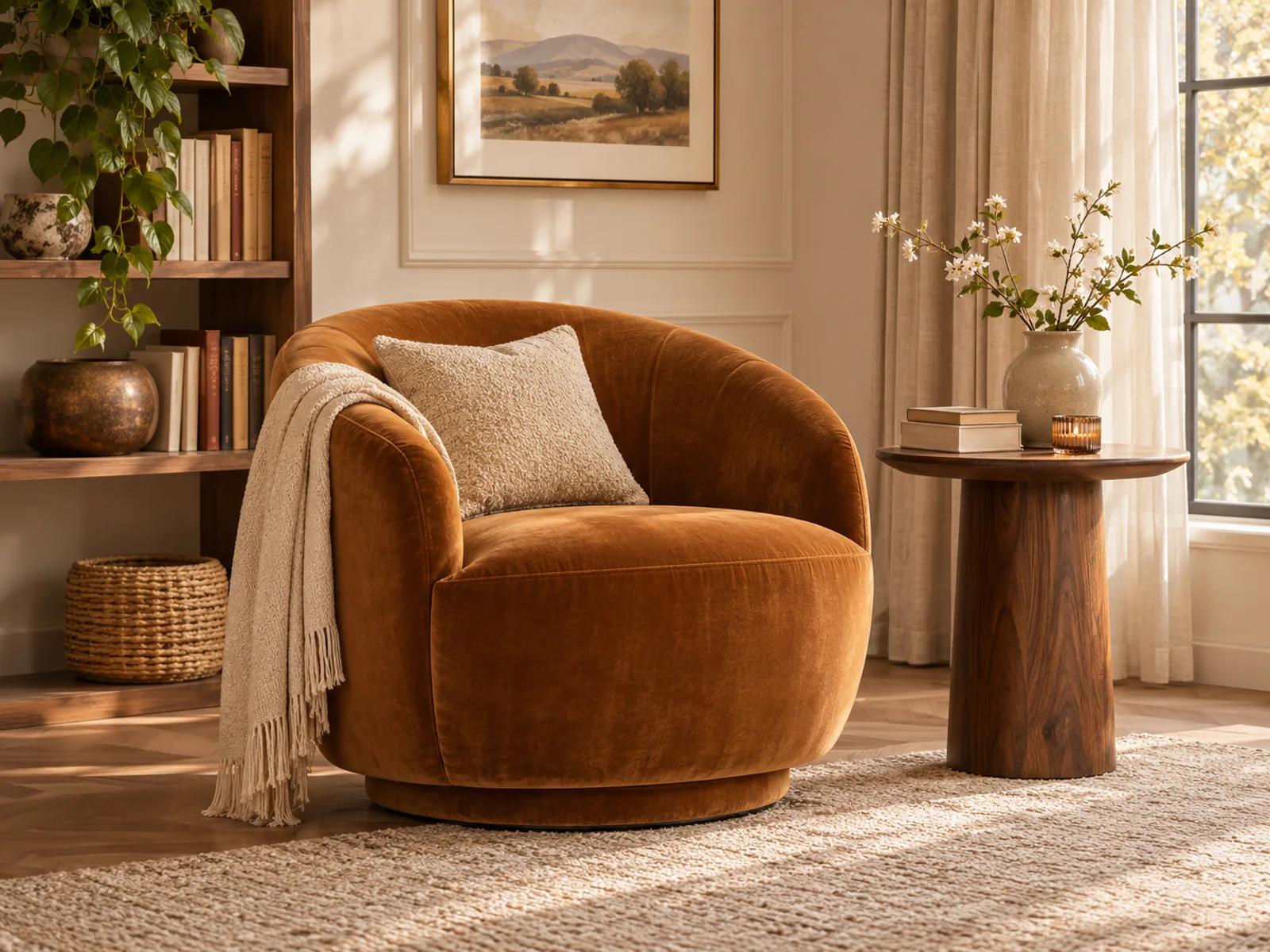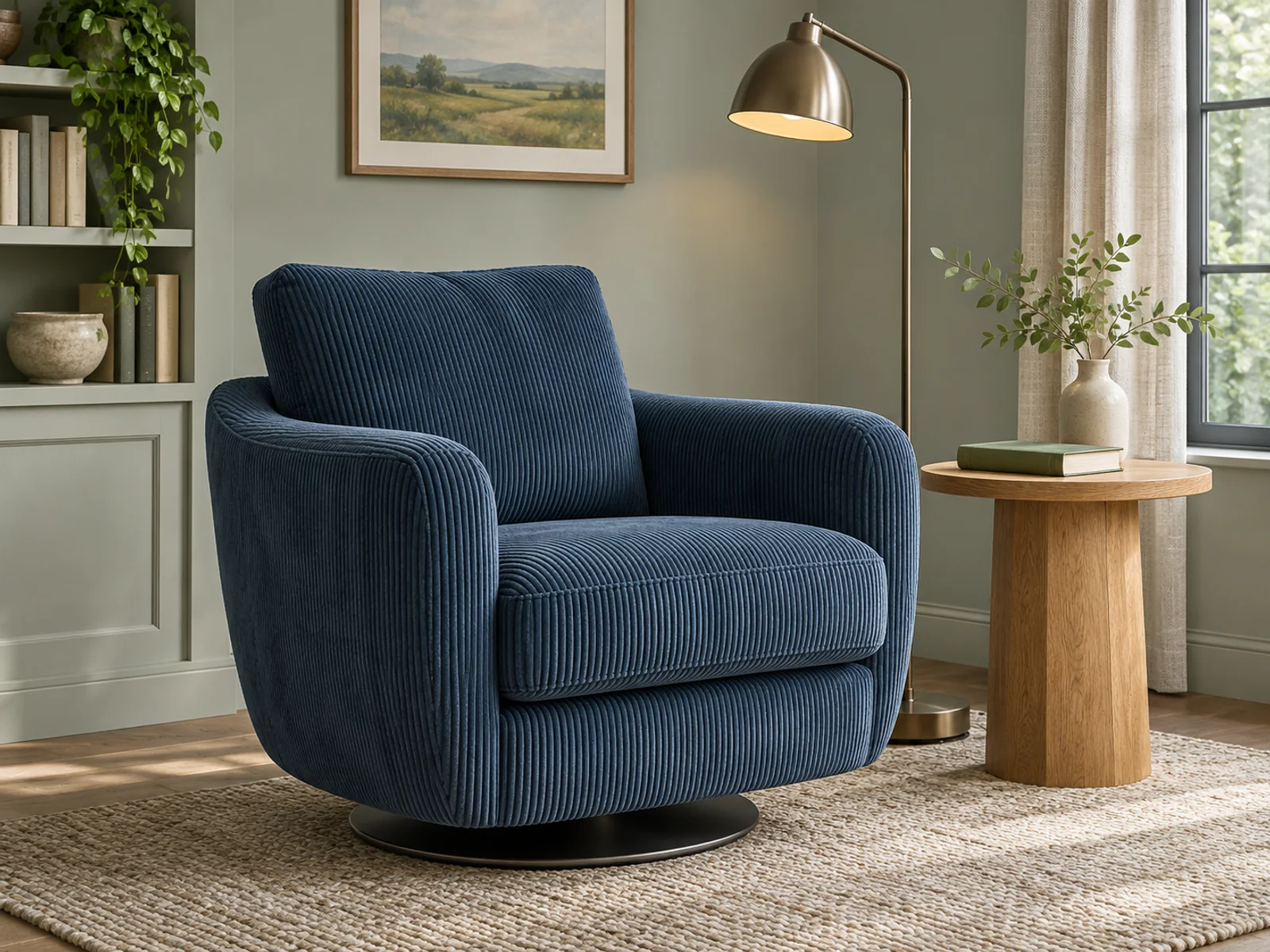
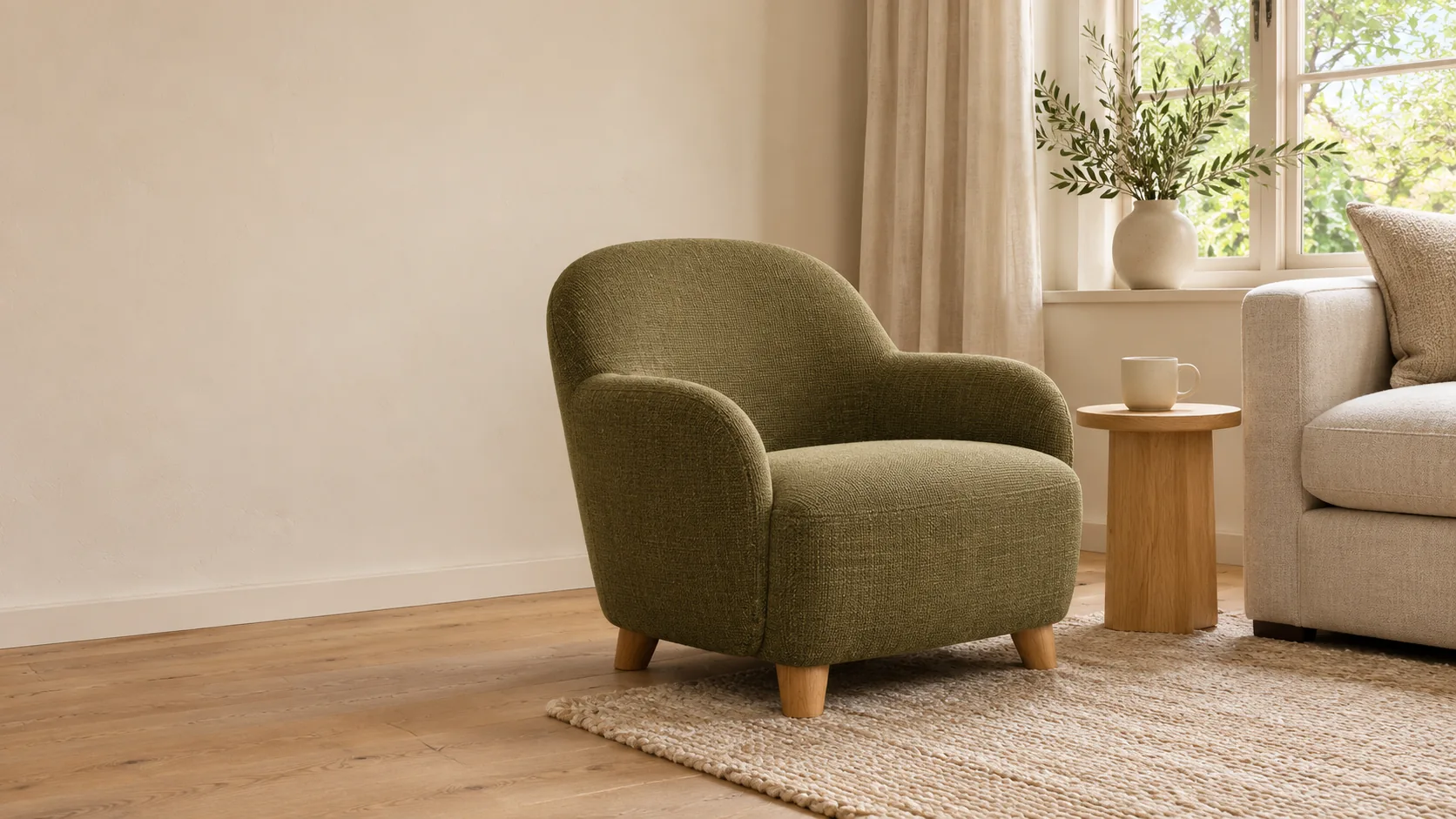
A role rather than a single chair shape
An accent chair might be a compact armless seat, a substantial armchair or a swivel design. The IKEA armchair and accent-chair collection illustrates that variety of formats. Read the actual dimensions and features instead of assuming the name identifies a particular kind of seat.
Start with the job you need it to do. A chair for reading every evening deserves a different comfort check from one used briefly when guests visit. Both can provide an accent without being interchangeable.
Choose one point of contrast
If your sofa is plain and neutral, a chair can introduce color, a different texture or a more curved outline. Choose the contrast you care about first. A vivid color and an elaborate pattern are not both necessary to make the chair noticeable.
Try repeating one existing detail, such as a wood tone or a color in artwork. This gives the new piece a connection to the room while leaving it distinct from the sofa.
Make the seat fit the person
Check seat height, depth, back angle and arm position. Sit long enough to notice whether the shape supports the activity you planned. A deep chair may suit curling up but feel less convenient for upright conversation.
Our reading chair guide focuses on that everyday use. If you prefer an open-sided silhouette, compare it with the slipper chair explanation rather than choosing from appearance alone.
Place it within the seating group
Mark the full footprint on the floor and leave space to sit down and walk past. A swivel chair also needs room to turn. Check a recliner in its open position if the accent chair includes moving parts.
Angle the chair toward the people it is meant to join, then check table and light access. A chair tucked into an attractive corner can still feel isolated if it has no relationship to the rest of the room.
Finish with fabric and care
Compare upholstery samples against the sofa, rug and wall. Read the cleaning instructions before deciding that a pale fabric or textured weave suits your routine. The material needs to work beyond the first photograph.
For a more textured contrast, explore velvet chairs. Keep comfort, clearance and maintenance in the decision even when the chair is intended to be the room's visual highlight.
Give the chair a job in the room
An accent chair draws attention through shape, colour or material, but it still needs a seating purpose. Decide whether it is for daily reading, occasional guests or a quiet corner. Then test seat height, depth and support against that use. A chair too small to relax in becomes decoration, while an oversized statement piece can block the path around the sofa. Mark its full footprint and the space to sit down, stand up and reach a table.
Choose one deliberate contrast
Compare a fabric swatch with the sofa, rug and wall colour in your actual light. Contrast can come from texture, silhouette or tone; it need not be a bright colour. Repeat a small element elsewhere, such as a wood finish or cushion colour, to make the chair feel intentional. If the chair is patterned, consider how it looks from the doorway and from the main seat. Avoid buying from a photograph that hides its scale next to ordinary furniture.
Check the everyday details
Read the upholstery care code and warranty, especially for a chair that will be used by children or pets. Check frame stability, leg protectors and whether cushions can be replaced. If the chair sits near a window, ask how the material responds to light. Compare the delivery dimensions with doorways and turning points. A distinctive chair can be a long-lived part of a room when it is comfortable, maintainable and correctly sized; styling alone will not deliver that.
Compare it with the room's other seats
Place the chair so it supports conversation or reading instead of facing only the sofa's side. Check that the seat height does not make one person feel far below everyone else. If it has a swivel base, mark its turning circle and keep it away from fragile lamps. A small side table and appropriate light can make the chair genuinely useful. The arrangement should still allow a clear path through the room when someone is seated.
Common questions
Does an accent chair need to match the sofa?
No. It can share one element, such as color or wood tone, while differing in shape or texture. Choose a connection that looks deliberate to you rather than trying to create an exact match.
Can an accent chair be used every day?
Yes, if its construction, comfort and intended use suit that routine. The accent label does not make a chair decorative-only, but it also does not establish how supportive or durable the particular model will be.
Do I need two matching accent chairs?
One can work well where you need a single extra seat. A pair can balance a larger seating group, but choose the number from the room and how it is used rather than a styling rule.
Where should an accent chair go?
Start near the seating group, a reading light or another useful destination. Keep walkways clear and check whether a table is within reach. Its position should make sitting there practical as well as visually appealing.