Measure the open table for its task
Record top height, width and the leg position. A table for dining needs a different relationship to the seat from a low drinks surface. Crossed supports can occupy knee space even when the tabletop appears large enough.
IKEA's GUNDE folding table listing is an example of a product with its own dimensions and instructions. Use the documentation for your shortlisted model rather than assuming every folding table works like a tray stand.
Understand how it stays open
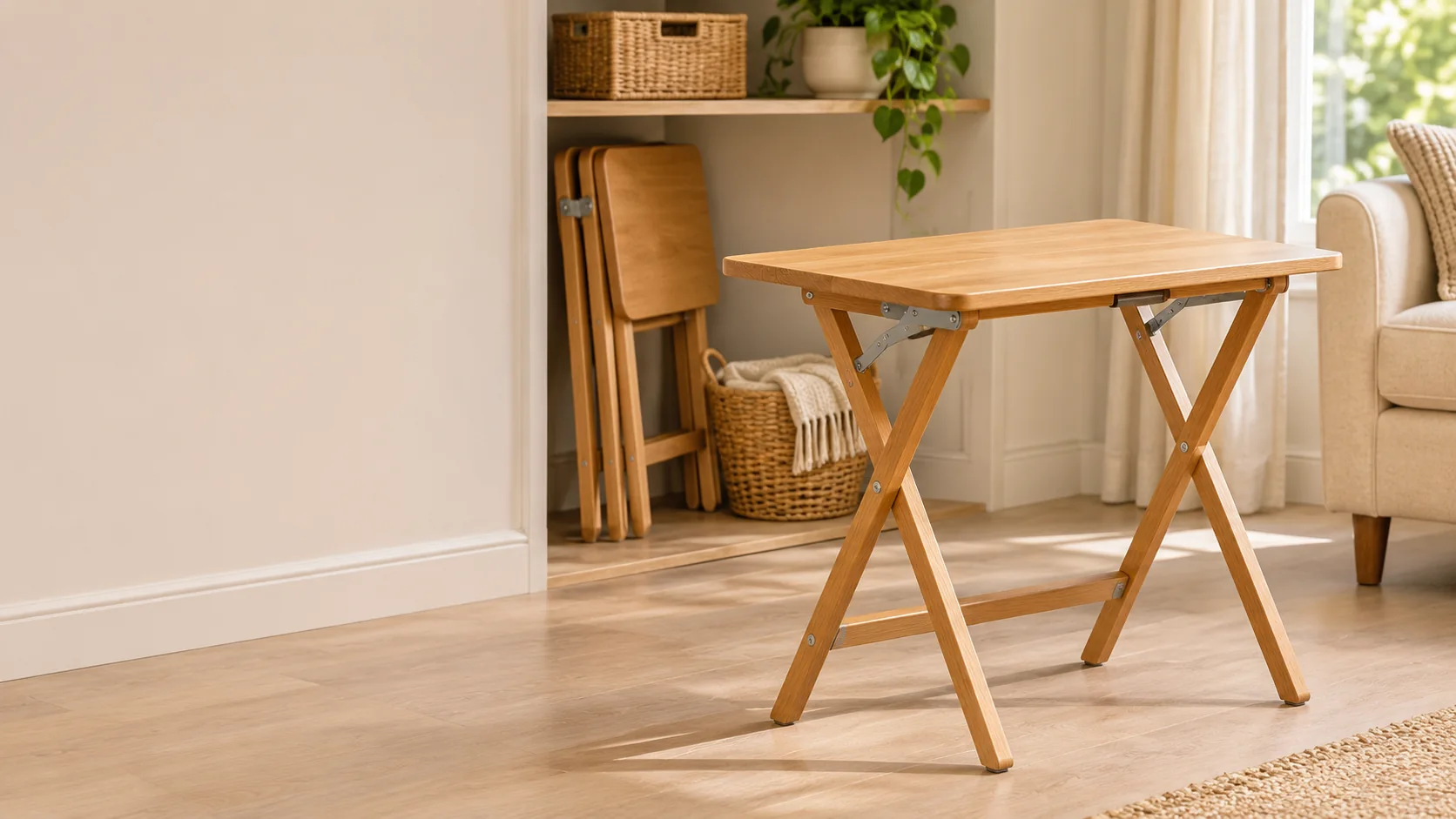
Read the setup sequence and identify the locking or bracing components. Ask for a demonstration if the mechanism is unclear. Confirm the final position before placing anything on the top.
Keep hands away from moving joints as directed and never bypass a stiff or damaged fitting. A table that will not lock correctly needs supplier guidance, not extra weight to hold it in place.
Measure the closed shape honestly
Include handles, protruding feet and the thickness of folded legs. Check the route into the cupboard or storage nook. A table may be narrow when folded but too tall to fit the intended space.
Plan how it will remain secure in storage without falling into a walkway. Follow any storage orientation specified by the maker. Do not balance it behind a door where ordinary use could dislodge it.
Check weight and environment
Decide who will move the table and whether they can use the intended handle or grip. Confirm indoor or outdoor suitability separately. A portable table is not automatically weather-resistant.
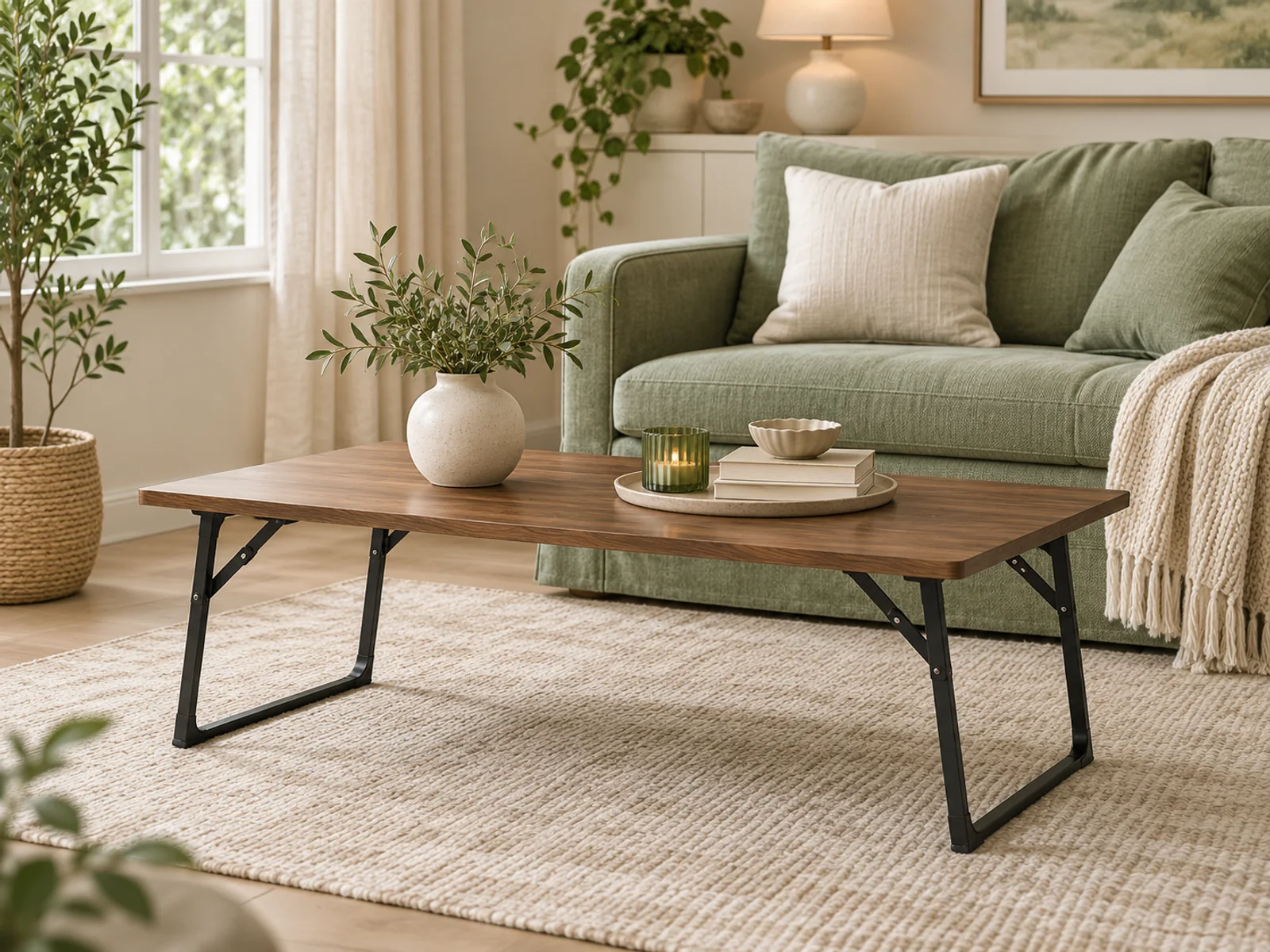
Compare folding side tables and folding coffee tables by these practical details. If you need a permanent surface every day, include a fixed table in the comparison rather than paying for a folding feature you will seldom use.
Measure both operating states
Record the dimensions when the table is open and folded, including handles and any protruding hardware. Tape the open footprint on the floor, then plan where the folded unit will be stored. Check doorways and storage access. A table that fits only in its open state may not solve the space problem that led you to consider folding furniture.
Operate the mechanism as instructed
Ask for a demonstration of the locks, hinges and leg release. Look for an unmistakable locked position and keep fingers clear of pinch points. Follow the manufacturer's setup sequence. Inspect a display unit for wobble and check the stated load limit. Do not sit on or stand on a table unless it is explicitly rated for that purpose.
Check repeated-use details
Consider how often you will fold it, who will lift it and whether its weight is manageable. Examine the tabletop finish, edge protection and feet for the floor type. If it will be used outdoors, confirm that the specific materials and hardware are intended for that exposure; a folding mechanism alone does not make a table weatherproof.
Common questions
Does a removable tray mean the table folds?
No. A lift-off top and folding legs are separate features. Check the assembly diagram and closed dimensions rather than inferring the mechanism from a photograph of a detached tray.
Can I use an indoor folding table outside?
Only if the manufacturer permits that environment. Portability does not establish resistance to rain, humidity or sunlight. Check the care and storage instructions for the exact table.
Should I fold it with objects still on top?
Clear the tabletop first and follow the operating instructions. Keeping a load on it can interfere with handling and the mechanism. Do not use the folding action to carry an unsecured tray of objects.
Will every folding table fit in a closet?
No. Compare its full folded dimensions, including protrusions, with the storage opening.
Can I leave it outside?
Only if the manufacturer rates the exact table for outdoor exposure and provides storage guidance.
How do I know the legs are locked?
Follow the model-specific mechanism instructions and confirm every required latch is engaged.
Are all folding tables lightweight?
No. Compare actual listed weights and test handling if possible.