
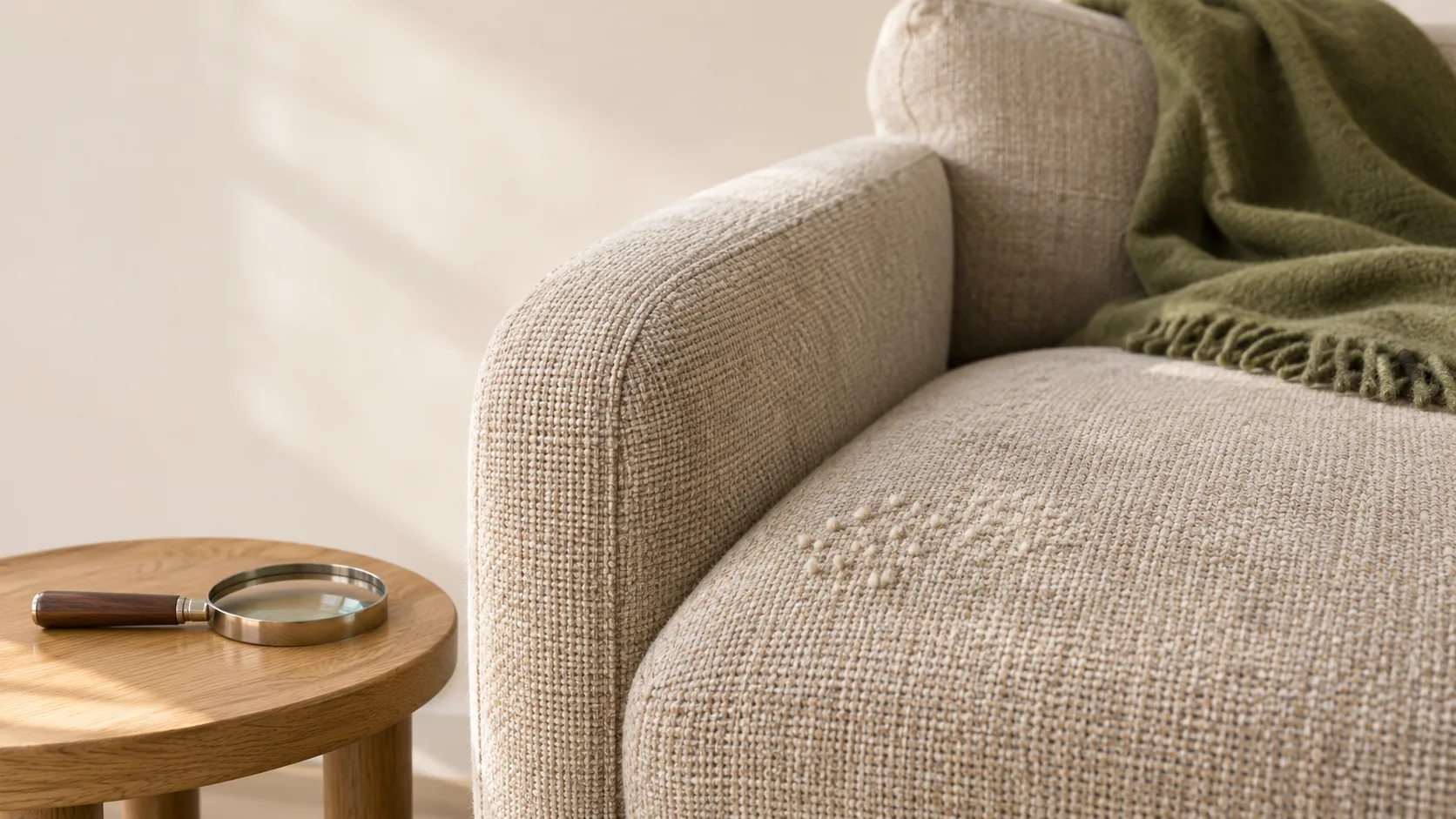
Look closely before treating the surface
Photograph the affected area in good light. Small rounded clumps differ from a long pulled loop, an open seam or a patch where the underlying weave has become thin. Those observations give the supplier something useful to assess.
Pottery Barn's pilling explanation describes loose fibers tangling after abrasion. That explains a common surface change, but it cannot diagnose every mark on your sofa from a photograph.
Check what is rubbing against the seat
Notice whether the affected patch sits beneath a frequently used throw or where clothing regularly contacts the arm. Record where it appears and whether it is spreading. This is more informative than comparing the sofa with an unused showroom sample.
Do not pull the clumps away by hand. If a thread is still connected to the weave, tugging can create another problem. Keep pets and sharp accessories away while you inspect the surface.
Get approval for the removal method
Ask the maker whether your fabric can be depilled and which tool and technique it recommends. A product demonstrated on a tightly woven fabric may be unsuitable for a loose looped texture. Do not start with an exposed razor.
If treatment is approved, follow the tool and furniture instructions and test a discreet area first. Stop if fibers catch or the surface changes. The aim is to remove approved surface pills, not shave down the upholstery itself.
Keep a record if the change concerns you
Save dated photographs, the fabric name and the care routine you have used. Contact the retailer before repeated treatments if you suspect more than ordinary pilling. Ask it to distinguish cosmetic change from a construction or material issue.
Our rub-count guide explains why abrasion data is a separate measure. For routine maintenance, use the cushion cleaning guide with the exact care label rather than improvising a stronger cleaning method.
Distinguish pills from damage
Pills are small balls of loose fibers formed through friction. A pulled loop, torn yarn or thinning patch needs a different response. Photograph the surface in daylight and compare several areas before treating it. Pottery Barn's fabric guidance explains the abrasion process, but your upholstery supplier should assess the particular fabric and pattern of wear.
Reduce avoidable friction
Notice where clothing, throws or repeated contact are abrading the seat. Rotate reversible cushions if the maker permits it and follow the stated cleaning schedule. Do not scrub pills with a stiff brush or pull them off by hand: a connected yarn can catch. If a depilling tool is approved, test the least visible area and stop if the weave changes.
Escalate unusual deterioration
Keep photographs, the exact fabric name and purchase details if the surface becomes thin or pills rapidly across many areas. Ask the retailer whether this is expected wear for the specified material and whether a repair or warranty review applies. Avoid repeated shaving before that assessment, since it may remove evidence and change the upholstery.
Common questions
Does pilling prove the fabric is defective?
Not by itself. Surface pills can develop through ordinary abrasion. If you also see thinning, broken yarns or unusually rapid deterioration, document those features and ask the supplier to assess the exact fabric.
Can I use a sweater shaver on any sofa?
No. Fabric construction and the tool both matter. Get the upholstery maker's approval and follow the specified method. A shaver that works on one textile can catch or damage another.
Will cleaning remove the pills?
Cleaning and depilling are different tasks. Do not scrub harder to remove attached fiber balls. Follow the cleaning code for dirt or stains and ask separately about an approved pilling treatment.
Do all sofa fabrics pill?
No. Fiber, yarn and weave affect the tendency, and use affects where pills appear. Ask about the exact covering.
Should I cut pills with scissors?
Only if the supplier approves that method. Avoid cutting the underlying yarn or opening the weave.
Will a higher rub count prevent pilling?
No. Abrasion and pilling are different measures. Check the fabric's full specification.
When should I contact the retailer?
Contact it if you see thinning, broken yarns or unexpectedly extensive change, ideally before trying repeated treatments.