
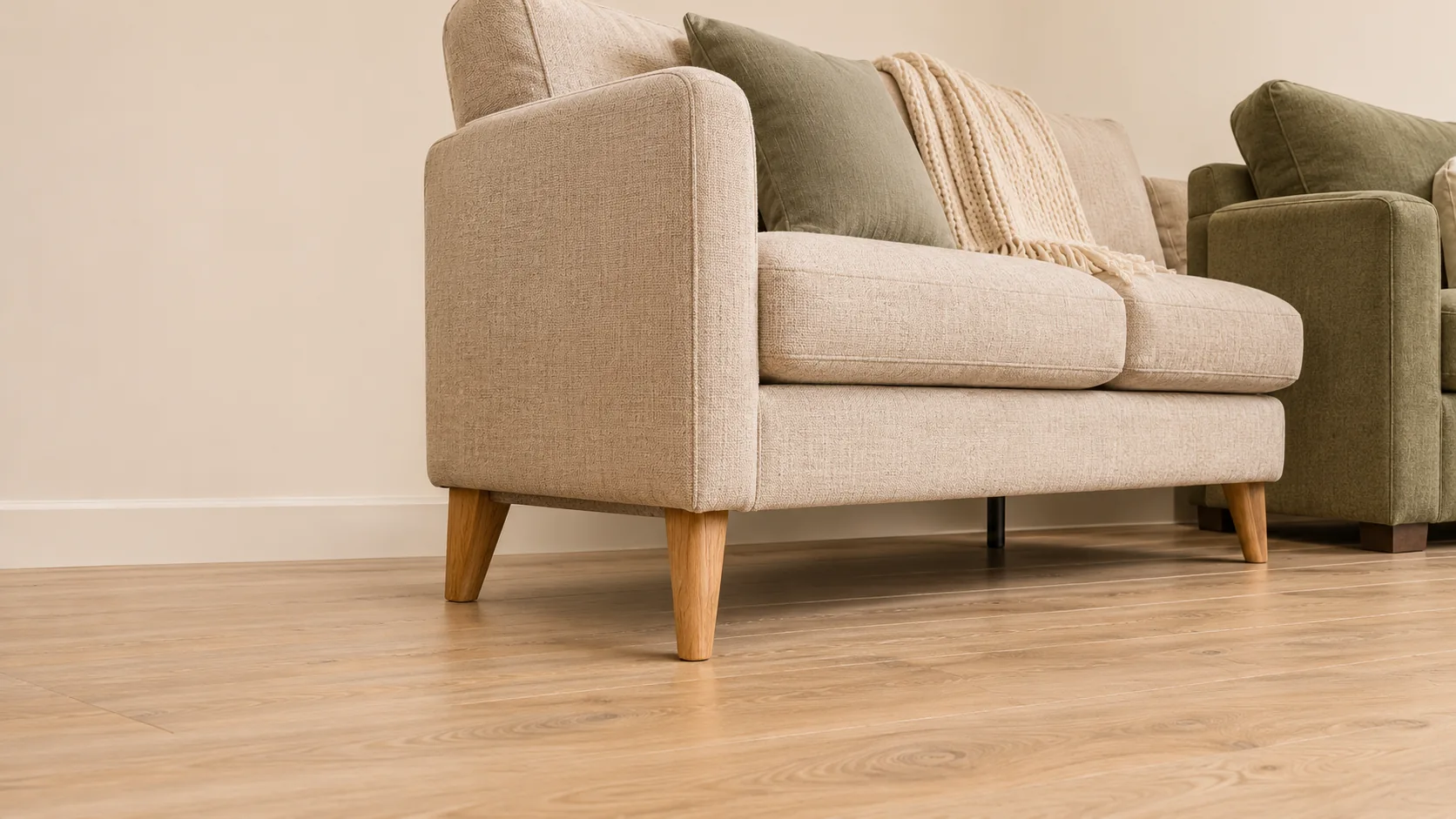
Separate clearance from seat height
Measure floor-to-frame clearance and floor-to-seat height independently. A sofa with tall legs can still have a low seat if its frame and cushion are shallow. The lowest crossbar or center support may leave less cleaning space than the visible front edge suggests.
If you use a robot vacuum, compare its actual height with the lowest accessible point. Leave room for entry and turning rather than treating a close numerical match as proof that it will travel underneath.
Look at the supports you cannot see
Ask for an underside diagram and the assembly instructions. Center legs may be essential even when they disappear in a front photograph. Confirm which supports touch the floor and whether the manufacturer specifies any adjustment.
The Design Within Reach construction guide distinguishes external and internal frames and legs. Use the complete support layout when comparing sofas, rather than judging strength from the two front legs.
Check floor contact and placement
Look at how far each foot projects beyond the upholstered body. An angled leg can occupy walking space outside the apparent frame. Check the floor-protection instructions for both the furniture and your flooring.
When a rug sits partly beneath the sofa, consider every support, including the middle ones. Do not solve an uneven setup by removing a required leg. Ask the supplier how the model should sit on that combination of surfaces.
Treat replacements as a compatibility question
Before changing leg height, request an approved part number, fitting method and any restrictions. Raising the frame changes more than its appearance, particularly where reclining or sleeper mechanisms are involved.
Compare compact sofas in their supplied configuration first. Our seat depth guide covers another measurement to test while you are seated. Keep the original parts and instructions if the manufacturer approves a change.
Look beyond the visible shape
Legs affect seat height, floor clearance and style, but their attachment to the frame matters more than their silhouette. Ask whether they screw into reinforced points, bolt through a rail or are integrated into the base. Check the maker's assembly instructions and user weight rating. Design Within Reach's sofa guide is a broad construction reference; the exact model's structure decides. Do not assume a chunky wooden leg means a strong frame or a slim metal leg means a weak one.
Test the legs on your floor
Measure under-sofa clearance if cleaning tools or storage need to pass. Check the feet against hardwood, tile or a rug and use suitable protectors that do not make the sofa unstable. A very tall leg can change the sitting height and make a deep sofa harder to use. If the sofa rocks on an uneven floor, follow the maker's levelling advice rather than placing random objects under one foot. Keep vents and heating outlets clear.
Check replacements before changing the look
Aftermarket legs may have different thread sizes, mounting plates or load limits. Ask the manufacturer whether a replacement is approved for your exact frame. Keep original hardware and the installation instructions. Changing legs can alter stability, seat height and warranty terms. If the goal is only a different colour, compare a sofa that already has the desired base rather than treating a structural part as interchangeable decoration.
Common questions
Will taller legs make a sofa more comfortable?
They change the height of the whole seat, which may or may not suit you. Try a sofa at the proposed finished height and obtain approval for the replacement before buying parts.
Can I leave the center leg off?
No, unless the manufacturer explicitly says it is optional for that configuration. A hidden support can be structurally important. Check the assembly diagram rather than assuming it is a spare.
Do all screw-in legs use the same fitting?
No. Thread, attachment plate and load requirements can differ. A visually similar fitting is not enough to establish compatibility. Ask for the exact approved replacement for your sofa.
Do taller legs make a sofa better?
They can create cleaning clearance and a lighter look, but they also raise the seat. Test comfort and stability on the actual model.
Can I fit universal replacement legs?
Do not assume compatibility. Check thread, mounting, load and warranty with the sofa maker before changing them.
Should legs match other furniture?
They can echo a wood or metal finish without matching exactly. Seat comfort and floor fit come first.
What if one leg is loose?
Stop using the unstable sofa and follow the manufacturer's fastening or service instructions. Do not keep adding pads to hide a failing joint.