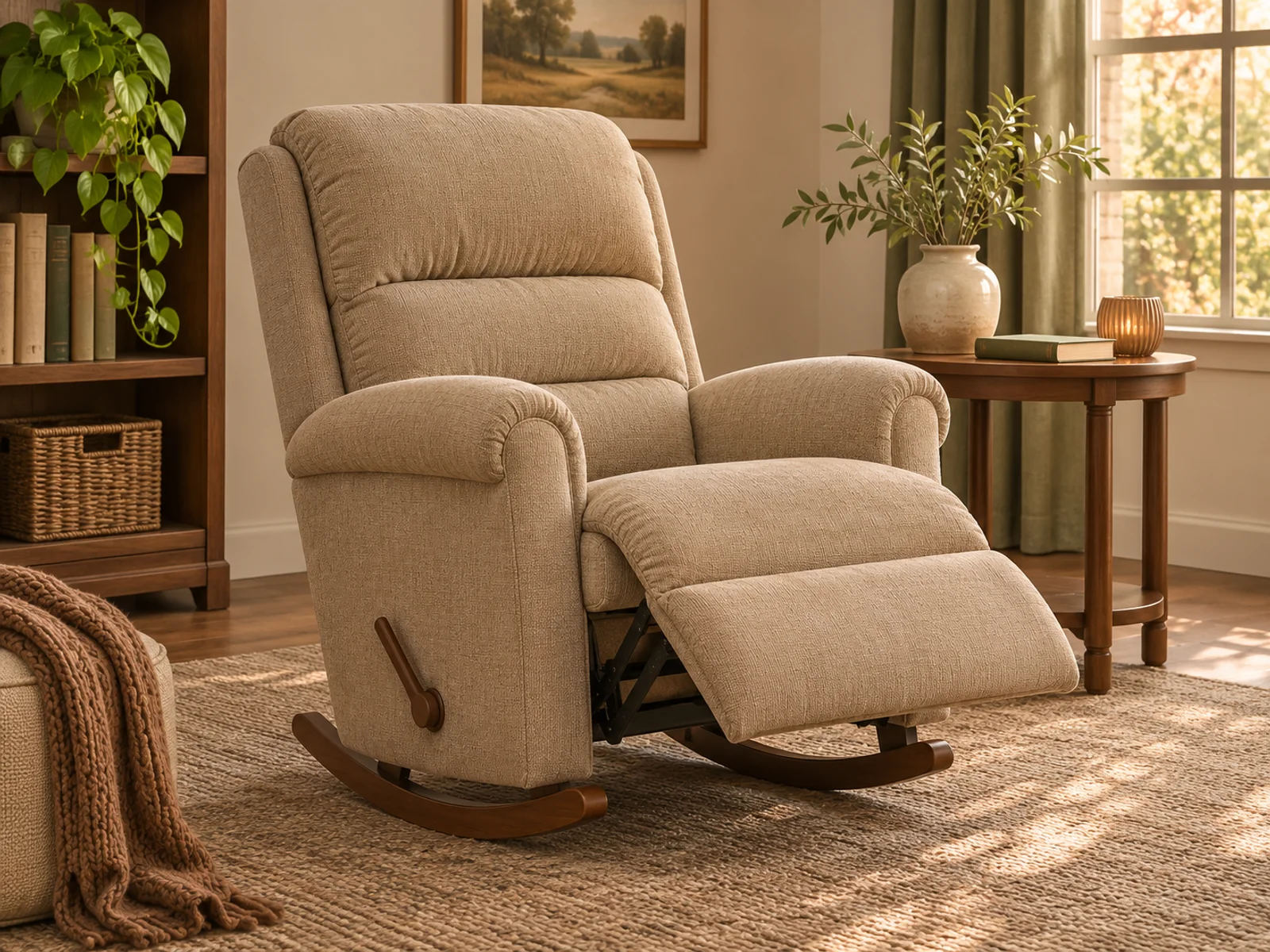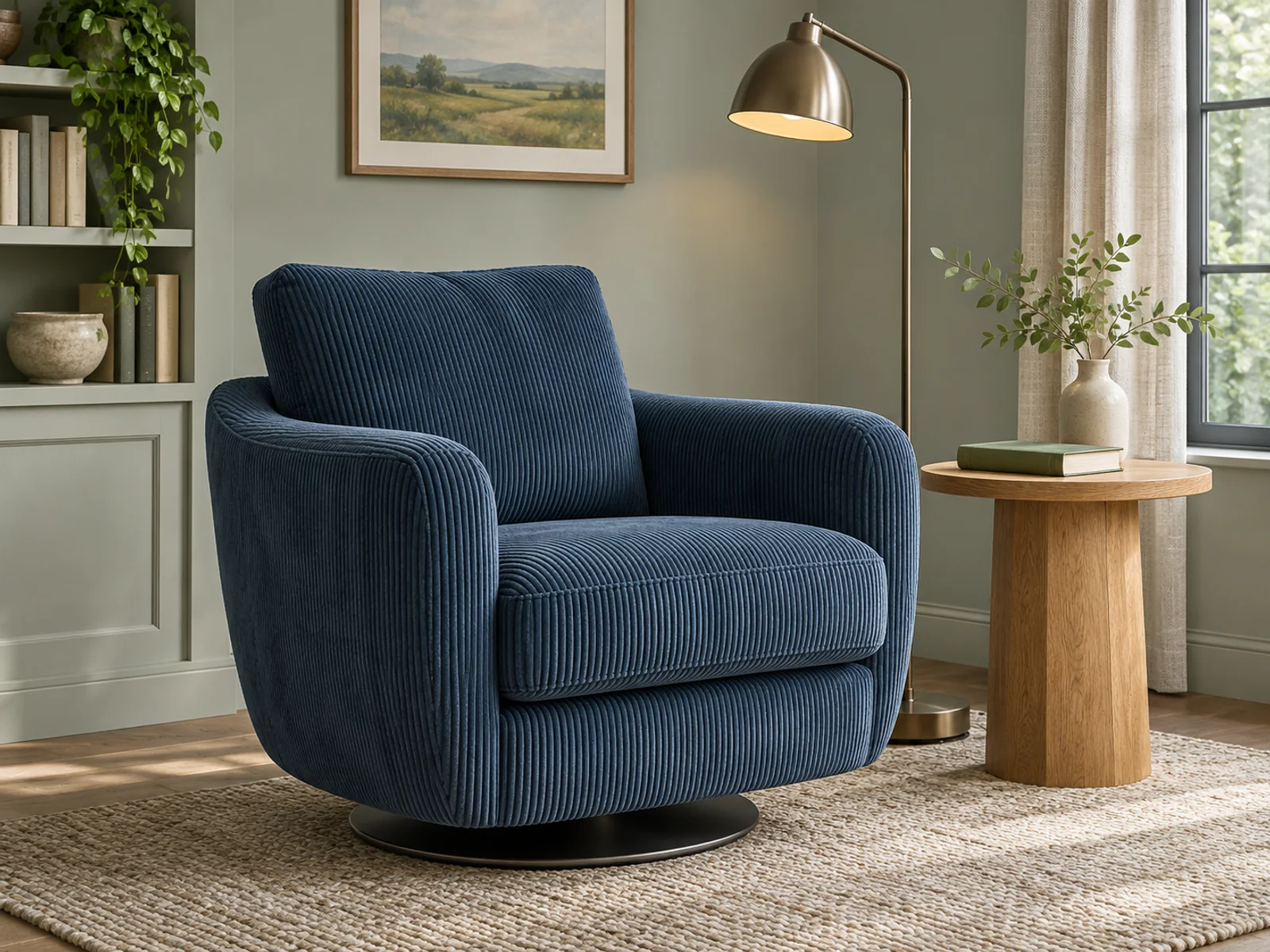
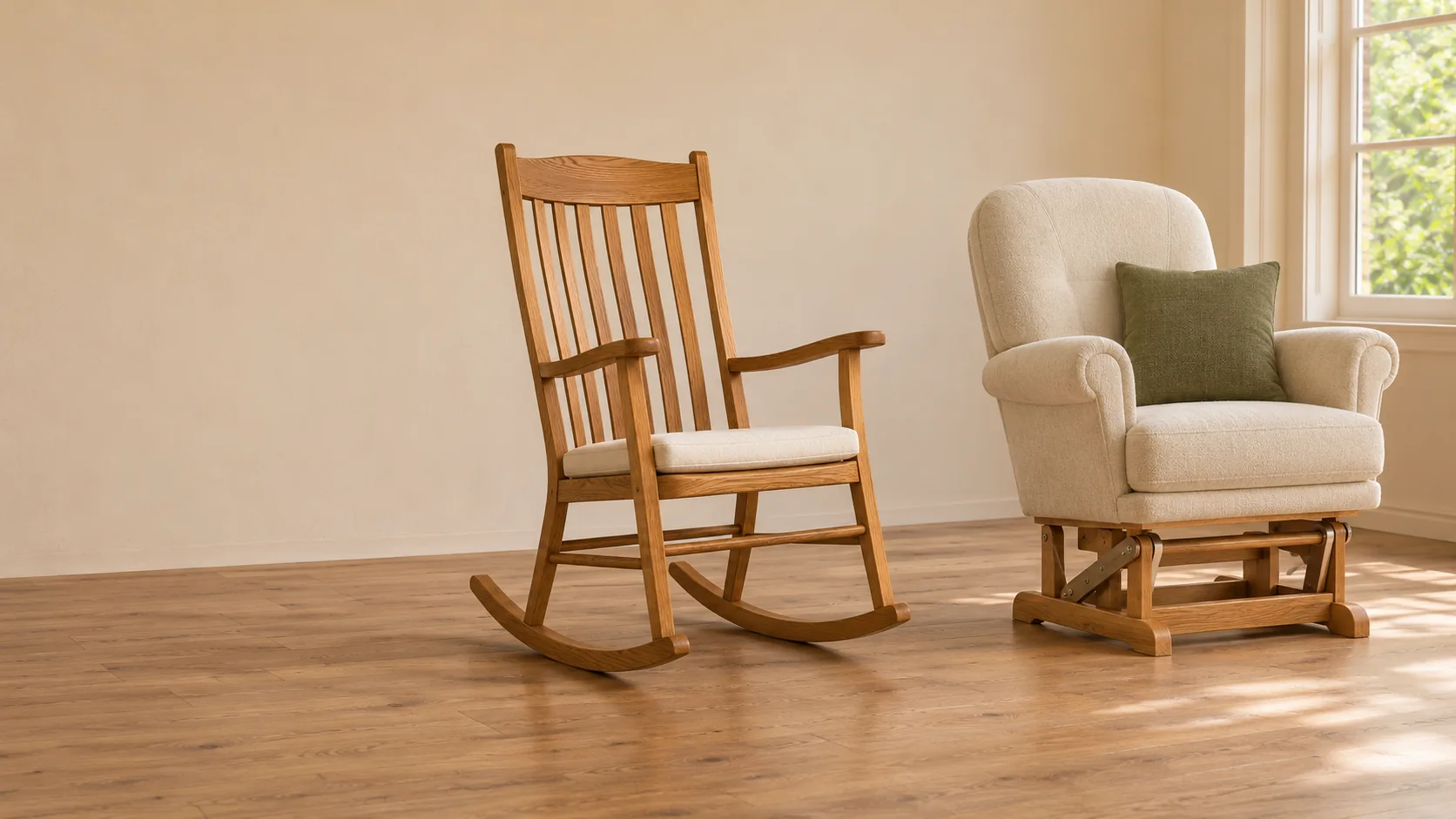
Separate the movement from the chair style
Visible curved runners are common on traditional rocking chairs. Gliders usually keep a base on the floor while the seat moves relative to it. Recliners can incorporate rocking or gliding through different mechanisms.
La-Z-Boy's gliding-recliner page distinguishes rocking and gliding among its movement options. Confirm the exact functions rather than assuming an upholstered chair behaves like a traditional wooden rocker.
Try the motion you will actually use
Sit with your feet in their normal position and start with a gentle movement. Notice whether you can control it comfortably and how the back and arms support your preferred position. Different models can feel quite different within the same category.
If another household member will use the chair, have them try it too. Avoid choosing from claims that one motion suits everyone. A footrest or matching gliding ottoman adds another piece to assess, not an automatic improvement.
Reserve space for the whole movement
Check the manufacturer's required clearances around the base, back and arms. Keep the motion away from nearby tables and curtains. If the chair also reclines, include that position in the room plan.
Follow the instructions for keeping children, pets and loose objects clear of moving parts. A hidden mechanism can still have pinch points. Do not treat upholstery around the base as evidence that the mechanism is inaccessible.
Compare care and long-term support
Ask how the frame and mechanism should be checked, cleaned and serviced. Use only the adjustment or lubrication methods the manufacturer permits. A squeak is not a reason to spray a household product into an unknown mechanism.
Our glider explanation covers the format, while rocking chair comparisons help with specific options. Keep the model number and operating instructions available after delivery.
Compare the motion in the actual room
A rocker follows a curved arc on its runners, while a glider uses a mechanism to move the seat. Try both with feet on the floor and the back in a normal posture. A motion that feels gentle in a showroom may need more space than expected beside a wall or table. Mark the furthest forward and backward points and check that a rug edge or pet bed will not catch. If the chair also reclines, test that movement separately rather than assuming the rocker or glide footprint covers it.
Choose for the person who will sit there
Check seat height, depth, arm support and how easy it is to stand up. A chair used for reading or feeding needs a reachable lamp and table; a chair used occasionally may prioritise a smaller footprint. Ask how the mechanism or runners are maintained and whether parts can be repaired. A glider may have moving joints that can squeak; a rocker needs a stable floor and enough clearance for its arc. Neither style is inherently more comfortable for every user.
Keep the movement area clear
Follow the maker's instructions for assembly, locking and weight limits. Keep small hands, cords and loose blankets away from moving parts. Test stability on the intended floor before regular use, especially if a thick rug or uneven board changes contact. Store the manual so a later noise or uneven movement can be checked against the actual design. A comfortable chair still needs a safe path to enter and leave it.
Common questions
Does a glider move across the floor?
Its intended motion is usually between the seat and its supporting base, but stability depends on the design, assembly and floor. Follow the placement instructions and stop using a chair that shifts unexpectedly.
Can I use a rocker on a rug?
Check the manufacturer's guidance for the chair and the floor covering. Rug thickness and edges can affect the movement. Test the approved setup without placing runners partly on an uneven edge.
Do rocking recliners keep rocking when reclined?
That behavior depends on the mechanism. Some functions change or lock in certain positions. Read the exact operating instructions and ask the retailer to demonstrate the sequence.
Does a glider need less room?
It may move in a different path, but the exact model's dimensions decide. Mark its full motion rather than relying on the category name.
Can I put either chair on a rug?
Check the maker's floor guidance and test stability and movement on the actual pile. A rug edge can catch a runner or base.
Which is easier to stand from?
Seat height, arm position and movement control matter more than the name. Try the chair in a normal posture and ask for help if mobility is a concern.
Is a glider the same as a recliner?
No. Some models combine features, but gliding and reclining are separate mechanisms. Check the exact model's functions and clearance.