
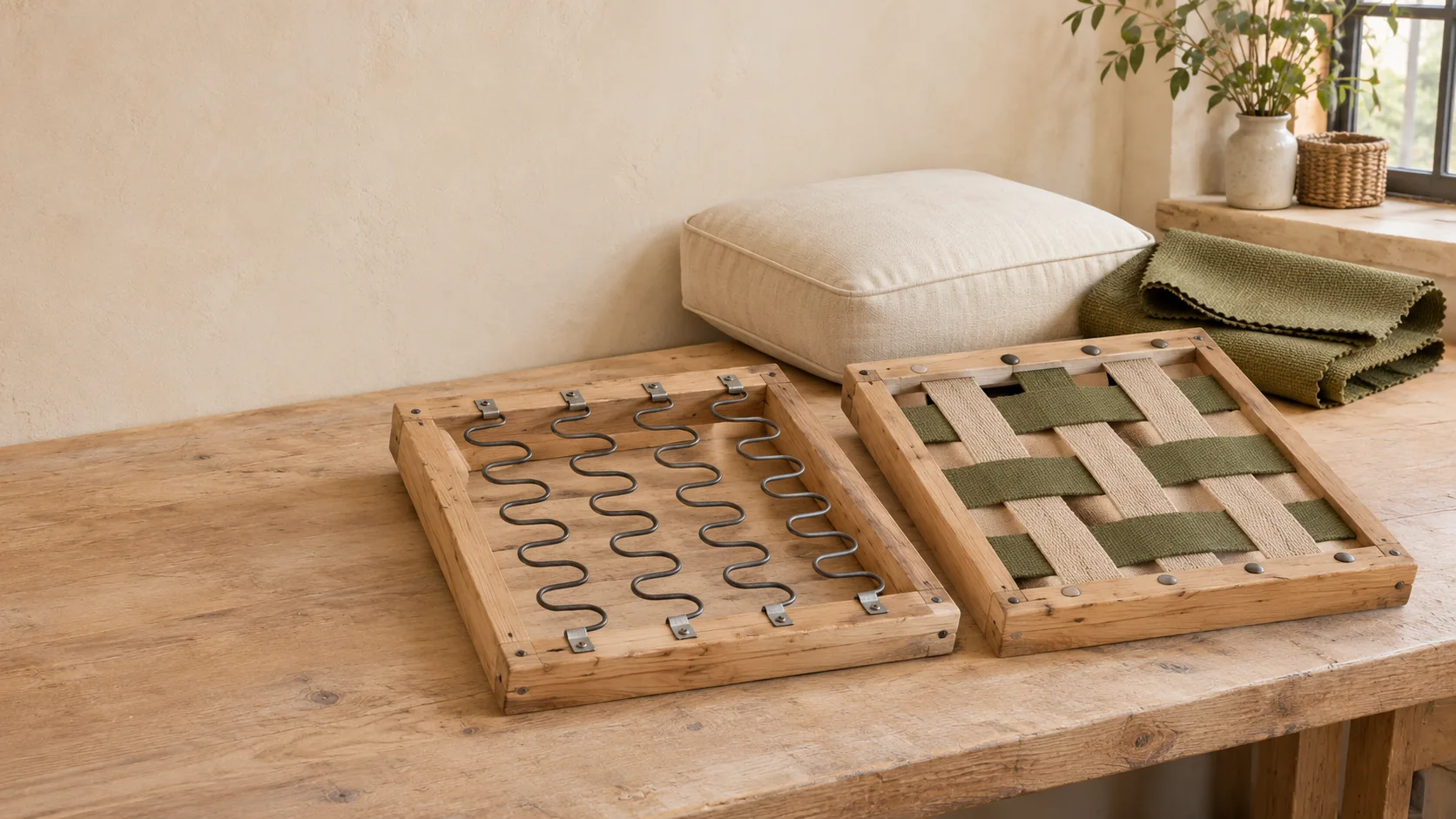
Find the layer below the cushions
Suspension spans the seat frame and carries the cushions above it. It is different from a spring unit that might be built inside a cushion. Ask the retailer which layer its description refers to.
The DWR sofa guide describes spring suspension using metal springs and web suspension using elastic bands. That distinction explains the material and layout, not a universal ranking of every sofa made with them.
Ask what the specification leaves out
A listing that says spring support does not tell you the complete arrangement, attachment method or frame construction. Webbing descriptions can also omit the direction and spacing of the bands. Request the construction sheet if these details matter to your comparison.
Keep the answer model-specific. A retailer may stock sofas with several different support systems, so a general brand description might not apply to the one in your cart.
Compare the sit without changing everything else
Try the middle and end seats with the intended cushions in position. Notice how the surface responds when another person sits down. Repeat the same sitting position across your shortlist.
Different cushion fillings can overwhelm the difference you expected from suspension alone. Our foam and down comparison helps separate the cushion choice from what is underneath. Record the filling as well as the suspension in your notes.
Investigate a problem before naming a repair
A hollow or uneven seat can involve the cushion, its support or the frame. Do not order replacement springs merely because the seat feels low. Photograph the issue and ask the manufacturer or an upholsterer to identify the affected part.
Check the sagging couch guide before attempting a repair. For a new purchase, ask whether support components can be serviced and which written warranty terms apply. A construction label is most useful when it leads to specific answers.
Understand the support path
The sitter's weight passes through cushions to springs, webbing or another suspension system, then into the frame. A label naming one layer does not describe the quality of the whole seat. Ask how the support is attached, whether it can be repaired and what the warranty covers. Design Within Reach's construction guide shows common approaches, but the exact sofa's specification decides. Sit across every position, including the centre and corner of a sectional, to notice uneven support.
Compare comfort without changing every variable
If two sofas use different suspension, try models with similar cushion firmness and seat depth. Otherwise, a softer cushion may be mistaken for a weaker spring system. Check whether the seat recovers after standing and whether a creak or dip occurs in one location. A loose webbing strap, broken spring or cracked rail can feel similar through the cushion. Inspect the underside only as the maker permits and use a professional for structural repair.
Plan for long-term service
Ask how a damaged support would be accessed, whether parts are available and who performs the work. A sofa may be worth repairing when its frame and fabric are otherwise sound. Keep the warranty and model number with the purchase record. If the seat suddenly drops or exposes metal, stop using it until assessed. Choosing springs or webbing should be part of comparing the complete construction, not a slogan that one system always wins.
Common questions
Are springs always better than webbing?
No universal ranking follows from those labels. Design, materials, assembly and cushions all affect the result. Compare the complete sofa and try it rather than treating one support type as a quality certificate.
Does firmer mean longer lasting?
Firmness describes how the seat feels, not a guaranteed service life. A firm cushion can sit over different support systems. Look for construction details and applicable warranty terms separately.
Can I see the suspension by removing the cushions?
Sometimes a fabric platform still covers it. Do not cut or remove that covering to investigate a new sofa. Request a diagram or have the supplier inspect it through an approved process.
Are springs always firmer?
No. Cushion construction, seat geometry and the particular spring system affect feel. Try the exact sofa.
Can webbing be replaced?
Often a qualified upholsterer can assess it, but access and frame condition matter. Ask for a written scope before work.
What causes a single seat to sag?
The insert, support layer or frame may be involved. Identify the failed layer rather than buying foam immediately.
Which lasts longer?
Quality of materials, assembly and use matter more than the category word alone. Compare warranty and repair options for exact models.