Look at the gray beside something neutral
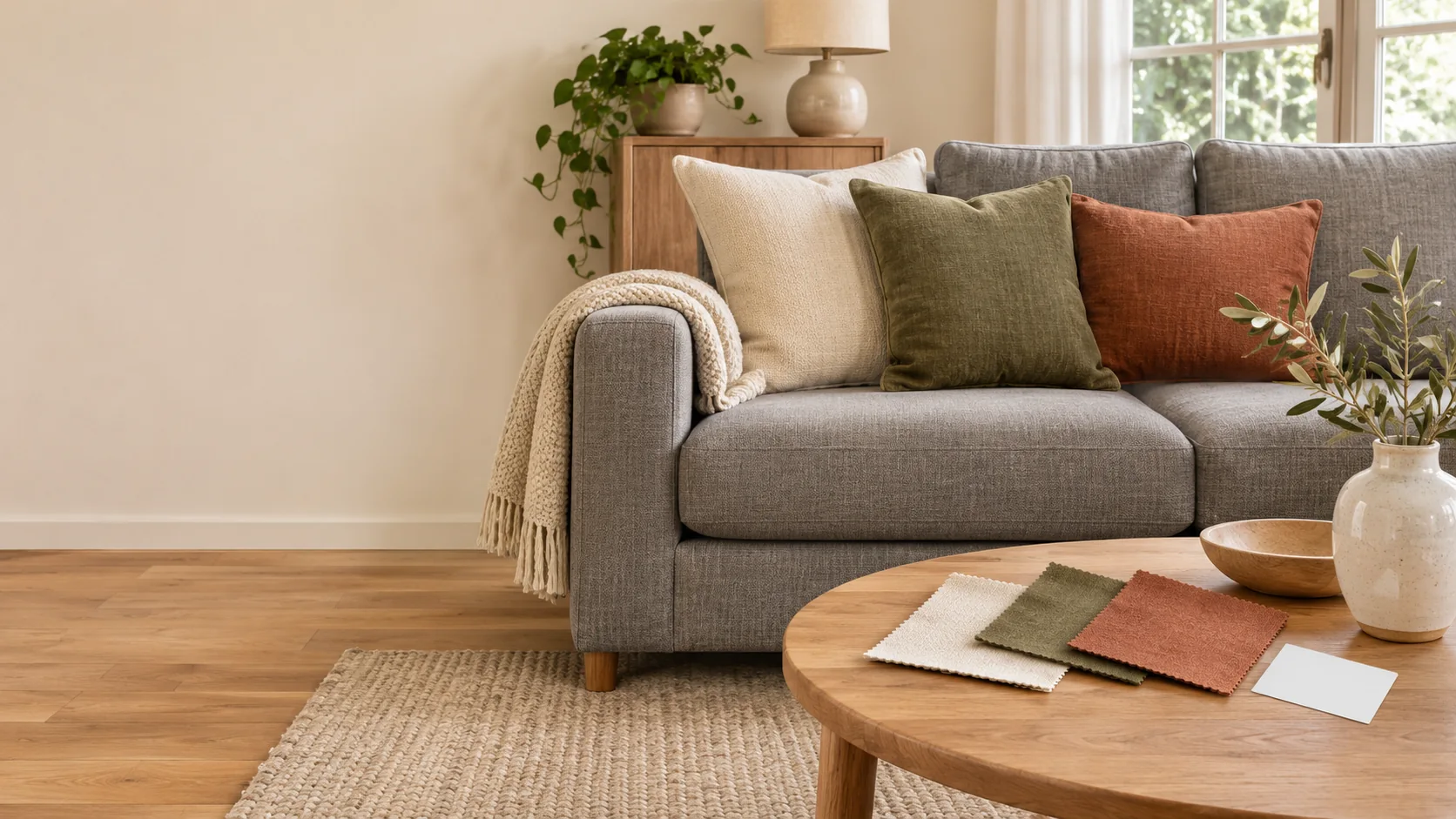
Place the upholstery sample beside a plain white sheet and the existing flooring. It may look blue, green, violet or warm brown by comparison. You do not need a technical color label to notice which nearby materials make it feel different.
View the sample in the place where the sofa sits. A gray that looks quiet near the window may look darker across the room. Compare it with the largest existing surfaces before adding small decorative accents.
Try a warm, quiet palette
For a softer contrast, sample warm off-white, natural wood and an earthy accent such as muted rust. These are editorial combinations to test, not a claim that all warm colors work with every gray.
Benjamin Moore's white-paint guidance explains that whites have different undertones and can change appearance under natural and artificial light. Compare wall samples beside the fabric rather than selecting a white from its name alone.
Try a cooler or greener direction
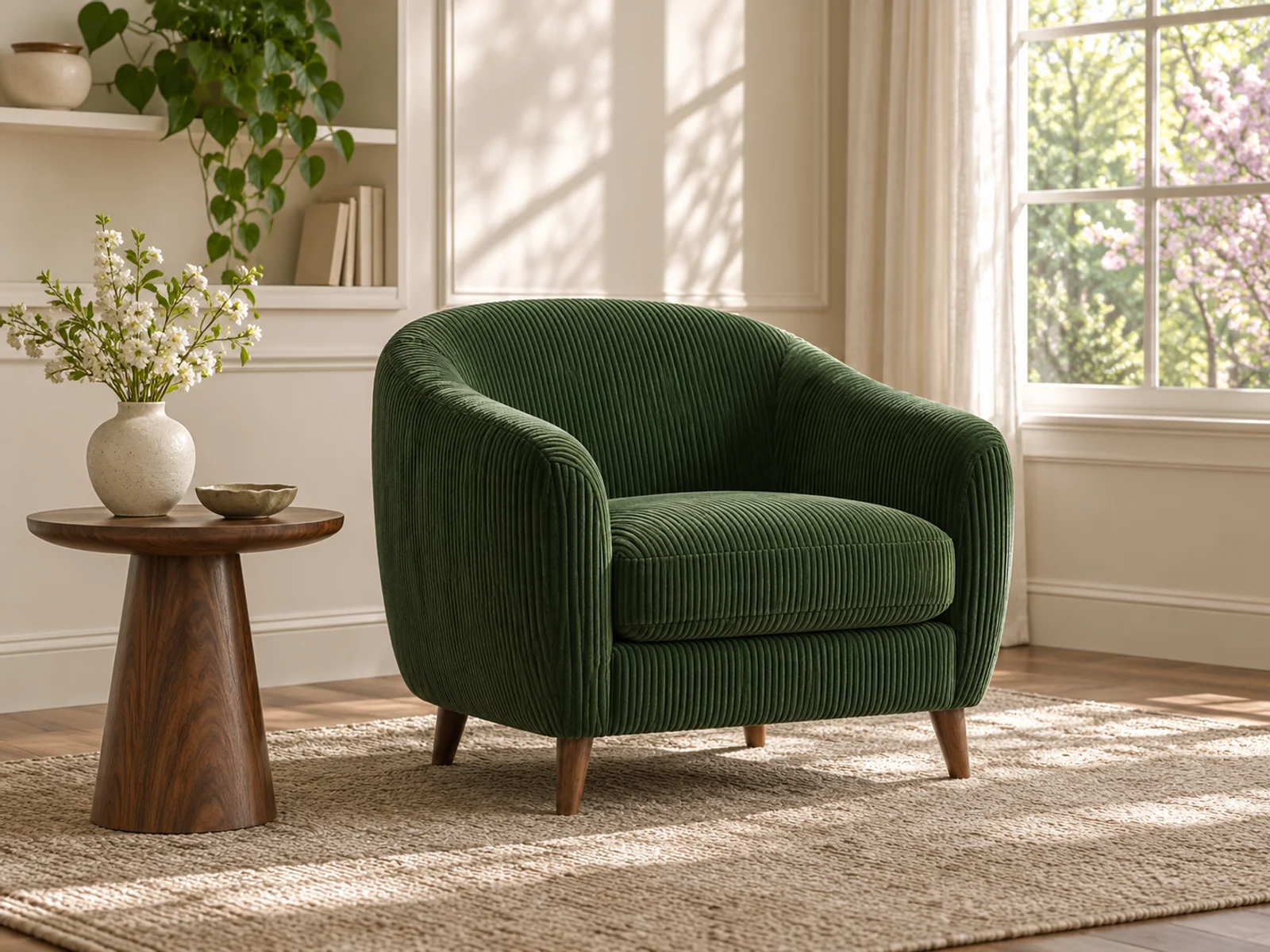
A blue-gray sofa can be paired with deeper blue and a pale neutral for a quieter contrast. A muted green chair or textile may add distinction without making the sofa the strongest color in the room.
Lay the samples together and remove one at a time. If the combination becomes clearer with fewer colors, keep the simpler version. There is no requirement to repeat every accent across cushions, curtains and artwork.
Use texture when you want less color
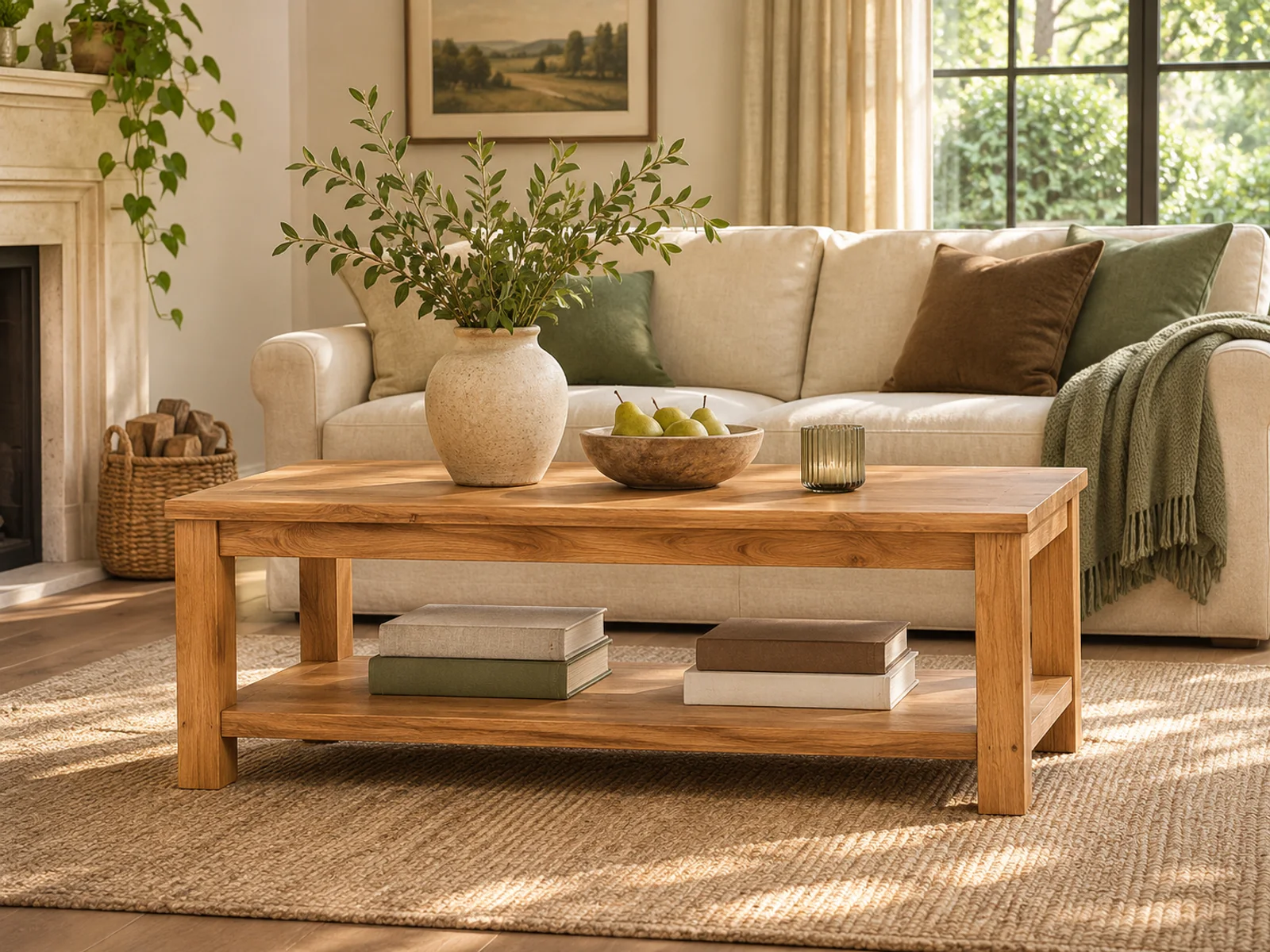
A room can have a narrow palette and still contain visible differences. Compare a woven rug, a smooth table and a textured cushion beside the sofa. Keep the material care requirements in mind, especially on frequently handled pieces.
Our green chair guide and wood coffee table guide offer ways to explore those directions after checking size and material.
Sample the largest change first
If you are repainting, test the wall color before buying a collection of accessories. If the walls are staying, choose the rug or curtains around them and the sofa. Small cushions are easier to change later.
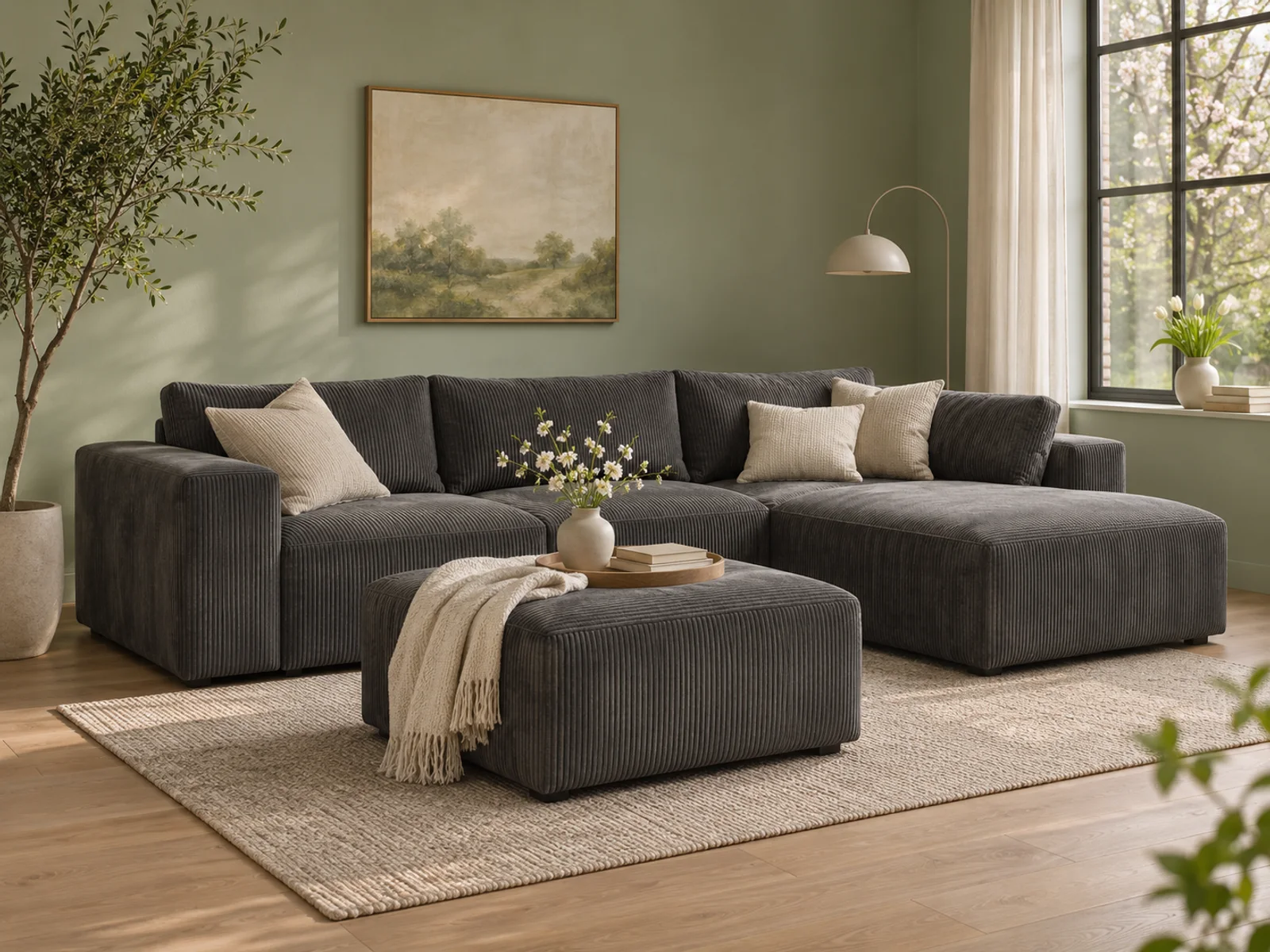
For the reverse decision, see choosing a couch for gray walls. A gray sofa with gray walls needs careful sample comparison because similar-looking undertones can become more obvious side by side.
Read the sofa's undertone beside the room
Grey upholstery can look blue, green, violet or warm brown depending on light and nearby finishes. Bring wall, curtain and rug samples to the sofa rather than relying on a screen photograph. Compare them in daylight and under the lamps used at night. A warm wood floor may make a cool grey couch appear bluer. Decide whether to balance that with cream and camel or lean into cooler blue and green. There is no single palette that fits every grey sofa.
Try the largest change first. A rug or wall colour covers far more area than a cushion, so test it before buying small accents.
Use texture to create depth
If you prefer a restrained palette, vary materials instead of adding several bright colours. A woven rug, wood table and matte ceramic can make grey seating feel less flat. Keep a clear value difference between sofa and wall so the room has shape. If the sofa is dark, a lighter rug can anchor it; if it is pale, a deeper accent chair or table may provide contrast. Check that the chosen textiles can be cleaned in the household's normal routine.
Common questions
Can gray and brown work together?
Yes. Compare the actual shades and materials. A wood table or brown leather chair can provide warmth, but its red or yellow tones may become stronger beside a cool gray sofa.
Does a gray sofa need bright cushions?
No. You can use a restrained palette and create interest through texture or differences in lightness. Add a strong color only if you like how it looks with the existing room.
Should I choose the same gray for curtains?
An exact visual match is difficult across different materials and light conditions. Compare samples at the window and sofa. A deliberate difference in shade may be easier to coordinate than a near match.
Can grey and brown work together?
Yes, when the undertones and textures are considered. Test a wood or brown fabric sample beside the exact sofa and floor. A warm accent can soften a cool grey room.
Do I need a bright accent colour?
No. Contrast can come from light and dark values or texture. Choose a strong colour only if you enjoy seeing it across the room every day.
Will cream make a grey room look cold?
It depends on the sofa undertone, wall colour and light. Test a cream sample beside the couch in daylight and lamplight. A warmer off-white or wood tone may soften the result.
Can I use another grey?
Yes, with a clear difference in lightness or texture. Two nearly identical greys can appear mismatched under different lamps. Compare real samples in the room.