Recognize the seated outline
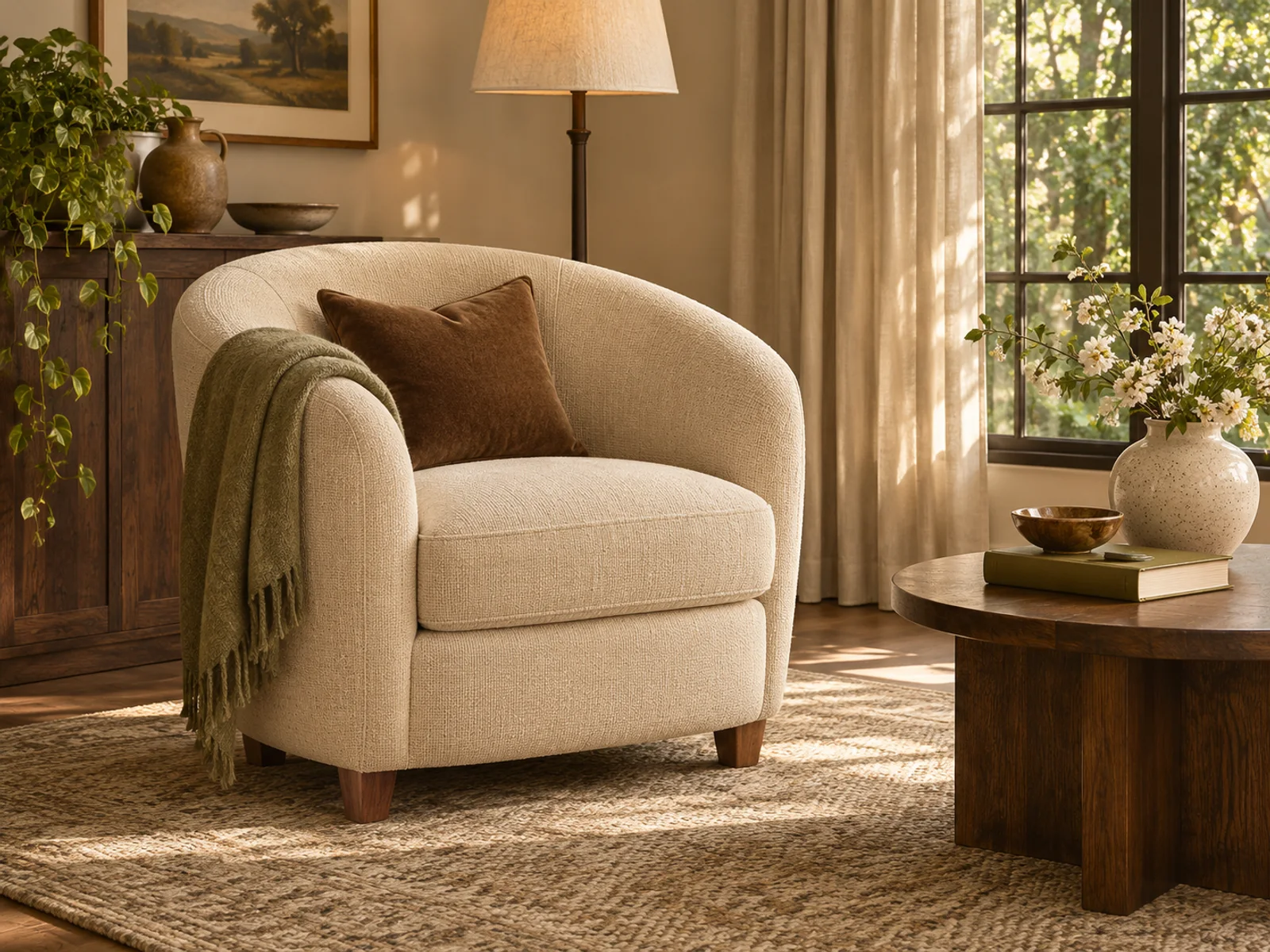
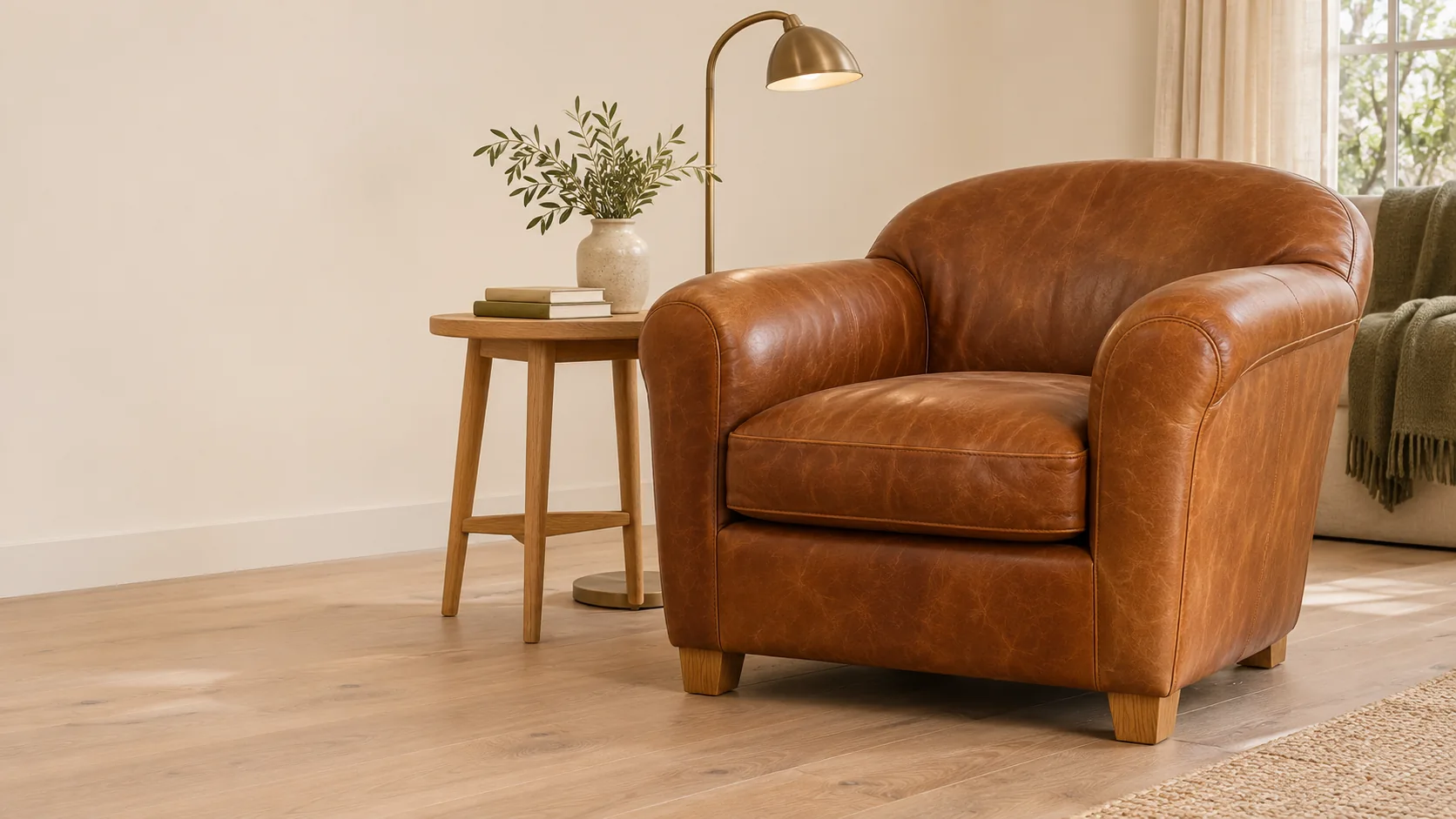
A club chair usually looks enclosed and grounded, with upholstered arms and a back that sit around the user rather than rising into a tall winged silhouette. The seat is intended for relaxed sitting, although the actual depth and firmness vary.
Look beyond the label. A chair with broad padded arms can occupy a large footprint while leaving a narrower seat than you expect. Overall width and usable sitting width answer different questions.
Leather is familiar, but not required
A caramel or dark-brown leather chair is a familiar interpretation. Woven fabric, velvet-like coverings and lighter colors can give the same basic format a different role in the room.
Bassett's Ellery chair is described as a modern interpretation of the club-chair form with roll arms and fabric choices. It illustrates how the category can change without being restricted to a single leather finish or exact outline.
Compare the sitting dimensions
Check usable seat width, depth and height, then compare them with a chair you find comfortable. Consider where the back cushion sits and whether your feet reach the floor in your preferred position.
A deep seat may suit curling up but feel different when you want to sit upright. If you plan to use an ottoman, check the combined footprint and the relative heights rather than choosing the pair from appearance alone.
Separate style from mechanism
Club describes a furniture style, not a moving function. Some chairs swivel, some recline and many remain stationary. Confirm any mechanism, its clearance and how it is operated in the selected listing.
Our glider-chair explanation covers a different distinction: the way a seat moves. A rounded upholstered shape does not establish that movement.
Give the chair a useful place
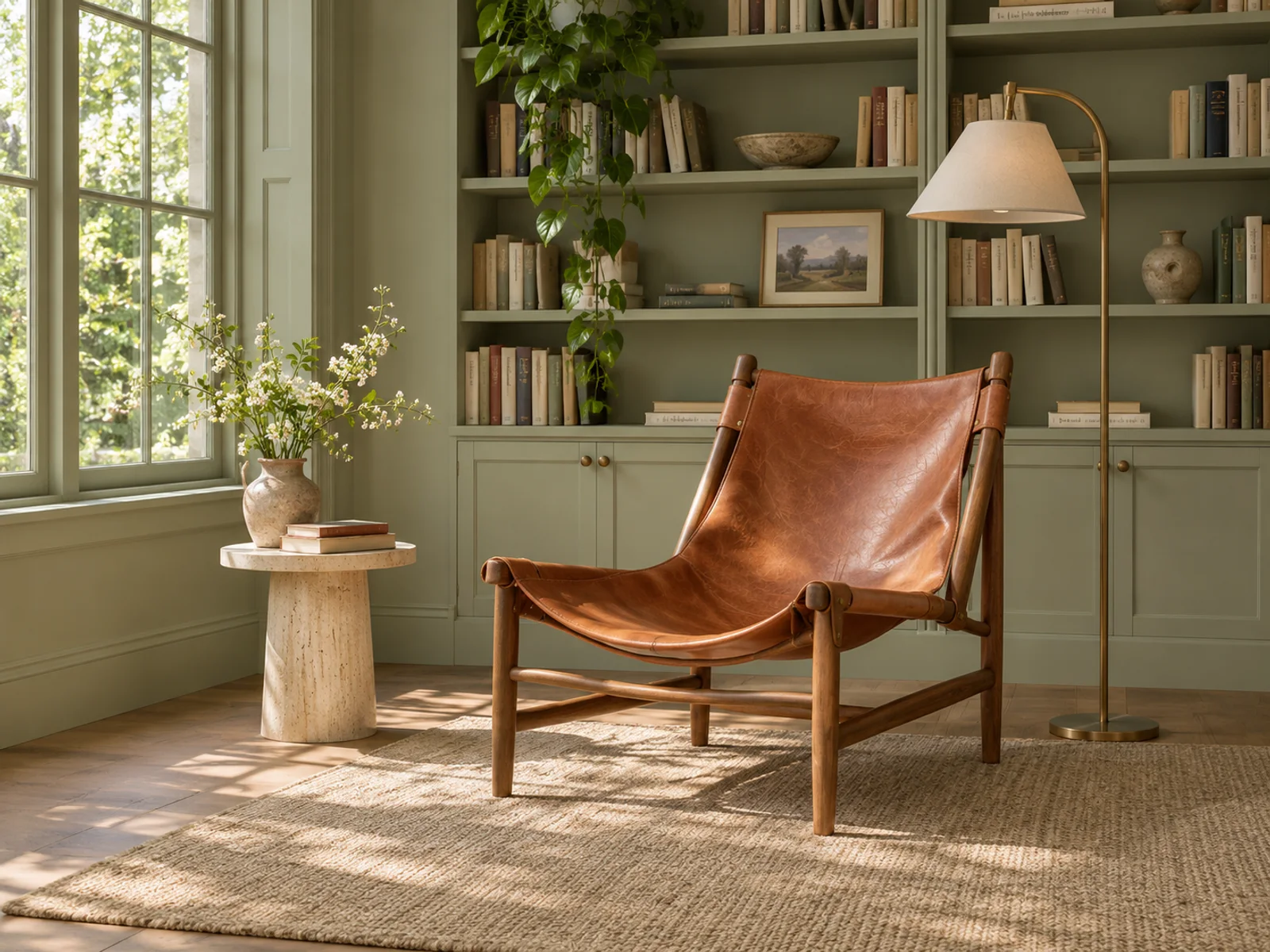
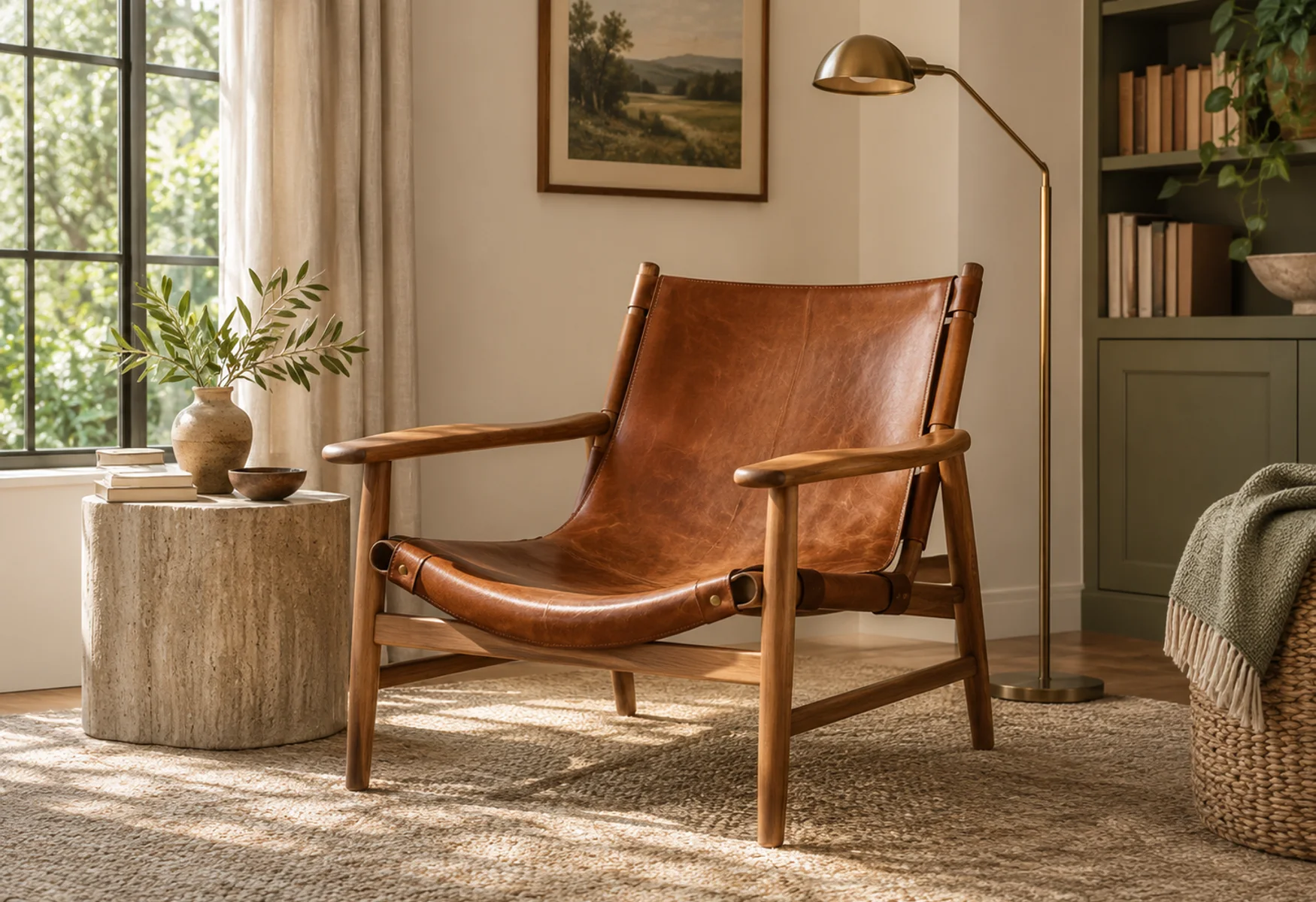
Position it where someone can approach and leave the seat easily. Include a reachable side table and a suitable reading light if that is the intended use, and keep the route around it clear.
Use the club-chair comparisons to examine individual shapes and materials. Ask for any missing seat measurements before committing a substantial corner of the room.
Use dimensions to test the classic shape
A club chair commonly has a substantial, enveloping seat and arms, but modern versions vary. Record seat height, depth, arm height and overall width. Sit with both feet on the floor and check whether the back supports you without a cushion. The generous outline can fill a room quickly, so tape its footprint on the floor beside the sofa and leave space to enter the seat. A chair that looks compact in a product photograph can be much wider once its rolled arms are included.
Treat leather as one option
Leather is associated with the style, but fabric versions can serve the same seating role. Compare material care, light exposure and how the surface feels in your room. A protected leather, aniline leather and coated imitation surface can need different cleaning. Ask for the exact upholstery description and care instructions. Test a fabric swatch beside the existing sofa and rug in morning and evening light. Match the chair's scale and comfort to the room before worrying about whether the upholstery is historically typical.
Check construction and delivery
Inspect the frame and leg attachment, then ask whether cushions can be repaired or replaced. If buying online, compare the chair's full dimensions with doorways and turning points. A deep club chair may be difficult to manoeuvre in a narrow hall even if its width fits the door. Read the retailer's return and collection terms for bulky furniture. If it will be a daily reading seat, place a lamp and side table within comfortable reach rather than making the chair an isolated decorative piece.
Decide which seat it replaces
Place the chair where it will be used, then check whether it blocks a walkway or narrows access to another seat. A club chair can provide a welcoming single-person spot, but its arms may make it a poor choice where people need to turn sideways to enter. If the room is small, compare a narrower accent chair using the same seat-height and comfort test. The design should solve a seating need as well as add visual weight.
Common questions
Does a club chair have to be leather?
No. Leather is a familiar finish, but fabric-covered versions also use the club-chair form. Compare the actual shape, seating dimensions and care requirements rather than treating the upholstery material as the definition.
Is a club chair a recliner?
Not automatically. Many are stationary, while some models add a swivel or reclining mechanism. Check the selected product's functions and required clearance instead of assuming movement from the style name.
Are club chairs suitable for small rooms?
Some are, but broad arms and deep bodies can take more floor space than expected. Measure the complete footprint and usable seat separately, then allow room to approach the chair and move around it.
What makes it different from a wingback chair?
A wingback typically has a taller back with projecting side wings. A club chair usually has a more enclosed, lower-backed outline. Retail labels vary, so use the photographs and dimensions to confirm the distinction.